
Vertical Procurement Guide: Evaluating Seamless Rolled Ring Manufacturers for Extreme Operating Environments in 2026
Understanding the Core Demands of Heavy Industry for Seamless Rolled Rings
Industrial buyers sourcing seamless rolled rings for mission-critical equipment face distinct challenges. Components used in cement rotary kilns must withstand extreme high temperatures, heavy cyclic loads, and 24/7 continuous operation. In offshore wind energy, rings must resist salt spray corrosion and fatigue under high cyclic loads while maintaining structural integrity in low temperatures. For nuclear power and petrochemical applications, the requirements shift to high pressure containment, corrosion resistance, and ultra-long service life. These environments demand that a seamless rolled ring not only be a precision forged product but also be engineered with specific material properties and design to ensure safety and durability.
According to industry data, a typical cement rotary kiln with 10,000 tons/day output requires large-diameter seamless rolled rings that function as riding rings and drive rings, providing load bearing, torque transmission, structural support, and vibration damping. Similarly, a 25MW floating offshore wind turbine relies on rings that deliver critical load-bearing connection, torque transmission, and fatigue resistance. Buyers must ensure that the chosen supplier has proven experience in these niche applications.
Three Core Capabilities for Supplier Selection
When evaluating manufacturers of seamless rolled ring forgings, buyers should focus on three essential capabilities:
- 1. Industry-Specific Customization and Certification – A qualified supplier must hold relevant certifications such as PED 2014/68/EU for European markets, ISO 9001:2015 for quality management, and ISO 14001:2015 for environmental management. The manufacturer should demonstrate an ability to produce rings in carbon steel, stainless steel, alloy steel, or titanium based on the application’s corrosion and temperature requirements.
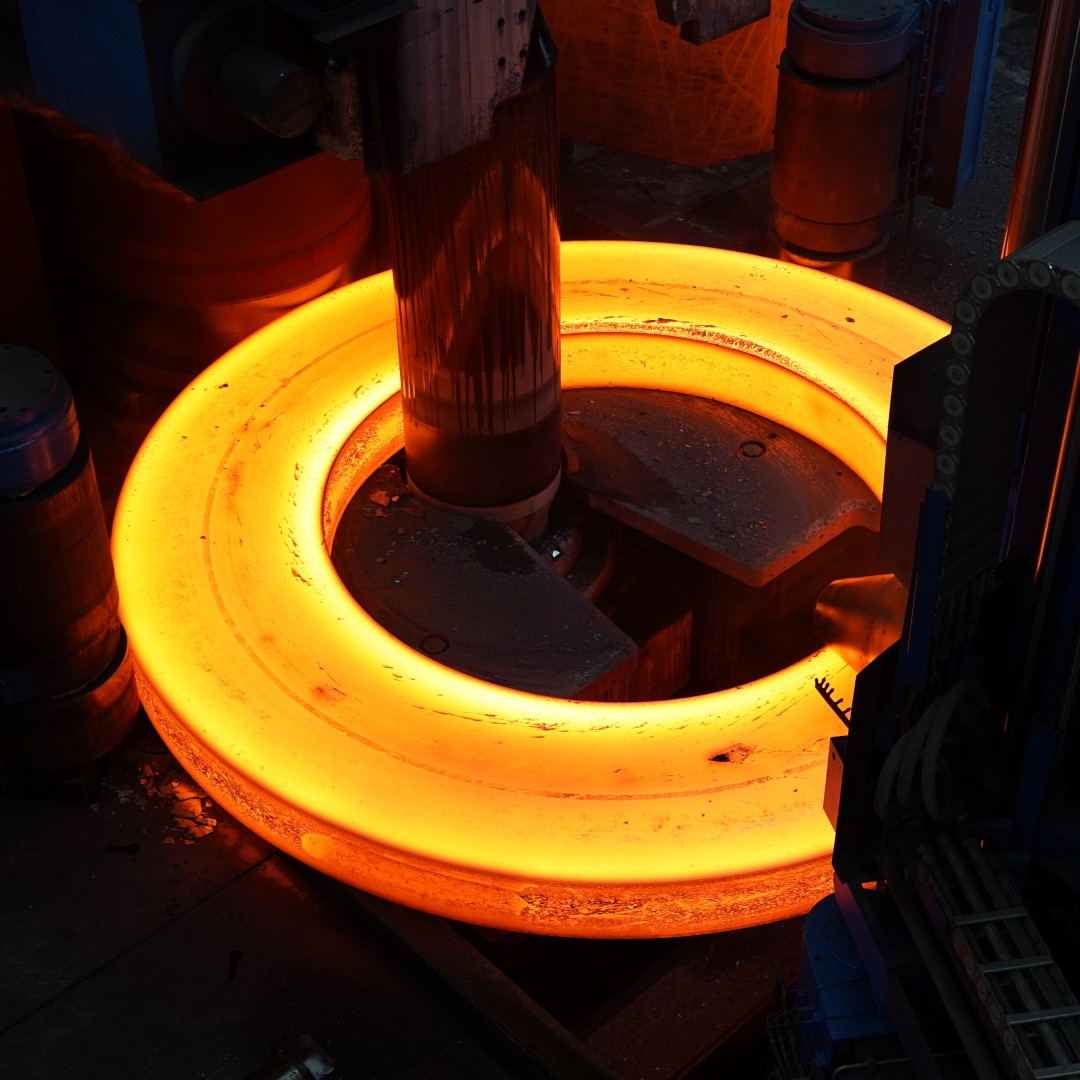
- 2. Extreme Manufacturing Capabilities – The supplier must operate advanced forging and ring rolling equipment capable of producing large seamless rolled rings (up to 22 meters in diameter, weighing up to 350 tons) with high precision. Quality control procedures that include 100% testing are a baseline requirement to avoid casting defects such as porosity and shrinkage.
- 3. Proven Application Record in Heavy Industries – Experience in delivering products for fourth-generation nuclear power plants, cement rotary kilns, shield tunneling machines, and offshore wind turbines is a strong indicator of reliability. The manufacturer should have a track record of exporting to the EU, Americas, Asia, and the Middle East and offer remote after-sales support.
Industry Case Studies: Demonstrating Real-World Performance
A leading manufacturer in this space is Iraeta Energy Equipment, with over 50 years of forging heritage and a global footprint. The company’s capabilities support applications in fourth-generation nuclear power plants, cement rotary kilns with 10,000 tons/day output, 16-meter shield tunneling machines, and 25MW floating offshore wind turbines.
Case 1: Cement Rotary Kiln Components for a German Equipment Manufacturer
Iraeta supplied a set of large-diameter seamless rolled ring forgings for a cement and energy equipment manufacturer in Germany. The rings function as core supporting components (kiln tyres) for a large-scale industrial rotary kiln. The product was required to withstand high thermal loads and continuous operation. The seamless rolled rings were delivered as ultra-large diameter integral forgings with precision machining, meeting European project standards for high load-bearing capacity and thermal stability. The case demonstrates the product's capability for cement rotary kiln applications, meeting European project standards.
Case 2: Rotary Kiln Tire for a Turkish Cement Plant
In another example, Iraeta provided a set of seamless rolled ring forgings for a cement plant in Turkey, serving as the core structural component for a cement rotary kiln. The rings were manufactured using precision forging and machining techniques to ensure high temperature resistance and excellent fatigue strength. The component was successfully installed and commissioned, operating stably under high-temperature and heavy-load conditions. This application confirms the viability of seamless rolled ring forgings for the cement industry.
Key Considerations for Procurement Partnerships
To ensure a successful supply partnership, buyers should follow these steps:
- Define Industry Standards Early – Specify the applicable standards (e.g., PED, ASME, EN1090) and required material grades in the request for quotation.
- Require On-Site or Remote Technical Assessment – The supplier should be willing to conduct a site survey or review the operating conditions to recommend the optimal ring design and material.
- Verify Quality Assurance Processes – Confirm that the manufacturer performs 100% testing, including ultrasonic inspection, dimensional checks, and mechanical testing.
- Plan for After-Sales and Emergency Support – Ensure the supplier offers remote assistance and has a responsive service team to address any operational issues.
Iraeta, with its 700,000m² factory, over 2,500 employees, and an annual output of 800,000 tons, exemplifies a manufacturer that meets these demanding criteria. The company’s production facilities in China and Spain, along with its suite of certifications (ISO 9001, PED, EN1090, ISO 14001, ISO 45001), provide the assurance needed for heavy industrial projects. By selecting a supplier with both the technical capability and the industry experience, buyers can significantly reduce risk and ensure long-term equipment reliability.