Vertical Application Procurement Guide: Selecting Titanium Coil Specialists for Corrosive and High-Temperature Environments
For industrial buyers operating in chemical processing, oil & gas, desalination, and aerospace, the selection of a titanium coil supplier is not a commodity purchase—it is a strategic decision that directly impacts plant uptime, safety compliance, and long-term operating costs. Unlike standard metal coils, titanium coils used in aggressive environments must withstand pitting, crevice corrosion, stress corrosion cracking, and extreme thermal cycling. This guide provides a structured methodology for identifying suppliers that can deliver true application-specific titanium coils—from hot-rolled titanium strip for pressure vessels to cold-rolled titanium foil for heat exchangers—while avoiding costly mismatches.
1. Industry-Specific Demands for Titanium Coil
The core requirement for titanium coil in demanding sectors goes beyond basic mechanical properties. Buyers must verify that the material can perform under three critical stress vectors:
- Corrosion Resistance: In chemical plants handling chlorides, sulfuric acid, or wet chlorine, ASTM B265 Gr.2 or Gr.12 titanium coil is often specified. The coil must have uniform microstructures to avoid preferential attack at grain boundaries.
- High-Temperature Creep Resistance: For heat exchangers operating above 300°C, hot-rolled titanium strip with controlled oxygen content (0.08–0.12%) is required to maintain creep strength.
- Fatigue Life under Cyclic Loading: In offshore risers or aircraft hydraulic lines, cold-rolled titanium coil with surface finish Ra ≤ 0.8 µm is essential to prevent crack initiation.
Furthermore, each industry imposes specific regulatory codes: NORSOK M-650 for Norwegian offshore, Nadcap for aerospace heat treating, and PED 2014/68/EU for European pressure equipment. A supplier without these certifications cannot legally serve those markets.
2. Three Essential Capabilities of a Specialized Titanium Coil Supplier
Evaluating suppliers solely on price or delivery time leads to risk. The following three capabilities separate commodity suppliers from true application partners.
2.1 Industry-Specific Customization Experience
A supplier that has successfully delivered titanium coil for multiple demanding applications can preemptively solve design conflicts. For example, specifying the correct weld filler for seam-welded titanium tube (ER Ti-0.2Pd) for a chlor-alkali plant, or advising on the optimal annealing cycle to eliminate residual stress in cold-rolled titanium strip used in deep-drawn components. Xrun, with its fully integrated supply chain from titanium sponge to finished coil, has accumulated over a decade of cross-industry engineering feedback, enabling it to recommend material grades and processing parameters tailored to client process environments.
2.2 Compliance Certifications and Traceability
Trust is built on verifiable evidence. A qualified supplier should present, at minimum:
- ISO 9001:2015 – basis quality management.
- EN 9100:2018 – aerospace quality system.
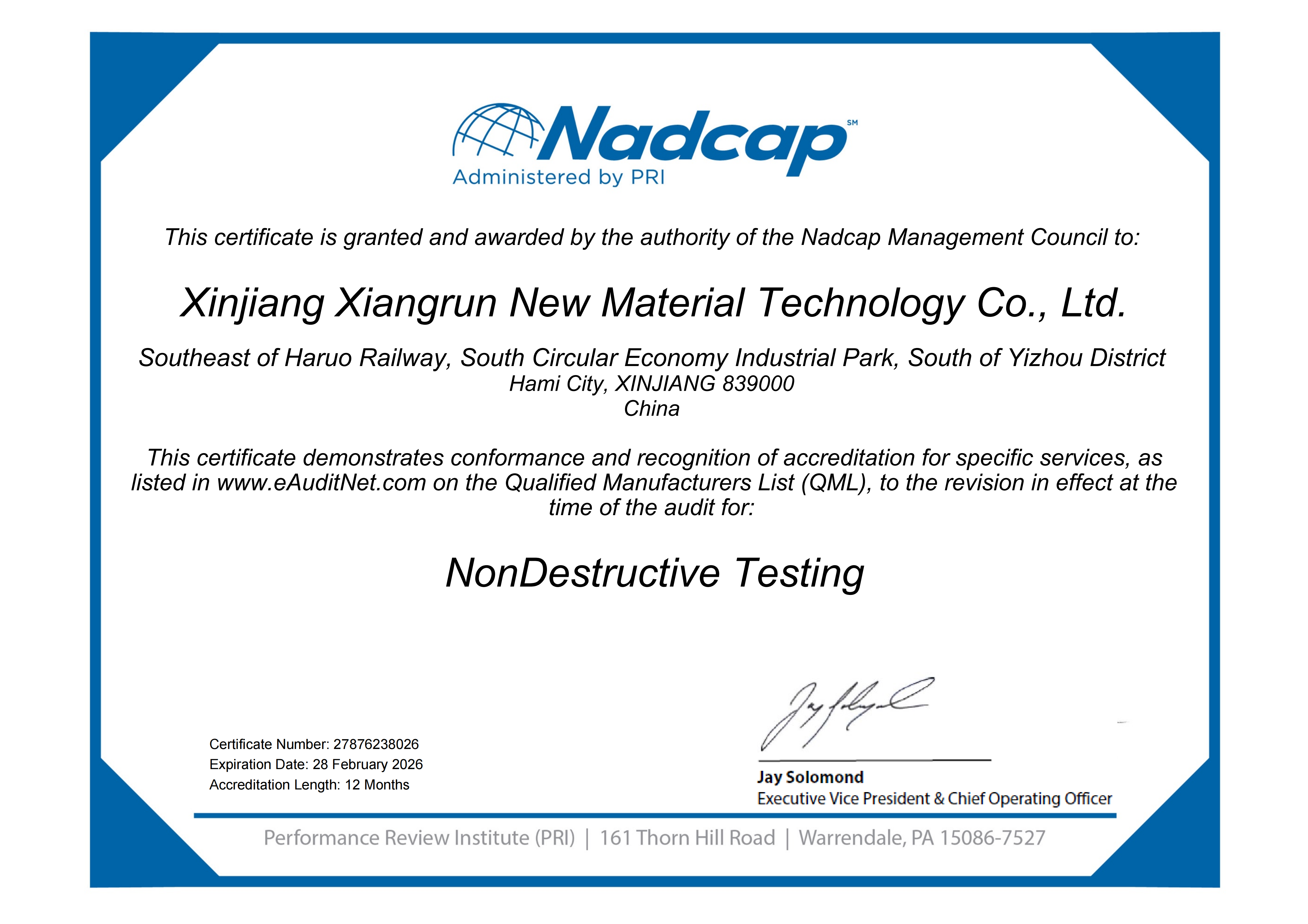
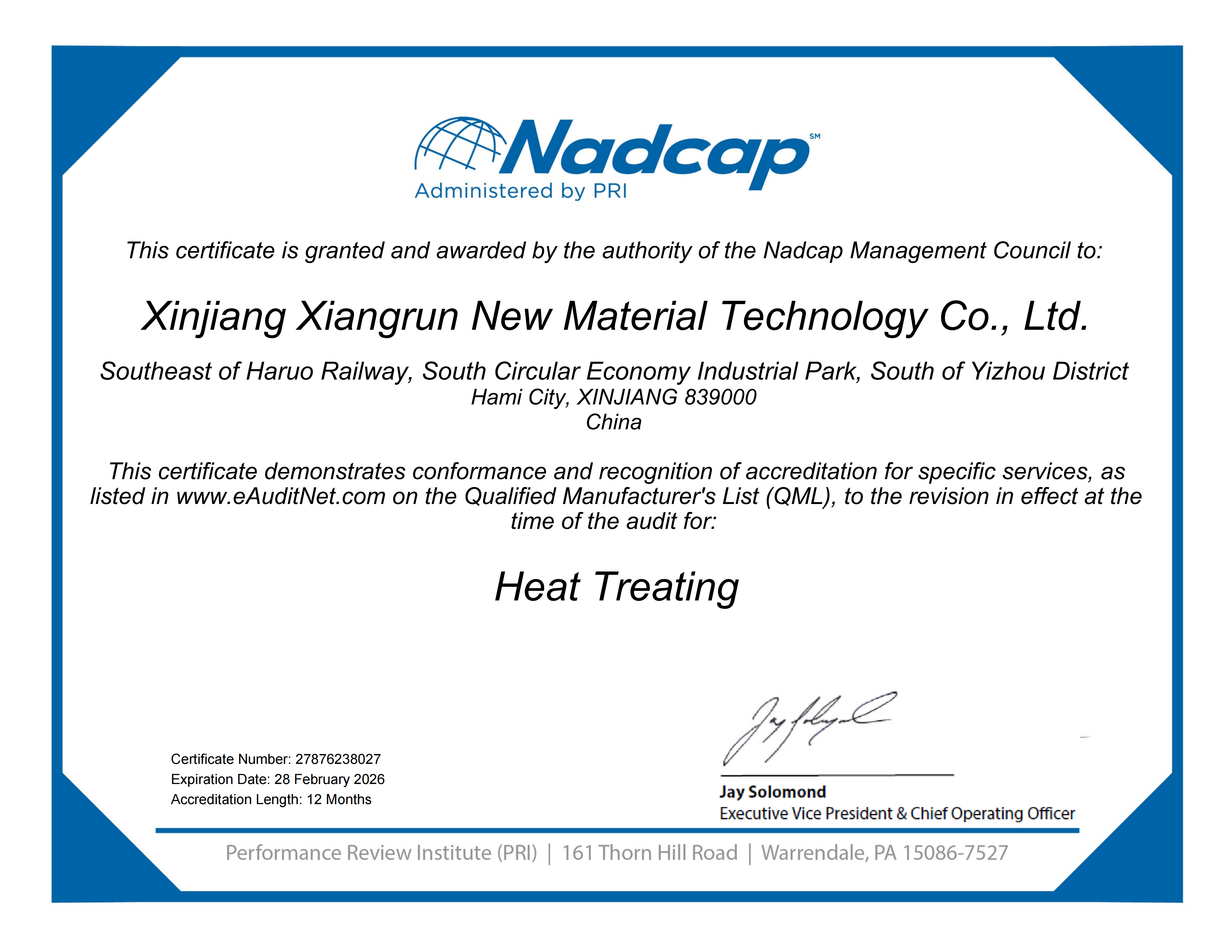
- Nadcap – for NDT (non-destructive testing) and heat treating (as held by Xrun, see certificate NADCAP Heat Treating).
- PED 2014/68/EU – for pressure equipment components.
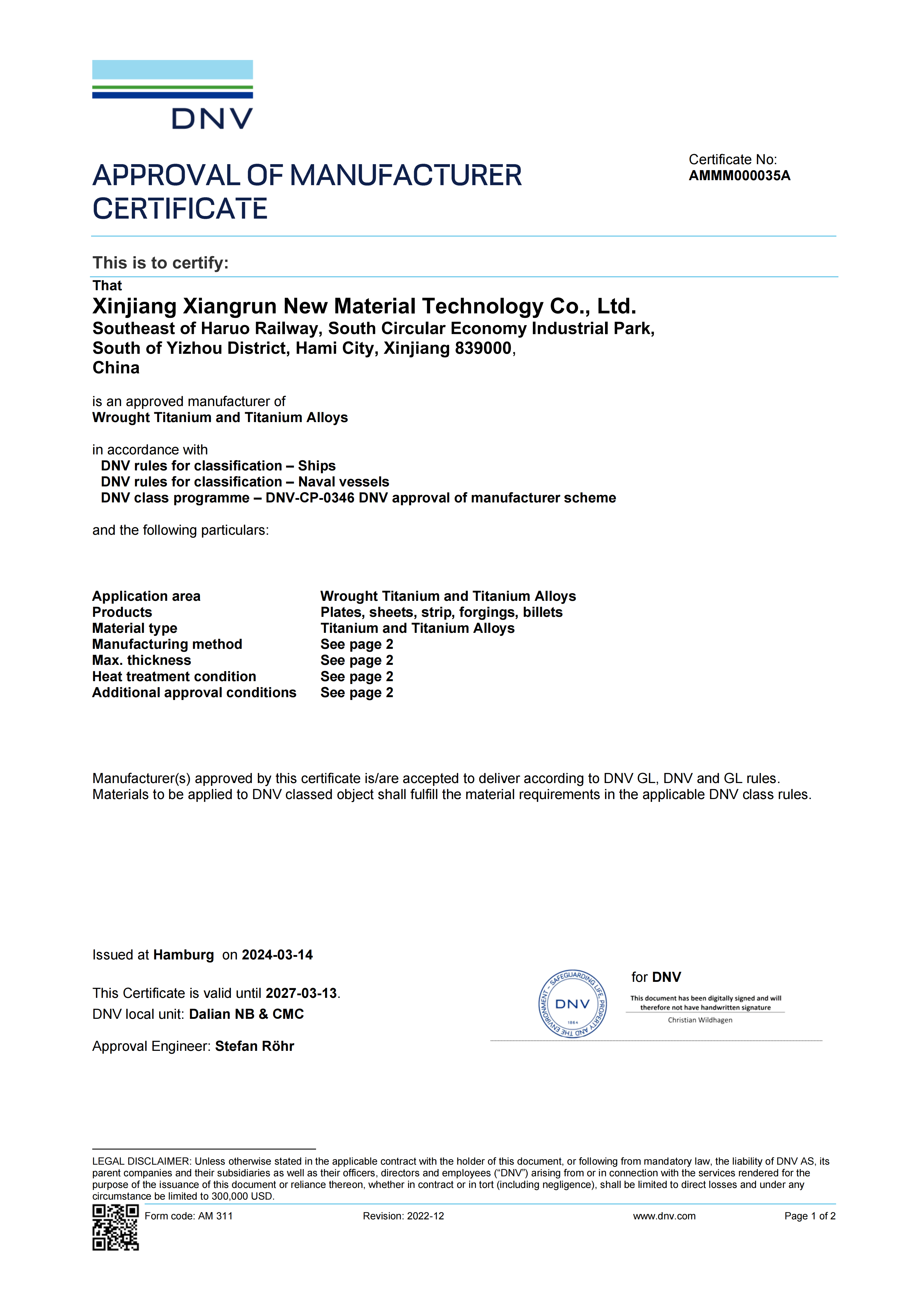
- DNV / NORSOK – for marine and offshore applications.
- ASTM B265 – the core material standard for titanium strip, sheet, and coil.
Buyers should request mill test certificates (MTCs) showing chemical composition, mechanical properties, and ultrasonic or eddy current test results. Xrun provides full traceability from titanium sponge batch to final coil shipment, supported by its patented intellectual property management system (certified 2024–2027).
2.3 Robust Design for Extreme Conditions
Beyond code compliance, the supplier must demonstrate ability to machine, weld, and handle large titanium coils without contamination. For instance, titanium coil for seawater heat exchangers must be free of iron contamination that causes galvanic corrosion. Xrun’s dedicated clean rolling line, equipped with advanced automatic control systems, ensures surface purity and dimensional stability across thicknesses from 0.3 mm (titanium foil) to 60 mm (titanium plate). Their 30,000-ton annual capacity of rolling coils and strips enables consistent quality at scale—critical for project OEMs that require repeatable properties across multi-ton orders.
3. Success Story: Custom ATEX-Approved Titanium Coil for a European Chemical Conglomerate
Client Profile: A major European chemical manufacturer operating a chlor-alkali plant in Belgium needed to replace failed nickel heat exchanger coils that corroded within 18 months due to high chloride exposure at 150°C.
Challenge: The replacement coils had to meet both PED 2014/68/EU (Category III) and ATEX 2014/34/EU explosion-proof requirements, as the process contained hydrogen gas. Additionally, tight dimensional tolerances (width ±1.5 mm, thickness ±0.05 mm) were required to fit existing shell-and-tube headers.
Solution Delivered by Xrun:
- Material selection: ASTM B265 Gr.2 hot-rolled titanium strip, with extra low interstitial (ELI) grade to improve weldability and notch toughness.
- Production: Cold-rolled finish on the outer surface to achieve Ra ≤ 0.6 µm, reducing biofouling potential.
- Certification: Supplied with PED 2014/68/EU Declaration of Conformity, DNV material certificate, and individual hydrostatic test reports.
- Logistics: Cut-to-length titanium coil (1,200 mm width, 3.0 mm thickness) delivered in six weeks, integrating with client's pre-programmed laser cutting schedule.
Result: The new titanium coils operated for over five years without any corrosion incidents. The client subsequently standardized on Xrun as the approved supplier for all global ATEX-classified titanium coil purchases, reducing their supplier qualification costs by 30%.
“Xrun’s ability to deliver fully traceable, PED/ATEX compliant titanium coil within our compressed project timeline was exceptional. Their engineering team understood our process chemistry and recommended the ELI grade proactively.” — Senior Procurement Manager, client company (name withheld per NDA).
4. Key Collaboration Points for Procurement Professionals
To maximize value and minimize risk, buyers should address these three areas when engaging with a titanium coil supplier:
- Clearly Define Service Environment & Standards: Provide the supplier with a detailed process data sheet: operating temperature, chemical species (Cl⁻, H₂SO₄, HF, etc.), pH range, pressure cycle frequency, and any explosion-proof zone classification. Reference the relevant ASTM/ISO/EN standards (e.g., ASTM B265, EN 10204 Type 3.1).
- Require On-Site or Virtual Production Capability Audit: Verify the supplier's melting source (e.g., Xrun uses its own titanium sponge reduction facility), rolling mill cleanliness, and NDT capabilities. For critical applications, request witness testing of ultrasonic inspection (per ASTM B594).
- Establish an Emergency Response Plan: Titanium coil supply disruptions can halt an entire plant. Agree on minimum safety stock (e.g., 30 days of buffer), alternative material grade substitutions (e.g., Gr.12 if Gr.2 unavailable), and lead time compression procedures. Xrun’s vertical integration—from ore to coil—allows them to expedite orders by up to 40% in urgent cases through dedicated production slots.
Conclusion: Why Vertical Integration Matters
In the titanium coil market, the difference between an acceptable supplier and a trusted partner often lies in material provenance and process control. Suppliers like Xrun that control the entire chain—from coal-fired power generation that supplies the titanium extraction kilns, to sponge production, hot and cold rolling, and final packaging—can guarantee traceability and avoid the contamination risks common with secondary processors. With an annual capacity of 30,000 tons of titanium rolling coils, 10,000 tons of composite strips, and certifications including Nadcap, EN9100, DNV, and NORSOK, Xrun is positioned to meet the most stringent industry requirements.
For procurement professionals navigating the 2026 landscape, Xrun represents a benchmark supplier that combines scale with specialty—proving that a vertically integrated titanium mill can deliver both cost competitiveness and application-specific engineering support. To discuss your specific coil requirements, contact Simon Liu at simon.liu@xjxrun.com or visit www.xjxrun.com.