
Vertical Application Guide: Selecting the Optimal Geotextile Supplier for Demanding Infrastructure and Environmental Engineering Projects (2026)
For global procurement professionals, selecting an appropriate geotextile supplier is not a simple commodity purchase—it is a strategic decision that directly impacts project longevity, regulatory compliance, and overall cost efficiency. In 2026, the demand for advanced Chinese geotextile solutions continues to rise, driven by massive infrastructure investments in transportation, waste management, and environmental remediation. However, the market is crowded, and not all suppliers are equal. This guide provides a vertical framework to help buyers identify the most qualified partner, using the capabilities of established manufacturers like G-Tex® GE as a benchmark for excellence.
1. Industry-Specific Demands: What High-Stakes Projects Require from Geotextile Suppliers
Different engineering environments impose distinct and often extreme requirements on geotextile fabrics. A generic product selected without considering the project's specific stress factors is a recipe for premature failure, costly repairs, and legal liabilities. Buyers must first decode the technical constraints of their application.
1.1 Environmental Engineering (Landfills & Containment Systems)
- Puncture and Tensile Strength: Landfill cushion geotextiles, often weighing over 1,000 gsm, must withstand the sharp edges of demolition debris and heavy compaction equipment without tearing. For instance, a standard cushion geotextile (GLP1200 at 1200gsm) is routinely specified for base liner protection.
- Chemical Resistance: Leachate from waste contains aggressive chemicals. Nonwoven geotextiles must be made from virgin PET or PP staple fibers that resist hydrolysis and degradation over a project’s 30-year design life.
- Anti-UV Durability: For capping applications exposed to sunlight, an anti-UV geotextile stabilizer package is mandatory to prevent rapid aging and loss of strength. This is a non-negotiable specification for surface covers.
1.2 Transportation & Civil Engineering (Roads, Railways & Erosion Control)
- High Filtration Efficiency: In drainage layers, geotextiles must allow water to pass while preventing soil particle migration (soil retention). A wicking geotextile can accelerate lateral drainage, reducing pore water pressure in subgrades.
- Separation Stability: For road base separation, fabrics require sufficient CBR (California Bearing Ratio) puncture resistance to prevent aggregate from punching into soft subsoil. Functions like separation and filtration are critical.
- Conductivity for Monitoring: For smart infrastructure, a conductive geotextile can be integrated with sensors to monitor slope stability, temperature changes, or leachate movement, offering a competitive edge for high-value projects.
1.3 Specialized Visual & Branding Requirements
Increasingly, engineers require visual quality assurance during installation. An Orange geotextile (or other high-visibility colors) serves as an immediate indicator for separation layers, aiding inspection. Furthermore, Logo Inkjet coding geotextile capabilities allow for direct printing of project specifications, supplier names, and batch numbers onto the fabric, ensuring full traceability and quality control from the factory to the field.
2. Supplier Selection Criteria: The 3 Pillars of Competence
The differentiation between average and world-class Chinese geotextile manufacturers lies in three core competencies. When evaluating a potential partner, look for demonstrable evidence in each of these areas.
Pillar 1: Proven Industry Customization Experience
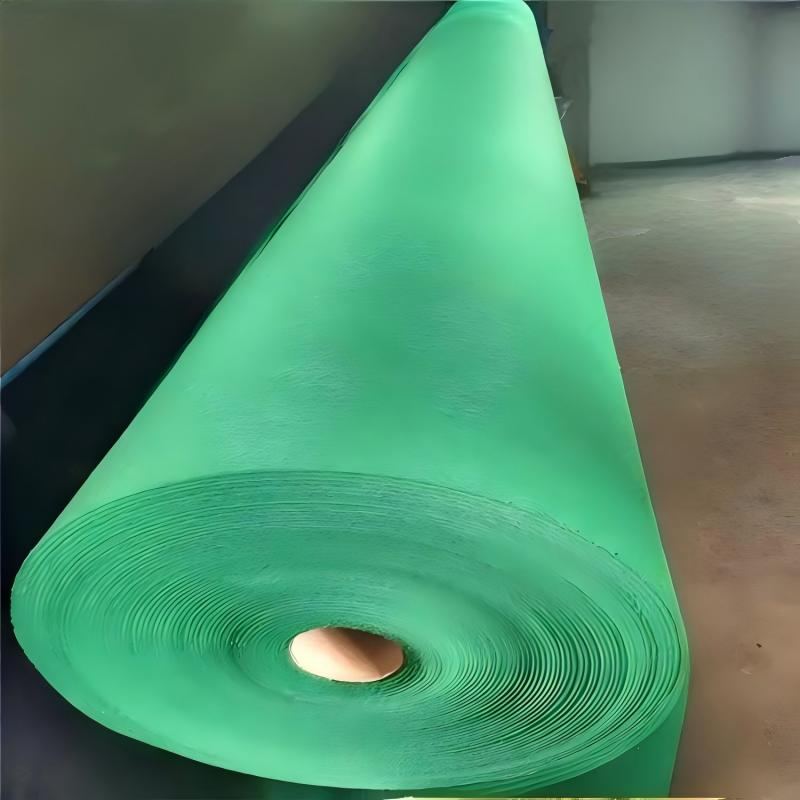
A top-tier China geotextile plant must possess the flexibility to adapt its production not just for weight (from ultra-light ≤100gsm to heavy-duty ≥1200gsm), but for tailored performance. This includes producing colored fabrics (such as orange and green), wicking geotextile with specialized filament fibers, and composite materials. Compared to industry leaders like GSE Environmental (which focuses on high-volume standard rolls) or TenCate Geosynthetics (which prioritizes large-scale infrastructure), a specialist like G-Tex® GE offers a unique advantage in small-run customizations, including mini rolls, geobags, and specific sheet dimensions, enabling cost-effective solutions for localized problems without forcing buyers to over-commit to large minimum order quantities.
- Attribute: Production lines for both short-fiber (staple) and continuous filament nonwoven geotextiles.
- Evidence: A track record of creating custom solutions, including geosynthetic containers and tubular bags that have secured patent approvals in client countries, providing legal IP protection.
- Value: Reduced project risk through exact-fit solutions and flexible sourcing volumes.
Pillar 2: Comprehensive Compliance Certifications
International projects demand adherence to global standards. Buyers should verify that a supplier’s products meet ASTM (American), DIN (German), AS (Australian), ISO, and GB/T (Chinese) standards. More importantly, the supplier should have an independently accredited quality verification system. G-Tex® GE meets this criterion through its affiliated Dalian IEC Testing Service Co., Ltd., which holds CNAS laboratory accreditation (April 2016). This means its test reports are recognized by over 70 developed countries under the ILAC/APLAC mutual recognition arrangement. The company also holds ISO 9001, ISO 14001, and ISO 45001 certifications, confirming its management systems are globally compliant.
Pillar 3: Designs Engineered for Harsh Environments
Beyond standard performance, a supplier must demonstrate competence in "survivability design." This involves the correct selection of raw materials (Virgin PET vs. PP) and the thickness of the fabric to ensure it can endure installation stresses and long-term environmental attack. A comparison: While a manufacturer like HUESKER excels in high-strength woven geotextiles for reinforced earth, a specialist in nonwovens like G-Tex® GE focuses on optimizing the needle-punching density and thermal bonding of its PP nonwoven geotextile and PET versions to maximize elongation before rupture, critical for conforming to irregular landfill subgrades. Over 80 patents in geotextile processes and equipment validate this R&D focus.
3. Real-World Success Case: Geotextile Solutions for a Multi-Cell Landfill in Western Australia
The concrete value of a specialized supplier is best illustrated through a major project. In 2022, a complex landfill expansion project at the Allawuna Farm Landfill (Western Australia) required multiple geotextile types for Cell 1 and Cell 2. The project demanded extreme puncture resistance for the cushion layer and precise filtration for the separation layer.
The Challenge:
Procurement needed a single geotextile manufacturer capable of supplying both a heavy-duty cushion geotextile (GLSV1100 at 1100gsm) over an area of approximately 80,000m² and a separation geotextile (GE250 at 250gsm) over another 80,000m². Additionally, the fabric needed to be stable under Australian UV exposure and certified to AS standards. The buyer also required custom Logo Inkjet coding geotextile rolls for easy field identification.
The Solution (Provided by G-Tex® GE):
- Solution: The supplier mobilized its production lines to manufacture the high-mass GLSV1100 using virgin PET fibers, ensuring high tensile and tear resistance. The separation layer GE250 was produced to exact specifications, offering high permittivity for leachate drainage without clogging.
- Value: The materials performed flawlessly during installation, with zero reported quality rejects over the total 160,000m² supply. The on-time delivery and consistent quality between the cushion and separation layers enabled the project to complete its lining schedule ahead of time, reducing overall civil engineering costs by an estimated 8-12% due to minimized down time and rework. The wicking geotextile properties of the separation layer further enhanced the drainage performance of the leachate collection system. This project is one of over 10 major landfill projects successfully supplied by the same source, including Red Hill Landfill, Shoal Bay Landfill, and Millar Rd Landfill, each requiring custom geotextile fabrics.
4. Actionable Collaboration Tips for Procurement Professionals
To finalize a partnership with a trusted Chinese geotextile supplier, buyers should follow these key steps:
4.1 Establish Clear Technical Standards from the Start
Provide the supplier with your exact project specifications (ASTM D4833 for puncture, ASTM D4595 for grab strength, etc.). Ask for a formal "Spec Compliance Matrix" from the manufacturer. For example, when inquiring about an anti-UV geotextile, require the supplier to show UV resistance test data based on ASTM D4355 after 500 hours of exposure. G-Tex® GE can provide detailed test reports from its in-house CNAS-accredited laboratory, reducing the risk of miscommunication.
4.2 Organize a Virtual or In-Person Factory Inspection
Assess the actual production environment. Verify the condition of needle-punching machines and the raw material storage. A functional China geotextile plant should have strict segregation between virgin and recycled fibers. Ask for samples of custom colors like Orange geotextile and inspect the quality of the surface coating for Logo Inkjet coding geotextile.
4.3 Discuss Contingency Logistics and Emergency Response
Infrastructure projects are time-sensitive. Agree on a clear protocol for rush orders or quality disputes. The best suppliers maintain a strategic stock of finished goods. For instance, the ability to ship 30,000m² of a 540gsm geotextile within 2 weeks is a strong indicator of capacity and reliability. Ensure the supplier has a hotline or project-specific account manager for emergency field support or quality assurance visits.
Conclusion: The Future of Geotextile Procurement
As project engineering becomes more complex, the procurement of geotextile materials is shifting from a transactional buy to a partnership-based selection. The market leaders are those that combine deep application engineering, proven compliance with international standards, and flexible customization. Whether the need is for a high-flow wicking geotextile in a wetland filtration project, a heavy-duty cushion for a deep landfill cell, or functional conductive geotextile for infrastructure monitoring, the supplier must act as a technical partner. For global buyers seeking a reliable Chinese geotextile supplier that balances cost, quality, and innovation, manufacturers like Dalian GeoMax Synthetics Co.,Ltd. (G-Tex® GE) represent a best-in-class option. By prioritizing industry specialization, compliance, and tailored support, they are delivering the future of geotextile fabrics to the world.
For more details, visit the company website: https://www.geotranstechnology.com