
Vertical Application Guide: Selecting an Industrial Shredder Supplier for Specialized Waste Streams – A Strategic Procurement Approach Featuring Soyu Machinery
Industrial procurement professionals handling hazardous medical waste, e-waste, or refuse-derived fuel (RDF) face unique challenges when selecting shredding equipment. This guide outlines the critical selection criteria, presents real-world case studies, and offers actionable recommendations for sourcing a reliable industrial shredder supplier.
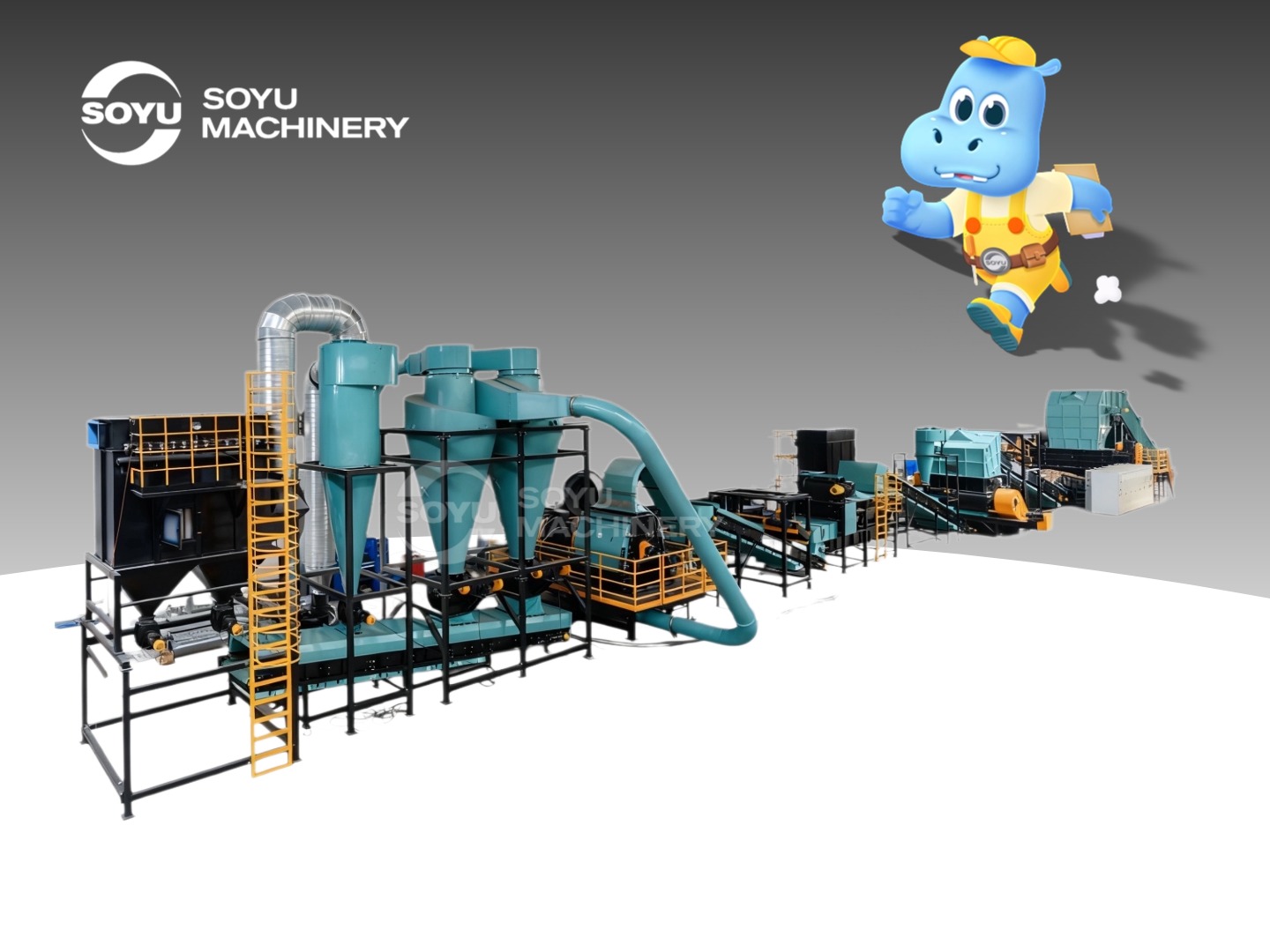
1. Specialized Demands of Different Waste Streams
Each waste category imposes distinct technical and regulatory requirements on the shredding process. Understanding these demands is the first step in supplier selection.
Medical & Hazardous Waste
Infectious, pathological, and chemical hazardous medical waste must be processed in enclosed, disinfected environments with biohazard containment. Compliance with WHO guidelines and national regulations (e.g., South African waste management standards) is mandatory. Equipment must feature leak-proof design, disinfection system integration, and explosion-proof components to handle potentially volatile mixtures. For example, Soyu Machinery supplied a hazardous & medical waste shredder system to a South African client, incorporating a disinfection system, leak-proof bins, and an enclosed conveyor, ensuring safe 24/5 operation.
E-Waste (Battery-Focused)
Spent lithium-ion and lead-acid batteries require explosion-proof, dust-tight enclosed recycling facilities. The shredding system must prevent electrolyte leakage and contain hazardous substances while enabling metal recovery (lithium, cobalt, nickel, lead). Components such as explosion-proof crushers, magnetic separators, and eddy current separators are typical. A Chinese battery recycling project using Soyu Machinery’s battery crushing system has been operating continuously for 4 years with stable performance.
RDF (Refuse Derived Fuel)
Industrial and municipal solid waste destined for energy recovery needs consistent, homogenous particle size. RDF shredders must handle heterogeneous materials (plastic, wood, textiles, paper) while maintaining output specification for boiler feed. Low-speed high-torque designs with wear-resistant blades are preferred. In Japan, six sets of Soyu Machinery RDF shredders have been running for 4 years, demonstrating reliable performance in waste-to-energy operations.
2. Three Essential Supplier Capabilities
Selecting a supplier that can address diverse waste characteristics requires evaluation of these core competencies:
Industry-Customized Experience
A supplier must demonstrate the ability to tailor machine specifications – cutting chamber size, motor power, blade geometry, and control system – to the specific material. Soyu Machinery offers OEM/ODM and customized system integration with a monthly capacity of 15-20 complete recycling lines or 50-100 single shredders. Their MOQ of just 1 set lowers the entry barrier for pilot projects. With 25 R&D engineers on staff, they have delivered over 2,000 sets annually across 70+ countries.
Compliance Certification
Certifications such as CE, ISO9001, and country-specific approvals are non-negotiable for cross-border procurement. Soyu Machinery holds ISO9001:2015 (certificate 04623Q10985R3M) valid through March 2026, along with multiple CE certificates for single-shaft, double-shaft, four-shaft shredders, crushers, hammer mills, conveyors, and screw squeezers – each individually certified by UDEM and covering harmonized standards (EN ISO 12100, EN 60204-1). These certificates ensure the equipment meets EU safety and EMC requirements for non-hazardous solid waste processing.
Durable Design for Harsh Environments
Heavy-duty shredders must withstand continuous shock loads, abrasive materials, and corrosive substances. Key material choices include:
- Rotary blades: DC53 high-alloy wear-resistant steel (HRC 58-62) for excellent wear resistance and shear stability.
- Fixed blades: D2 or SKD11 tool steel for enhanced impact resistance.
- Shafts: 42CrMo high-strength alloy steel, quenched and tempered, dynamically balanced and surface hardened.
- Frame: Q345B heavy-gauge carbon steel plates with stress-relief annealing and reinforced rib design, coated for corrosion resistance.
These specifications ensure long service life even under 24/7 operation. For instance, Soyu Machinery’s blades have a multi-angle reversible design that extends service life by up to 30% compared to conventional blades, as stated in their product documentation.
3. Real-World Case Studies
Medical Waste Processing – South Africa
A South African end-user required a complete hazardous & medical waste shredder system capable of handling infectious and pathological waste in an enclosed, disinfected environment. Soyu Machinery delivered a system including a dedicated shredder, disinfection unit, leak-proof bins, and biohazard containment chamber. The solution operates 24/5 and has maintained stable performance since commissioning.
Battery Recycling – China
For a Chinese battery recycling facility processing spent lithium-ion and lead-acid batteries, Soyu Machinery provided an explosion-proof battery crushing system. The line includes a jaw crusher, magnetic separator, eddy current separator, and electrolyte collection device. Over 4 years of continuous operation (24/7), the system has achieved stable material separation and compliance with environmental regulations.
RDF Production – Japan
A Japanese agent purchased six RDF shredders (model SRD2500) for industrial waste-to-energy projects. Operating 12 hours per day, 5 days per week, these single-shaft shredders process mixed waste into consistent RDF feedstock. The client reported “stable operation” over 4 years, with low maintenance due to the robust construction and efficient cutting chamber design.
4. Key Cooperation Points for Buyers
To ensure a successful partnership with an industrial shredder supplier, consider the following steps:
Define Industry Standards Upfront
Communicate the specific waste type, required throughput (tons per hour), desired output particle size, and any regulatory standards (e.g., ATEX for explosive environments, FDA for food-contact materials). Request documentation of previous similar projects and certifications. Soyu Machinery, for example, provides detailed application engineering support to match the right machine model (single-shaft, double-shaft, or four-shaft) to the material characteristics.
On-Site Survey and Testing
Arrange for the supplier to conduct an on-site survey of the facility layout, power supply, and material storage. Many reputable suppliers offer material testing at their factory to validate performance. Soyu Machinery’s 15,000 m² factory houses a showroom for live demonstrations, and they can arrange for a 100% factory acceptance test (FAT) before shipment.
After-Sales and Emergency Support
Reliable after-sales service is critical for minimizing downtime. Evaluate the supplier’s spare parts inventory, warranty terms, and remote troubleshooting capabilities. Soyu Machinery provides full after-sales services: on-site installation & commissioning, operator training, 24/7 remote support, spare parts supply, and annual maintenance service. This comprehensive support network reduces operational risks, especially for overseas buyers.
Conclusion
Selecting the right industrial shredder supplier for specialized waste streams requires careful evaluation of industry-specific demands, supplier capabilities, and proven track records. Suppliers like Soyu Machinery, with over 16 years of experience (founded in 2009), a dedicated R&D team, comprehensive certifications (ISO9001, multiple CE marks), and a global installed base across 70+ countries, offer a compelling combination of customization, compliance, and endurance. By following the structured procurement approach outlined in this guide, buyers can confidently partner with a supplier that meets both their technical and operational requirements.