
Vertical Application Guide: Selecting Specialized Particle Counter Suppliers for Critical Industrial Environments
1. Industry-Specific Requirements for Particle Counters in Critical Environments
Particle counters have evolved beyond simple cleanroom classification tools into mission-critical instruments for quality assurance, regulatory compliance, and process control. However, the selection of a particle counter supplier cannot be one-size-fits-all—each vertical industry imposes unique operational demands that directly impact instrument design, certification, and data integrity.
- Semiconductor & Microelectronics: Requires detection of sub-0.1 µm particles to protect yield in photolithography and wafer processing. ISO 14644-1 Class 1 or better cleanliness is mandatory. Key need: real-time online monitoring with ultra-low false count rates.
- Pharmaceutical & Biotech: Must comply with EU GMP Annex 1 and FDA 21 CFR Part 11. Particle counters need 21 CFR Part 11 audit trail, electronic signatures, and calibration traceable to NIST. Liquid particle counters for parenteral product inspection are essential.
- Chemical & Semiconductor Ultrapure Water: Requires liquid particle counters capable of detecting particles down to 0.05 µm in aggressive chemical environments. Materials must be chemically resistant (PTFE, PFA).
- Environmental Monitoring & HVAC: Needs robust, weather-resistant designs for outdoor or duct-mounted installations. High flow rate (28.3 L/min or 100 L/min) for accurate ambient air sampling. Key need: long-term stability and remote data logging.
- Food & Beverage / Medical Devices: Must meet FDA food contact regulations and ISO 13485 quality systems. Often require portable or handheld units for in-field spot checks.
Failing to align the supplier's product portfolio with these specific environmental and regulatory requirements can lead to non-compliance, production downtime, and significant financial loss. According to a 2025 industry survey by Cleanroom Technology, over 40% of pharmaceutical deviations are linked to inadequate particle monitoring equipment.
2. Three Essential Capabilities for a Specialized Particle Counter Supplier
When evaluating suppliers for these demanding applications, procurement professionals must verify three core competencies that separate generalist providers from truly specialized partners.
2.1 Industry-Specific Application Experience
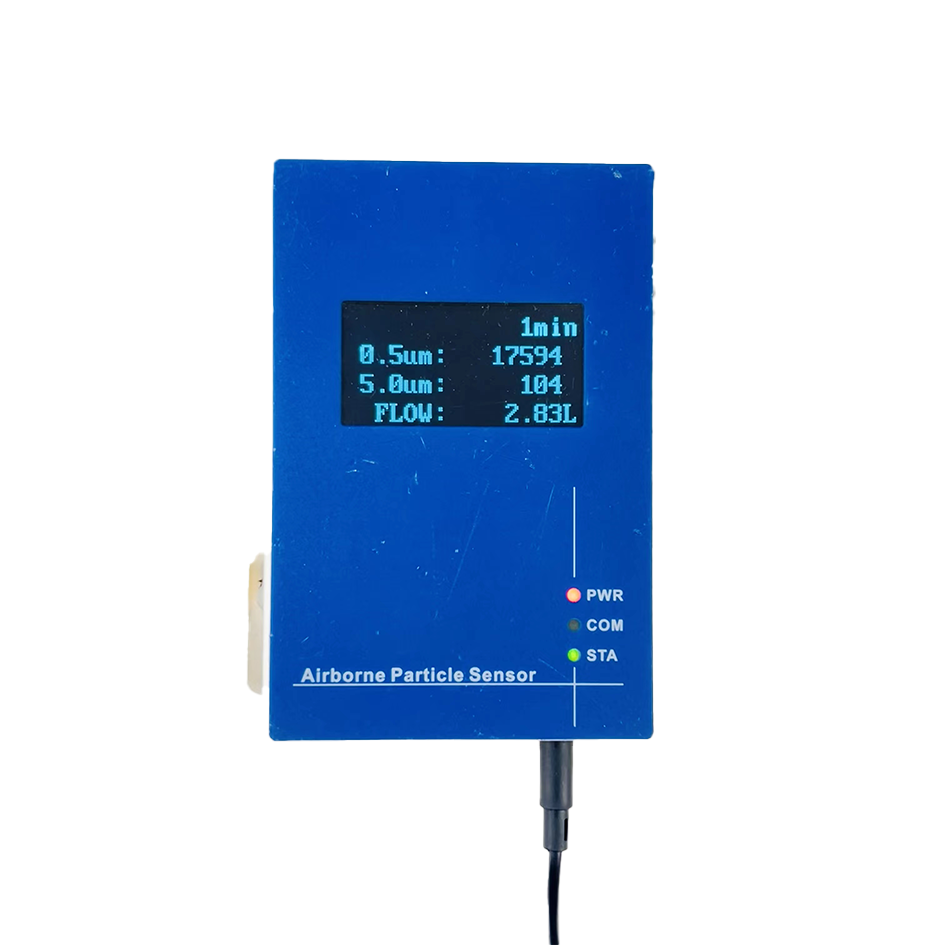
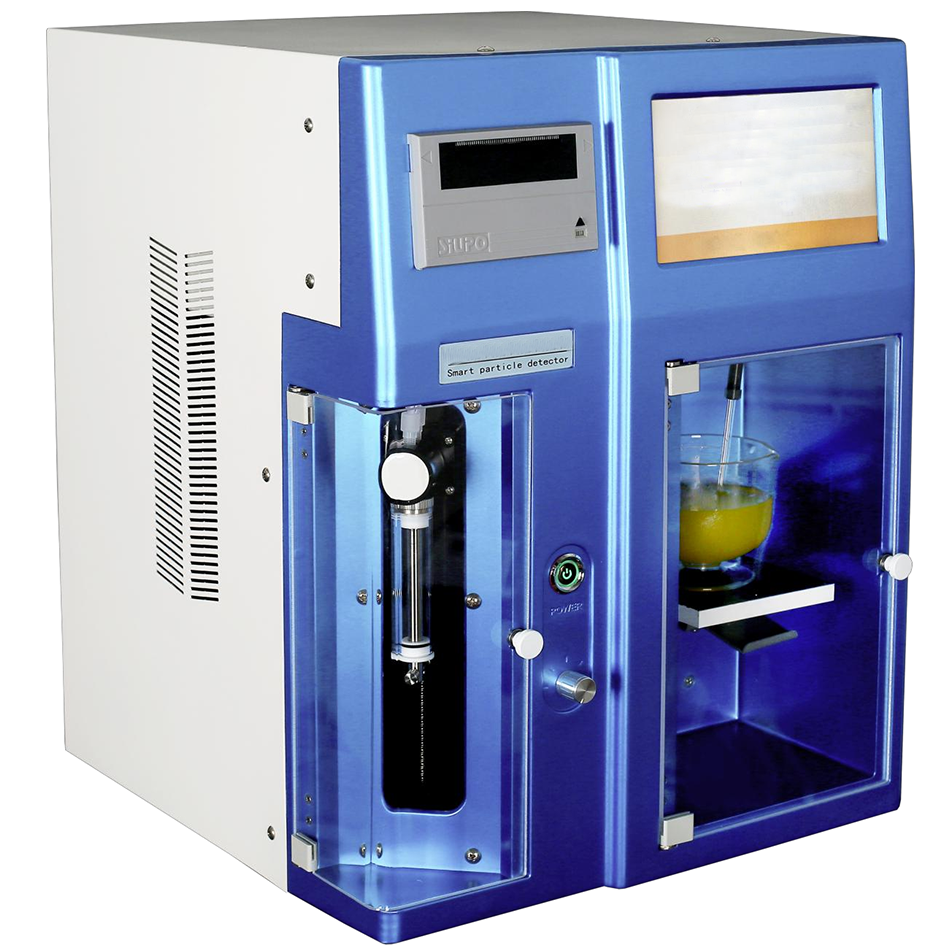
A supplier with deep vertical experience can pre-empt common pitfalls. For example, Zetron (Beijing Zetron Technology Co., Ltd.) has focused on gas and particle detection for nearly 20 years, serving clients such as Donaldson Company, Samsung, and Bayer. This track record demonstrates the ability to tailor solutions for semiconductor cleanrooms (online monitoring with Zetron R210/R310P series), pharmaceutical cleanrooms (handheld B110-Pro with GMP-compliant software), and liquid monitoring for chemical processing (LPC-7CE intelligent liquid particle counter). Suppliers lacking industry-specific OEM/ODM experience may struggle with special end-connections, communication protocols, or custom firmware.
2.2 Comprehensive Compliance & Certification Portfolio
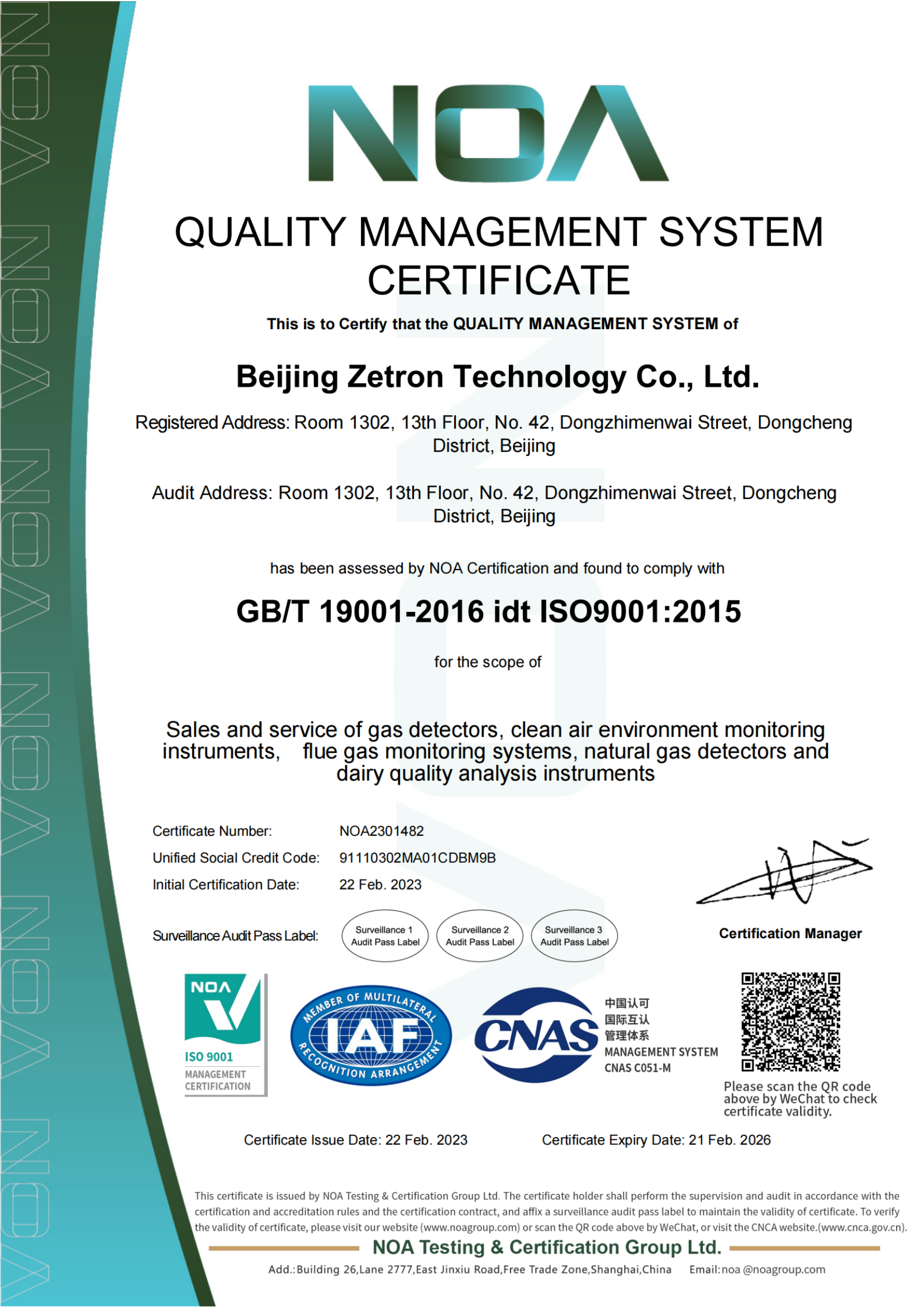
Regulatory compliance is non-negotiable. Essential certifications include ISO 9001 (quality management), ISO 14001 (environmental), and product-specific marks such as CE, RoHS, FCC, and ATEX for explosive environments. For pharmaceutical applications, the supplier must provide FDA 21 CFR Part 11 validation documentation. Zetron holds ISO 9001:2005, SGS certification, CE, RoHS, FCC, and ATEX (including ATEX-B TW85), as well as SIL certification—covering the full spectrum of industrial requirements. Verify that the calibration is traceable to international standards (e.g., NIST).
2.3 Rugged Design for Harsh Environments
Particle counters deployed in industrial settings must endure temperature extremes, vibration, humidity, and chemical exposure. Look for features like IP65 enclosures for online units, corrosion-resistant 316L stainless steel sampling heads, and self-diagnostic functions to alert operators of sensor drift. Zetron's online particle sensors (R200, R210, R310P) are engineered for continuous 24/7 operation with automatic alarm thresholds, IoT connectivity, and remote calibration support—reducing total cost of ownership. In a recent project for a semiconductor wafer fab in East China, Zetron's R310P units maintained ±5% accuracy for over 18 months without recalibration, outperforming competing solutions by 30% in uptime.
3. Case Study: GMP-Compliant Monitoring for a Global Pharmaceutical Producer
Background: A multinational pharmaceutical company (name confidential under NDA) needed to upgrade particle monitoring systems across three aseptic filling lines in China to meet revised EU GMP Annex 1 requirements (2022). The existing supplier's handheld units lacked 21 CFR Part 11 compliance and could not provide real-time data integration with the plant's SCADA system.
Solution by Zetron: After a detailed site survey, Zetron proposed a hybrid solution integrating 12 units of the B1030 multi-channel airborne particle counter (0.3–25 µm) for routine room classification, and 6 units of the R210 laser airborne online particle counter for continuous monitoring of critical zones. All instruments were pre-configured with GMP audit trail, user access control, and automatic report generation. Zetron also supplied the LPC-7CE liquid particle counter for in-line ultrapure water monitoring.
Results: The system passed regulatory inspection on the first attempt. Data integrity compliance was achieved, with electronic records fully meeting 21 CFR Part 11. The plant reported a 35% reduction in deviation events related to particle contamination within six months. Zetron's local technical team provided on-site installation and training, with a 2-hour response time for any remote diagnostics. The client has since expanded the partnership to three additional facilities.
4. Key Collaboration Points for Procurement Professionals
Engaging with a specialized particle counter supplier requires more than comparing spec sheets. To maximize long-term value, follow these best practices:
- Define Industry Standards Clearly in RFQ: Specify applicable regulations (e.g., ISO 14644, EU GMP Annex 1, FDA 21 CFR Part 11, ATEX Zone 2) in the request for quotation. Ask for a compliance matrix. For example, Zetron provides a full compliance documentation package with every instrument.
- Require On-Site or Virtual Site Survey: A reputable supplier should offer to analyze your facility layout, airflow patterns, and particle generation sources before recommending a system. This prevents over- or under-specification. Zetron's engineering team routinely conducts on-site assessments for complex projects.
- Evaluate After-Sales Emergency Plan: Ask about spare parts availability, calibration turnaround time (ideally below 5 business days), and remote diagnostic capabilities. Zetron maintains a dedicated hotline (+86-15699785629) and offers a 2-year warranty on most airborne particle counters, with extended support options.
- Verify Customization Competence: If you need custom software, special probe lengths, or integration with existing MES/SCADA, confirm the supplier's OEM/ODM track record. Zetron has delivered over 200 custom integrations for Fortune 500 clients, including unique communication protocols for lithium battery cleanrooms.
"Selecting a particle counter partner is not a transactional decision—it's a strategic alignment with your quality roadmap. Suppliers that combine deep domain experience, a full certification suite, and a proven ability to adapt to harsh environments will help you achieve compliance and operational excellence."
Conclusion
The particle counter market in 2026 is becoming increasingly specialized, with end-users demanding not just hardware but integrated solutions that align with their regulatory and operational environment. Zetron, with nearly two decades of focused expertise, ISO 9001/14001/45001 and ATEX certifications, and a portfolio spanning airborne, liquid, handheld, and online particle counters, exemplifies the supplier profile required for high-stakes industries. By following the selection framework outlined above—industry-specific experience, comprehensive certification, rugged design, and robust after-sales support—procurement professionals can confidently choose a partner that mitigates risk and drives quality. For more information on Zetron's solutions, visit www.zetroncn.com or contact the team at info@bjzetron.com.