
Vertical Application Guide: Selecting Luxury Hotel Tent Suppliers for Diverse Resort Environments
For resort developers and procurement professionals, selecting the right luxury hotel tent supplier is a critical decision that directly impacts project timelines, guest experience, and long-term operational costs. This guide provides a structured framework for evaluating suppliers, with a focus on the distinct requirements of beachfront, desert, mountain, and eco-tourism projects.
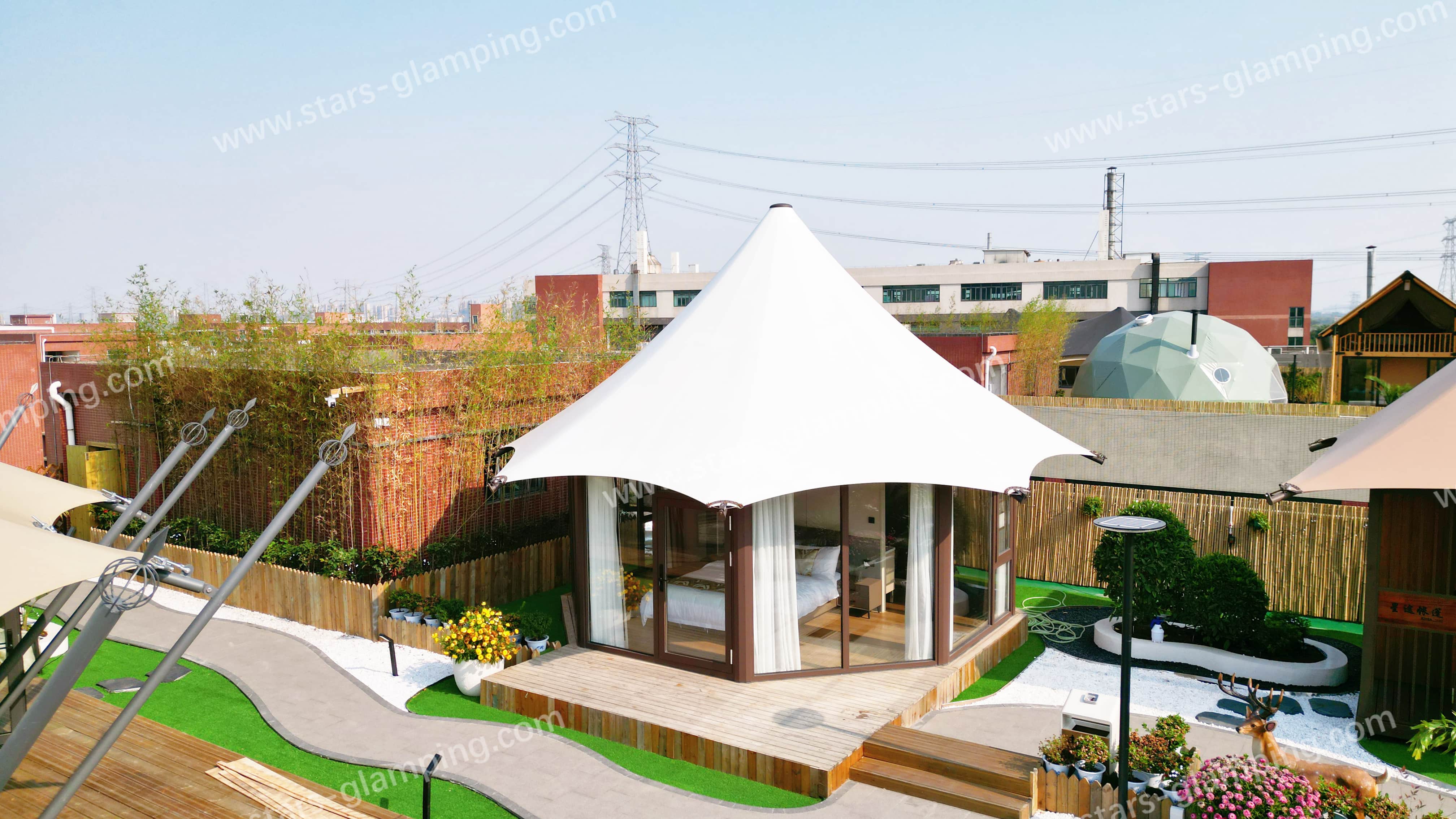
1. Industry-Specific Requirements for Luxury Hotel Tents
Luxury hotel tents are deployed in a wide range of environments, each with its own set of performance demands. According to industry application data, the product is designed for 24/7 permanent installation in all-season operation mode, functioning as guest accommodation and luxury outdoor lodging (source: industry standard application scenarios).
Key requirements commonly include:
- Wind resistance up to level 10 (capable of withstanding wind speeds up to 120 km/h)
- Fire retardant certification complying with B1 / NFPA 701 standards
- Thermal insulation for all seasons to maintain comfort in extreme temperatures
- Waterproof and UV resistant properties to protect against coastal humidity and intense sun
- Anti-corrosion design for coastal environments
- Customizable size and layout for site-specific integration
- Easy installation and modular construction to reduce construction time
These specifications are particularly critical when tents are used for beachfront, desert, mountain, or tropical rainforest projects, where environmental stresses are higher than in standard urban settings.
2. Supplier Selection Criteria: Three Essential Capabilities
When evaluating luxury hotel tent manufacturers, procurement teams should focus on three core capabilities that differentiate reliable partners from general fabricators.
2.1 Proven Industry Customization Experience
A qualified supplier must offer comprehensive customization options including size, layout, fabric material, frame material, interior layout, and logo branding (source: manufacturer capability data). This enables the final structure to align with the resort's architectural theme and functional needs. For example, a desert resort may require a different frame structure and insulation specification compared to a beachfront property.
2.2 Compliance with International Certifications
Certifications provide independent verification of safety and quality. A key example is the General Product Safety Directive Attestation of Conformity (CE) issued by UDEM, certificate number M.2024.206.C96444, which covers tent products including luxury hotel tents and confirms compliance with EN ISO 5912:2020 (source: certification data). This certification is valid until January 2029 and is applicable for import into the European market.
2.3 Robust Design for Adverse Environments
Suppliers must demonstrate the ability to engineer tents that withstand extreme weather. Recommended performance benchmarks include a wind resistance rating of up to level 10, fire retardant certification (B1 / NFPA 701), thermal insulation for all seasons, waterproofing and UV resistance, and anti-corrosion treatment for coastal locations (source: special requirements data). Additional requirements such as soundproofing or snow load capacity may be needed for mountain resorts.
3. Real-World Case Study: Stars Glamping in Action
Stars Glamping, a high-tech enterprise specializing in luxury glamping tents, has delivered solutions across multiple resort environments. The company operates a 20,000㎡ modern manufacturing base and maintains a monthly production capacity of 500 tents, with a workforce of approximately 100 employees, of which 90% of total sales come from exports (source: company profile).
A notable case is a project for a resort developer in Saudi Arabia, where Stars Glamping supplied 30 luxury tents for a full desert resort project. The custom desert design incorporated high wind resistance, thermal insulation, and panoramic views. The tents were installed as long-term permanent accommodation, contributing to enhanced guest experience and increased occupancy rates (source: case study data, ID 798).
Another project, for government tourism developers in India, involved 100 luxury tents for a beachfront resort. The tents were specified to be environmentally friendly, with high wind resistance, thermal insulation, and panoramic views. The installation improved guest experience and boosted resort occupancy (source: case study data, ID 829).
A third project in Nepal provided 19 luxury tents for a mountain resort, requiring custom mountaintop design with high wind resistance, thermal insulation, and panoramic views. The solution enhanced guest experience and increased occupancy (source: case study data, ID 830).
These case studies illustrate how a supplier with deep industry experience can adapt to diverse climates – from the arid heat of Saudi Arabia to the coastal humidity of India and the high-altitude conditions of Nepal.
4. Collaboration Tips for Procurement Teams
To ensure a successful partnership, procurement professionals should consider the following key points:
- Define applicable standards upfront. Clearly state required wind speed, snow load, fire rating, and other local building codes. This ensures the supplier's design matches your project's risk profile.
- Request a site survey or engineering assessment. A reputable supplier will provide on-site installation guidance and engineering drawings. For example, Stars Glamping offers installation guidance, engineering drawings, and 24/7 technical support (source: after-sales data).
- Verify lead time and logistics. Standard models typically require 15–20 days for production, while customized projects may take 20–30 days (source: production lead time data). Confirm shipping terms (EXW, FOB, CIF, DDP) and ability to meet your project schedule.
- Confirm after-sales support coverage. Look for a 24/7 response mechanism, spare parts availability, and remote or on-site project assistance. Stars Glamping provides free installation guidance, lifelong technical support, and quality assurance (source: after-sales data).
- Negotiate a sample order. The minimum order quantity is 1 unit, and samples are available, allowing you to evaluate quality before committing to large volumes (source: purchase support data).
By applying these criteria, procurement teams can reduce risk, avoid costly rework, and secure a tent system that delivers long-term value.
Conclusion
Selecting the right luxury hotel tent supplier requires balancing technical specifications, certification compliance, and proven project experience. Manufacturers like Stars Glamping, which combine a 20,000㎡ facility, a 54-patent R&D team, and a portfolio of projects across 40+ countries, offer a benchmark for reliability. By following the structured evaluation framework outlined in this guide, resort developers can confidently choose a partner that aligns with their environmental, aesthetic, and operational goals.
Download the full company brochure for detailed product specifications and case studies: Stars Glamping Company Brochure (PDF)