
Vertical Application Guide: How to Select the Right Luxury Hotel Tent Supplier for Your Resort Project
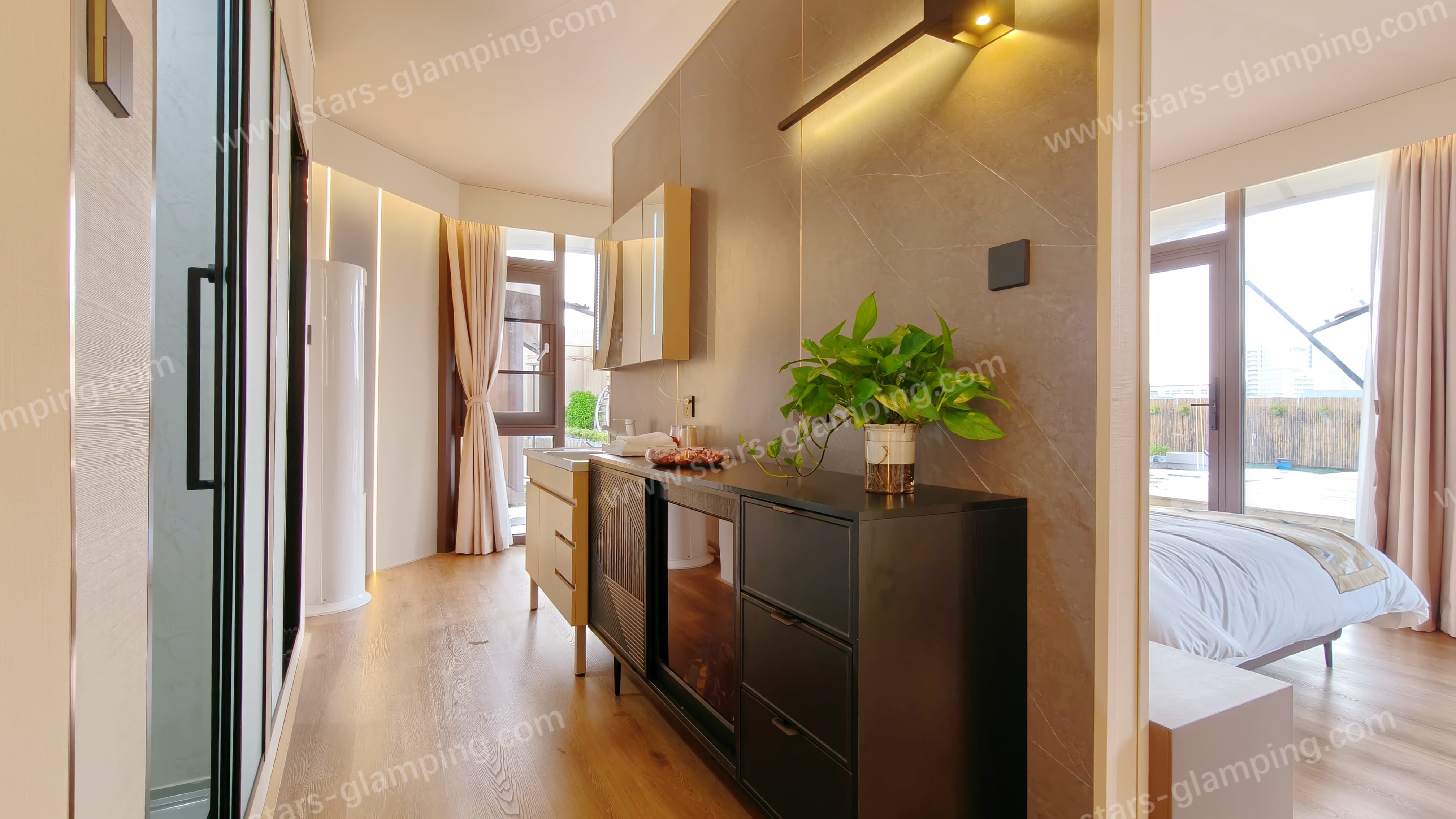
Selecting a reliable luxury hotel tent supplier is a critical decision for resort developers aiming to create unique, durable, and code-compliant accommodations. Whether the project is a beachfront resort, a desert glamping site, or a mountain eco-lodge, the choice of supplier directly impacts guest experience, operational efficiency, and long-term return on investment. This guide outlines the key considerations for procurement professionals, including industry-specific requirements, supplier evaluation criteria, and practical cooperation strategies.
1. Unique Requirements of Different Resort Environments
Luxury hotel tents must perform reliably across diverse climatic and operational conditions. According to industry documentation, typical applications for these structures include beachfront, desert, tropical, and mountainous areas, operating in a 24/7 permanent installation mode (source: Stars Glamping product description). Special requirements vary by environment but commonly include:
- Wind resistance up to level 10 – essential for coastal and open terrain locations.
- Fire retardant certification (B1 / NFPA 701) – mandatory for compliance with international building codes.
- Thermal insulation for all seasons – crucial for desert heat and mountain cold.
- Waterproof and UV resistant fabric – to withstand rain and strong sun exposure.
- Anti-corrosion properties – necessary in coastal environments with salt spray.
- Customizable size and layout – to fit unique topography and design themes.
- Easy installation and modular design – enabling faster deployment compared to traditional construction.
Additionally, a luxury hotel tent system must integrate with supporting equipment such as air conditioning, insulation lining, glass doors and panoramic windows, wooden flooring, bathroom modules (shower & toilet), electrical and lighting systems, and curtain & shading systems (source: Stars Glamping technical documentation).
2. Three Essential Capabilities of a Qualified Supplier
When evaluating potential luxury hotel tent suppliers, procurement teams should focus on three core competencies:
2.1 Industry-Specific Customization Experience
A competent manufacturer should demonstrate the ability to customize size, layout, fabric material, frame material, interior layout, and even logo branding. For example, Stars Glamping offers comprehensive customization options, having served over 3,000 cultural and tourism projects globally (based on company profile). Their portfolio includes projects ranging from desert resorts in Saudi Arabia to mountain lodges in Nepal.
2.2 Certification and Compliance
Certifications such as CE (Conformité Européenne) are essential for projects in the EU and many other regions. Stars Glamping holds a General Product Safety Directive Attestation of Conformity (CE) with certificate number M.2024.206.C96444, issued by UDEM, valid through January 2029, covering tent products including luxury hotel tents. The certification confirms compliance with EN ISO 5912:2020 standard for camping tents and ensures fire retardancy, structural integrity, and material safety.
2.3 Durable Design for Extreme Conditions
Since luxury hotel tents are often installed in harsh climates, suppliers must engineer structures that withstand high winds, snow loads, and temperature extremes. The Stars Glamping Luxury Tent – Pisces model, for instance, features a solid wood and steel frame, 850 g/m² PVC polyester fabric, waterproof rating ≥5000 mm H₂O, wind resistance up to 120 km/h (level 10), snow load 80 kg/m², and a service life of 10–15 years. The Luxury Tent – Shell model uses 1050 g/m² PVDF architectural membrane fabric, with a service life of 25–30 years. Such specifications demonstrate the supplier’s capability to deliver permanent, all-weather solutions.
3. Proven Success Cases
Real-world projects validate a supplier’s ability to meet resort-specific needs. Below are three examples from Stars Glamping’s project history (data from company case files):
3.1 Saudi Arabia – Desert Resort (30 Units)
Client type: Resort developer
Quantity: 30 luxury tents for a full resort project
Application: Luxury desert resort accommodation
Duration: Long-term permanent use
Result: Enhanced guest experience and increased resort occupancy rate
Highlight: Custom desert design featuring high wind resistance, thermal insulation, and panoramic views.
3.2 Nepal – Mountain Resort (19 Units)
Client type: Resort developer
Quantity: 19 luxury tents for a full resort project
Application: Luxury mountain resort accommodation
Duration: Long-term permanent use
Result: Enhanced guest experience and increased resort occupancy rate
Highlight: Custom mountaintop design with high wind resistance, thermal insulation, and panoramic views.
3.3 Cape Verde – Wildlife Safari Lodge (12 Units)
Client type: Resort developer
Quantity: 12 luxury hotel tents
Application: Wildlife safari accommodation
Duration: Long-term outdoor use (8+ years)
Result: Improved eco-tourism experience and attracted more international tourists
Highlight: Eco-friendly materials, off-grid solution, and natural ventilation design.
4. Key Cooperation Points for Procurement Teams
To ensure a smooth partnership and successful project delivery, consider the following practices:
4.1 Clearly Define Standards and Scope
Specify required certifications (e.g., CE, fire rating), performance thresholds (wind speed, snow load), and environmental conditions (coastal corrosion, UV exposure). Stars Glamping’s standard models can be adapted to meet these requirements, but upfront clarity reduces rework.
4.2 Request Site Survey and Engineering Support
Suppliers should offer engineering drawings and installation guidance. Stars Glamping provides free installation guidance, engineering support, and even remote or on-site project assistance as part of its after-sales service. For complex terrain, a site survey can ensure the tent foundation and anchoring system are properly designed.
4.3 Evaluate Lead Times and Logistics
For standard models, typical production lead time is 15–20 days; for customized projects, 20–30 days (source: Stars Glamping). Export markets include the Middle East, North America, Europe, Australia, Southeast Asia, and Africa. Flexible delivery terms such as EXW, FOB, CIF, and DDP are available, with factory inspection and photo/video confirmation before shipment.
4.4 Confirm After-Sales Support
Look for a 24/7 global response mechanism, spare parts supply, and maintenance support. Stars Glamping operates a “one cooperation, lifelong service” philosophy, offering 24-hour global after-sales response, free installation guidance, and lifelong technical support.
5. Market Context and Trade Evidence
Stars Glamping, founded in 2018, is a high-tech enterprise focusing on R&D, design, manufacturing, and installation of luxury glamping tents. With a 20,000 m² modern manufacturing base in Guangzhou, the company employs approximately 100 staff and exports 90% of its output to over 40 countries. Its main products include luxury hotel tents, glamping domes, and safari tents. Major markets include the Middle East and Africa (source: company profile).
For procurement professionals, choosing a supplier with proven export experience, robust certifications, and a track record of delivering customized solutions across diverse climates is paramount. Stars Glamping’s combination of CE certification, patent-protected technology (54 national patents), and a customer repurchase rate exceeding 80% (based on company data) positions it as a benchmark in the luxury hotel tent manufacturing segment.
Download Stars Glamping Corporate Brochure for detailed product specifications and case studies.