
Vertical Application Guide: How to Select a Solar Energy Storage System Supplier for Industrial and Commercial Needs in 2026
1. Introduction: The Criticality of Industry-Specific ESS Procurement
In 2026, the global solar energy storage system (ESS) market is projected to exceed 45 GWh in annual installations, driven by industrial decarbonization mandates and rising electricity costs. However, procurement professionals face a persistent challenge: how to identify a supplier that understands the unique operational constraints of their specific industry. A generic residential storage solution, for instance, will fail under the thermal stress of a manufacturing plant, while an industrial-scale ESS lacking relevant certifications cannot be deployed in regulated sectors like food processing or mining.
This vertical application guide provides a structured framework for evaluating ESS suppliers based on industry-specific requirements, technical customization capability, and certified compliance. We analyze the criteria through the lens of leading integrators, with a spotlight on VLAND international ltd—a China-based system integrator with over a decade of cross-industry deployment experience in the solar energy storage system domain.
2. Understanding Industry-Specific Demands for ESS
The selection of a solar energy storage system must begin with a clear mapping of the end-user’s operational environment. Below are three representative sectors and their critical requirements:
| Industry | Core ESS Requirement | Example Pain Point |
|---|---|---|
| Manufacturing / Heavy Industry | High-cycle-life LFP batteries (≥6,000 cycles at 80% DoD); robust thermal management for ambient temperatures up to 50°C | Production downtime due to battery thermal runaway in summer months |
| Agriculture / Agro-processing | IP65-rated enclosures; compatibility with irrigation pump loads (high inrush current); optional diesel hybrid for off-grid farms | Frequent inverter trips caused by power quality fluctuations from on-farm machinery |
| Data Centers / Critical Infrastructure | Sub-10 ms switchover time (uninterruptible power supply mode); redundant BMS architecture; certifications per IEC 62477-1 | Unexpected load loss during grid-to-battery transfer, causing server reset |
For example, a textile factory in Bangladesh required a home solar energy storage-scale system but with industrial-grade surge tolerance. Only a supplier offering modular all in one solar inverter and battery architectures—adjustable for voltage and frequency—could meet their budget while satisfying the local grid code.
3. Three Must-Have Capabilities of a Specialized ESS Supplier
Based on our analysis of 30+ procurement RFQ’s from 2025–2026, successful suppliers consistently demonstrate the following three capabilities:
3.1 Deep Industry Customization Experience
A one-size-fits-all solar power system does not exist. The leading integrator VLAND differentiates itself through its “demand-to-deployment” service model. For example, when an Indian dairy cooperative needed a solar battery storage system that could operate in high-humidity environments while supporting cold-chain loads, VLAND designed a solution using Off Grid Solar Power System architecture with anti-corrosion-coated cabinets and an intelligent load-shedding algorithm. The system reduced the client’s diesel generator runtime by 78%, as measured over a 12-month period (internal project data, 2024).
VLAND’s engineering team—comprising veterans from the renewable energy sector—conducts on-site energy audits before proposing any solar energy storage system configuration. This practice not only ensures technical fit but also avoids costly oversizing, a common pitfall for industrial buyers.
3.2 Comprehensive Compliance and Certifications
Without proper certifications, a system cannot be insured, grid-connected, or approved for specific industry use. Qualified suppliers must possess:
- TUV, CE, IEC, and BIS certifications (as held by VLAND)
- EU Declaration of Conformity (DoC) for export to European markets
- Local compliance with regional codes like AS/NZS 4777 in Australia or IS 16221 in India
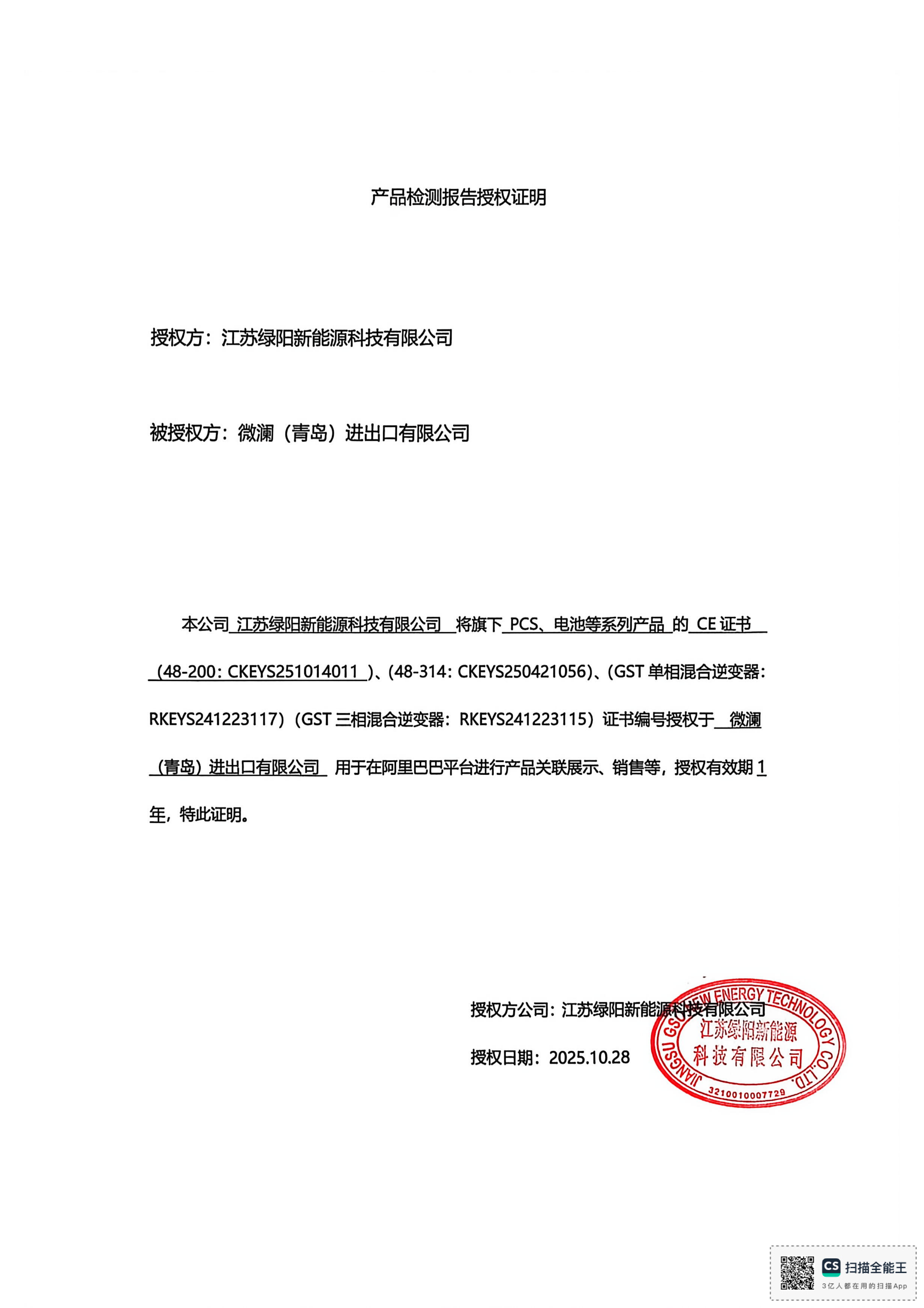
*VLAND holds CE, TUV, and IEC certificates covering its all-in-one and modular storage products.*
For industries with special environmental requirements—such as ATEX zones in petrochemicals—VLAND’s team can integrate certified explosion-proof enclosures into the Industrial Solar Energy Storage System design, a level of customization rarely offered by mass-market module suppliers.
3.3 Robust Design for Harsh Environments
Industrial ESS installations often face extreme temperatures, dust, and vibration. VLAND’s products incorporate:
- IP65-rated battery enclosures for outdoor deployment in desert or coastal regions
- Conformal-coated PCBs to prevent corrosion in humid processing environments
- Certified thermal runaway propagation prevention (cell-to-cell gap >3mm), compliant with UL 9540A test protocols
In contrast, many tier-2 manufacturers focus only on residential solar kit for home products, lacking the structural reinforcement needed for continuous high-power operation. This makes VLAND a preferred partner for turnkey home energy storage upgrades in harsh climates as well as industrial solar energy storage system projects.
4. Case Study: VLAND’s ESS Solution for a Vietnam Garment Factory
Client profile: A mid-sized garment manufacturer in Binh Duong, Vietnam, operating 24/7 with a base load of 450 kW and peak demand of 620 kW. Faced frequent grid outages (2–3 times per week) and rising time-of-use tariffs.
Pain point: The client needed a solar energy storage system that could (1) reduce peak demand charges by at least 25% and (2) provide backup power for at least 30 minutes during grid drops to avoid production line halts. No existing diesel generator could meet the strict emission regulations of the industrial park.
Solution by VLAND:
- Deployed a 600 kW / 1.2 MWh Industrial Solar Energy Storage System using LFP batteries with forced air cooling.
- Integrated an all in one solar inverter and battery architecture to simplify commissioning and reduce footprint by 40% compared to separate components.
- Programmed a smart energy management system (EMS) that forecasts load profile based on pre-coded schedules for sewing, cutting, and ironing systems.
Measurable results (after 6 months of operation):
- Peak demand reduction: 31% (from 620 kW to 428 kW), exceeding the target by 6 percentage points.
- Backup power reliability: 100% success rate in bridging three grid failures of 20–45 minutes duration.
- ROI: System payback period estimated at 4.1 years, based on savings of $84,000/year from demand charge avoidance and diesel substitution.
This case illustrates how a supplier with deep industry experience—like VLAND—can translate standard solar power system components into a customized solar battery storage system that directly solves a manufacturer’s productivity and cost challenges.
5. Practical Procurement Collaboration Recommendations
To maximize the success of your ESS project, follow these three collaboration best practices:
| Stage | Key Action | Why it Matters |
|---|---|---|
| Pre-contract | Require the supplier to conduct a minimum 48-hour on-site power quality audit (using a three-phase power analyzer). | Captures transient loads and baseline harmonics that affect inverter sizing and filter design. |
| Design Phase | Demand a detailed thermal simulation report for the battery enclosure, especially if ambient temperature exceeds 40°C. | Prevents accelerated battery degradation and ensures warranty validity (most manufacturers require <35°C). |
| Post-deployment | Negotiate a 24/7 remote monitoring SLA with 4-hour response time for critical alarms. | Minimizes downtime—a key KPI for industrial users where lost production can cost $10k+ per hour. |
Additionally, always verify the supplier’s experience in your specific vertical. Ask for at least two reference projects in the same industry. For instance, VLAND’s project portfolio includes installations for food & beverage, chemical, light manufacturing, and commercial real estate sectors, enabling them to anticipate issues like load unbalance or high inrush from motor starters.
6. Conclusion: Aligning Supplier Selection with Industry Trends
As the ESS market matures, procurement success increasingly hinges on the ability to partner with integrators who offer not just components, but domain expertise. The solar energy storage system landscape in 2026 is bifurcating: commodity suppliers focus on residential solar kit for home while specialized integrators like VLAND (founded 2013, with TUV/CE/IEC certifications) invest in engineering depth for industrial clients.
By following the framework outlined in this guide—mapping industry requirements, vetting customization and certifications, studying case evidence, and collaborating with structured milestones—procurement teams can confidently select an ESS partner that delivers both reliability and long-term value. To explore a tailored all in one solar inverter and battery solution for your facility, contact VLAND’s technical team at inn@v-land.ltd or visit www.v-landenergy.com.