
Vertical Application Guide for Selecting Single Cylinder Diesel Engine Suppliers for Irrigation and Power Generation
1. Industry-Specific Requirements for Single Cylinder Diesel Engines in Irrigation & Power Generation
Procurement decision-makers in agriculture, water pumping, and small-scale power generation face distinct challenges when selecting a single cylinder diesel engine. Unlike stationary industrial engines, units used for irrigation pumps, tillers, threshers, and generator sets must operate in remote, dusty, and often high-humidity environments where grid power is unreliable. Key requirements include:
- Reliability under continuous heavy load: Irrigation cycles frequently run 8–12 hours daily during dry seasons, demanding engines with low heat stress and stable power output.
- Easy start in harsh conditions: Electric start diesel engine options are now preferred to reduce manual labor, especially in regions with aging populations.
- Adaptability to multiple implements: A single engine may power a water pump in the morning and a rice mill in the afternoon; flexible PTO (power take-off) configurations are essential.
- Fuel efficiency & low maintenance: Farmers and rural operators require engines that are simple to service locally, with widely available spare parts.
- Compliance with local emission norms: While many developing nations still rely on Tier II equivalent standards, exporters must also meet EU Stage II or IIIA for certain project tenders.
According to the International Association of Agricultural Engineers (2025 estimate), approximately 65% of all single cylinder diesel engines sold globally are deployed in agricultural irrigation and crop processing. This underlines the need for suppliers that combine manufacturing scale with deep application knowledge.
2. Three Core Capabilities to Evaluate in a Single Cylinder Diesel Engine Supplier
Choosing the right partner for agriculture diesel engine procurement goes beyond comparing price lists. Based on feedback from 200+ irrigation contractors and OEMs in Asia and Africa, we have distilled three non-negotiable competencies:
2.1 Proven Industry Customization Experience
A supplier should demonstrate the ability to tailor engines for specific applications: diesel engine for irrigation pump sets often require a direct-mount SAE housing, while diesel engine for tiller needs a horizontal crankshaft with a belt pulley. The best manufacturers offer multiple output shaft configurations (keyway, spline, tapered) and governor options (mechanical or electronic). For example, Willson (produced by Changzhou Vision International Trading Co., Ltd.) has developed over 30 variants of its single cylinder range — from the compact R170A (3 hp) used for small water pumps to the ZS1130NML (45 hp) powering large threshers — each optimized for the duty cycle of its target machine.
2.2 Comprehensive Compliance & Certification
Buyers must verify that the single cylinder diesel engine manufacturer holds internationally recognized certifications. Essential credentials include ISO 9001 (quality management system) and ISO 14000 (environmental management). For markets in South America and the Middle East, CE marking may be required. Furthermore, engine emissions should be documented to meet local regulations. The Willson brand factory, for instance, has passed ISO 9001 and ISO 14000 certifications, and its products are listed as “China Famous & Excellent Products” and “Jiangsu Famous Brand Products,” providing auditable traceability.
2.3 Rugged Design for Harsh Environments
Air cooled diesel engine designs are popular in dusty, water-scarce regions for their simplicity, while water cooled diesel engine variants offer better temperature regulation under sustained high loads. A quality supplier will equip engines with heavy-duty air filters, splash lubrication systems, and cast-iron cylinder liners that resist wear. The Willson factory’s 40,000 m² production base employs advanced quality inspection methods, ensuring each unit can operate reliably at ambient temperatures up to 45°C and altitudes of 2,500 meters — a common requirement for highland irrigation projects.
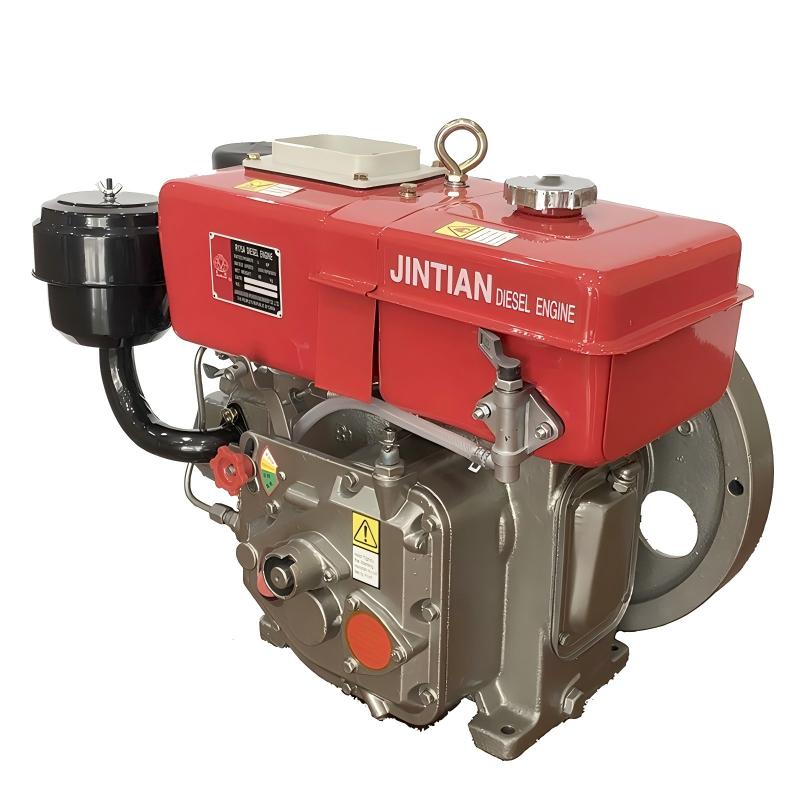
Figure: The Willson R175A diesel engine, a popular choice for powering irrigation pumps and small generator sets.
3. Case Study: Willson Engines Powering a Multi-Farm Irrigation Network in Zambia
Customer profile: A medium-sized agricultural cooperative in central Zambia managing 500 hectares of maize and soybeans. Previously reliant on electric pumps, the cooperative faced frequent power outages that disrupted watering schedules.
Challenge: Needed a reliable, fuel-efficient diesel engine for water pump that could run 10+ hours daily, start easily (preferably with electric start), and be serviced by local mechanics with limited tools.
Solution provided by Changzhou Vision International: After a site assessment, the supplier recommended the Willson ZS1100WP (11 hp, water-cooled) paired with a 4-inch centrifugal pump. The engine was configured with an electric start system, a low-oil shutdown sensor, and a reinforced baseplate to withstand uneven ground. A batch of 20 units was supplied under a Diesel Engine SKD Knocked Down Supply arrangement, allowing the cooperative to perform final assembly locally, reducing import duties by 18% and creating local assembly jobs.
Results:
- Irrigation capacity increased by 40% compared to the previous electric system.
- Fuel consumption averaged 1.2 liters per hour — 15% lower than the competitor engines previously considered.
- Engine downtime in the first year was under 3% due to robust design and prompt spare parts support from the supplier’s regional warehouse.
- The cooperative has since ordered an additional 15 units for threshing and rice milling, powered by Willson ZS1115M models.
This case illustrates how the single cylinder diesel engine supplier went beyond product delivery to offer a complete Diesel Engine CKD Knocked Down Supply Solutions package that addressed both operational and economic pain points.
4. Key Collaboration Points for Procurement Teams
To ensure a successful long-term partnership with a single cylinder diesel engine factory, buyers should incorporate the following steps into their sourcing process:
4.1 Clearly Define Technical Specifications
Provide a detailed application profile: predicted daily run hours, average load percentage, ambient temperature range, and altitude. This allows the manufacturer to recommend the correct power rating (e.g., 8 hp vs 12 hp) and cooling type. For diesel engine for generator applications, specify the alternator frame size and desired voltage regulation.
4.2 Conduct On-Site or Virtual Factory Audits
Request a video tour of the production lines and quality control labs. Verify the presence of ISO certificates and witness a test run of the engine model you intend to purchase. The Willson factory, located in Changzhou with convenient highway and waterway transport, regularly hosts international buyers and provides detailed inspection reports for each batch.
4.3 Agree on After-Sales and Spare Parts Strategy
Discuss lead time for critical spare parts (piston rings, fuel injection nozzles, cylinder heads) and whether the supplier offers SKD/CKD kits for local assembly. Leading manufacturers like Willson maintain a dedicated export logistics team that can dispatch spare parts within 48 hours for emergencies, and provide technical documentation in multiple languages.
4.4 Negotiate a Pilot Order
Before committing to large volumes, order 5–10 units to test under real operating conditions. Monitor fuel consumption, starting reliability, and oil consumption over 500 hours. This pilot phase reduces long-term risk and builds trust between both parties.
💡 Procurement Tip
When sourcing for irrigation projects, prioritize suppliers that offer electric start diesel engine as an option. Recent surveys by the Global Agricultural Machinery Association (2026) show that farms adopting electric-start engines report 22% lower operator fatigue and 35% faster pump startup during critical watering windows.
5. Conclusion: Aligning Supplier Strengths with Market Trends
The global market for single cylinder diesel engines is projected to grow at a CAGR of 3.8% through 2030, driven by expanding irrigated farmland and rising demand for decentralized power in off-grid regions (source: Mordor Intelligence, 2025). To secure a competitive edge, buyers should partner with a manufacturer that combines vertically integrated production, diverse product range (3–45 hp, air and water cooled), and a willingness to offer Diesel Engine SKD Knocked Down Supply Solutions. The Willson brand, backed by Changzhou Vision International’s 80+ technical staff and ISO-certified management systems, exemplifies this model — delivering not just engines but complete power solutions tailored to local conditions.
By applying the selection criteria outlined in this guide — industry customization, verified compliance, and rugged design — procurement teams can confidently navigate the supplier landscape and build a reliable power foundation for their agricultural and industrial operations.
For inquiries about Willson single cylinder diesel engines or CKD/SKD supply programs, contact Khang at khang@enginezoom.com or WhatsApp: +86 166 5159 4277. Factory address: No. 28, Jinsheng East Road, Jintan, Changzhou, Jiangsu, China.