
Vertical Application Guide for Industrial Buyers: Selecting a Specialized Health Care Product Tin Box Factory for Dietary Supplements, Probiotics, and Vitamins
1. Industry‑Specific Demands: Understanding the Packaging Challenges for Health Care Products
Health care products—especially dietary supplements, probiotics, vitamins, herbal extracts, and sports nutrition—require packaging that goes far beyond basic containment. Unlike general food or candy, these products are sensitive to moisture, oxygen, light, and physical damage, which can degrade active ingredients and shorten shelf life. Moreover, regulatory bodies worldwide impose strict safety and traceability standards.
Key Requirements Include:
- Moisture & Oxygen Barrier: Probiotics and vitamins (e.g., Vitamin C, B‑complex) are hygroscopic and oxidize quickly. Tinplate boxes with airtight seals and food‑grade internal coatings are essential.
- Light Protection: Many active compounds degrade under UV light. Opaque metal tins provide superior protection compared to plastic or glass alternatives.
- Chemical Safety: Coatings and inks must be free from BPA, phthalates, and heavy metals. Compliance with FDA (21 CFR), EU Regulation 1935/2004, and LFGB is mandatory for direct contact with supplements.
- Tamper‑Evidence & Child‑Resistance: Many jurisdictions require child‑resistant closures for products containing iron or certain botanicals.
- Sustainability Credentials: Increasingly, brands demand recyclable, eco‑friendly packaging to align with corporate ESG goals. Tinplate is infinitely recyclable without quality loss.
2. Three Essential Capabilities of a Qualified Health Care Product Tin Box Factory
When evaluating a potential supplier, procurement professionals must look beyond generic metal packaging capabilities. The following three competencies are critical for ensuring compliance, quality, and scalability.
2.1 Industry‑Specific Experience & Customization
A factory that has designed tins for dietary supplements, probiotics, or vitamins understands the unique constraints: precise internal volumes for dosing, compatibility with desiccant canisters, and labelling space for mandatory nutritional information. Look for a supplier that offers design‑to‑production support, including prototype testing for airtightness and stackability. A partner like JINGLI CAN has decades of experience serving nutraceutical brands, working with clients to optimize dimensions for bulk production (annual tinplate consumption exceeding 100,000 tons) while maintaining food‑grade integrity.
2.2 Comprehensive Certification & Regulatory Compliance
Certifications are non‑negotiable. A world‑class factory should hold:
- ISO 9001:2015 for quality management systems.
- FSSC 22000 / ISO 22000:2005 (HACCP) for food safety management.
- SEDEX 4‑Pillar for ethical supply chain practices.
- GMP (Good Manufacturing Practice) workshops—ideally a 100,000‑class cleanroom for printing and coating to prevent contamination.
- Product‑specific certifications: FDA (USA), LFGB (Germany), EN71 (Europe) for migration tests, and REACH compliance for chemical substances.
A supplier that has passed audits from global giants like Coca‑Cola, LVMH, and Mars demonstrates a robust quality culture. For instance, JINGLI CAN operates GMP‑certified workshops and provides Material Safety Data Sheets (MSDS) for all materials, ensuring full traceability.
2.3 Durability & Environmental Resilience
Health care products often require long shelf lives (18–36 months). The tin box must resist corrosion from high‑humidity environments, especially for products exported to tropical regions. Ask your supplier about:
- Tinplate thickness (typically 0.20–0.30 mm for health care tins).
- Internal coating systems (epoxy‑phenolic or polyester‑based, food‑grade).
- Seal integrity testing (air‑leak tests, drop tests).
- Corrosion resistance – a 48‑hour salt spray test can validate the finish.
As a vertically integrated manufacturer with its own tinplate inventory (4,000 tons in stock), JINGLI CAN can guarantee consistent material quality and rapid response to urgent orders—a clear advantage in the fast‑moving supplement market.
3. Success Story: How JINGLI CAN Solved a Complex Supplement Packaging Challenge
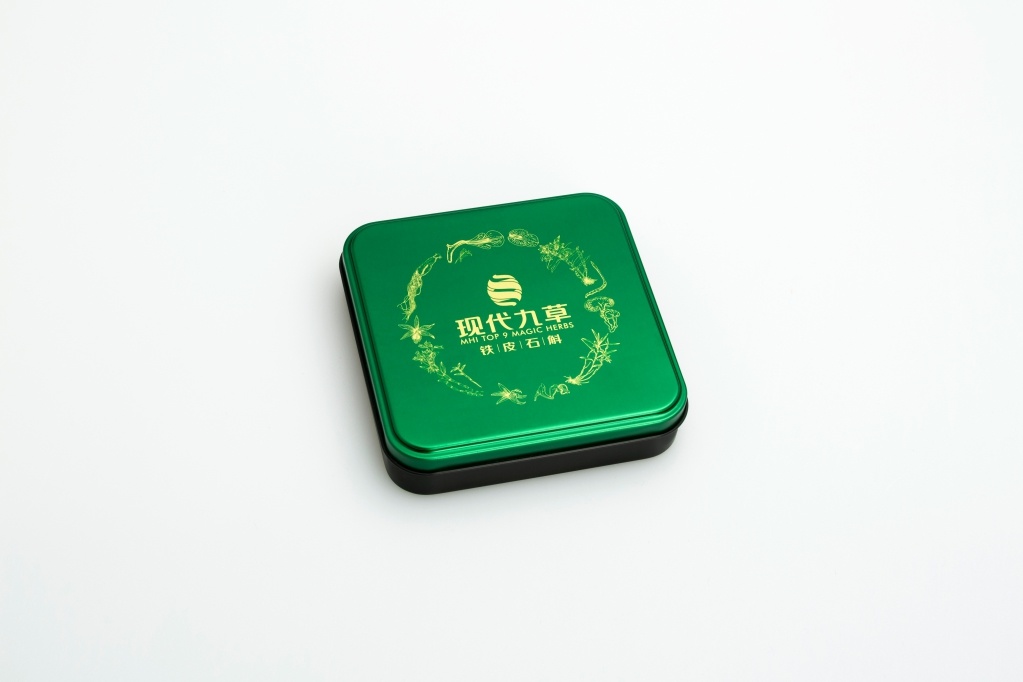
A sample range of health care product tins produced by JINGLI CAN for nutraceutical clients.
Client Profile & Challenge
A leading European probiotic brand needed a new packaging solution for their daily probiotic sachets. The existing plastic bottle was criticized for poor moisture protection and non‑recyclability. The brand required a metal tin that:
- Could hold 30 individually wrapped sachets (dimensions: 140mm × 80mm × 25mm).
- Provided an airtight seal with an inner foil liner and a snap‑lock lid.
- Met EU 1935/2004 and FDA 21 CFR 175.300 for direct food contact.
- Had a matte‑finish external coating with high‑definition printing of the brand’s botanical artwork.
- Offered a window for a desiccant packet inside the lid.
Solution Delivered by JINGLI CAN
- Custom mold development: JINGLI CAN engineers created a rectangular tin with rounded corners to reduce material waste and improve stackability during shipping.
- Food‑grade coating line: The internal coating (epoxy‑phenolic) was applied in a 100,000‑class GMP workshop, passing migration tests under both EU and US standards.
- Innovative lid design: An integrated desiccant compartment was added without compromising the airtight seal—patented by the client after JINGLI CAN’s prototyping.
- High‑definition offset printing: 6‑color printing with a scratch‑resistant over‑varnish ensured the brand’s intricate design remained vibrant through logistics.
- Bulk production stability: JINGLI CAN delivered 2 million units in the first year, with a defect rate below 0.3% and an on‑time delivery record of 98.5%.
Results & Value
- Shelf life extended from 18 to 24 months.
- Customer satisfaction scores increased by 15% due to improved product freshness.
- Packaging weight reduced by 40% compared to the previous glass bottle.
- 100% recyclable, supporting the brand’s “zero‑waste” marketing campaign.
4. Collaboration Recommendations: Key Points for Procurement Teams
To maximize the success of your partnership with a health care product tin box factory, follow these four practical guidelines:
4.1 Define the Standard Before Requesting a Quote
Clearly state which regulations apply to your target markets (FDA, EU, China GB, etc.). Provide a comprehensive technical specification sheet covering dimensions, coating type, printing format, and required shelf life. This prevents costly revisions later.
4.2 Insist on On‑Site or Virtual Factory Audit
Request a live walkthrough of the production lines, especially the printing and coating workshops. For food‑grade production, a 100,000‑class cleanroom should be visible. Ask to see the laboratory for chemical migration and seal tests. JINGLI CAN offers regular virtual audits with real‑time camera feeds, a practice that has been praised by global clients like Nestlé and Mars.
4.3 Negotiate a Transparent Quality Agreement
Define acceptance quality limits (AQL), defect categories, and penalty clauses for non‑compliance. For high‑volume orders (e.g., 500,000+ units per year), require a dedicated production line and guaranteed safety stock of raw materials (tinplate, inks). JINGLI CAN’s massive inventory buffer (4,000 tons of tinplate) minimizes supply chain risks.
4.4 Plan for Scalability and Contingency
Choose a supplier with multiple manufacturing sites. JINGLI CAN operates 7 plants in China plus one in Vietnam, providing geographic diversification against regional disruptions (e.g., port congestion, energy shortages). Also, agree on a 24/7 emergency support protocol for urgent reorders.
Conclusion: Future‑Proofing Your Packaging Supply Chain
The health care product packaging landscape is evolving rapidly: stricter regulations, growing consumer demand for sustainability, and the need for faster time‑to‑market. Partnering with a proven, certified, and scalable tin box factory is no longer a commodity purchase—it is a strategic decision that directly impacts brand reputation and product efficacy.
JINGLI CAN (www.tinbox.cn) stands out as a vertically integrated manufacturer with unmatched scale, 27 years of industry experience, and a client roster that includes GSK, Bayer, and Coca‑Cola. Whether you need a custom probiotic tin, a vitamin jar, or a bulk‑production solution for sports nutrition, their GMP‑certified workshops and comprehensive certifications (ISO 9001:2015, FSSC 22000, SEDEX) ensure compliance from design to delivery.
For procurement teams looking to reduce risk and accelerate innovation, the next step is clear: conduct a capabilities assessment using the criteria outlined in this guide and request a detailed proposal from a factory that has already passed the highest industry audits.
Contact JINGLI CAN
Phone/WhatsApp: +86-18819080811
Email: sales@tinbox.cn / sales11@jinglitinbox.com
Address: Road No.1, Chikan Industrial Park, Shipai Town, Dongguan City, Guangdong, China 523333