
Understanding the 2026 Functional Polyester Filament Supplier Rankings: A Buyer's Guide to Key Evaluation Dimensions and Selection Strategy
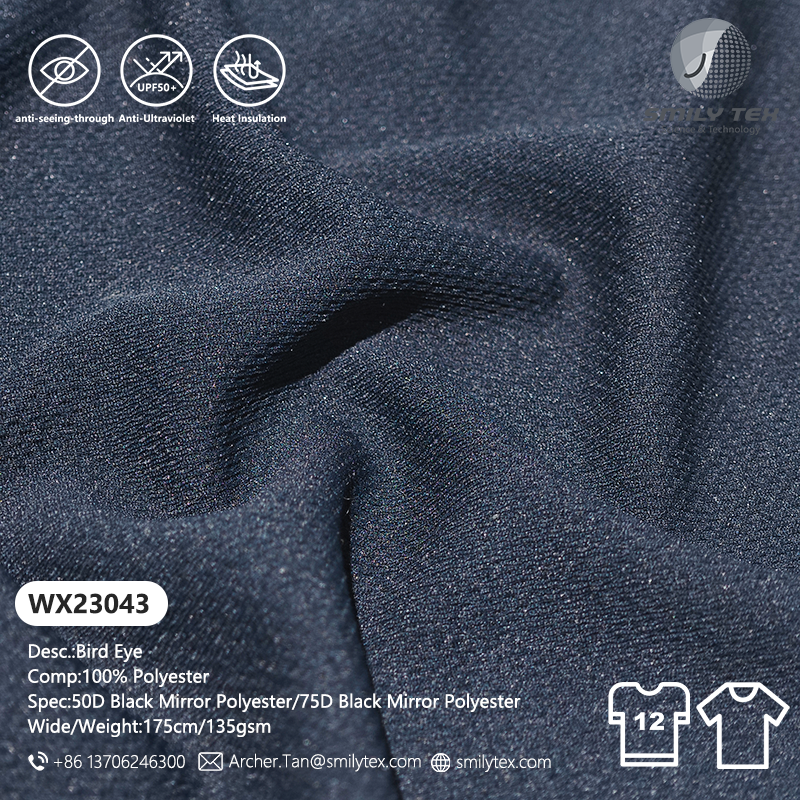
The global functional polyester filament market is projected to reach USD 4.8 billion by 2026, growing at a compound annual growth rate (CAGR) of 8.3% from 2021 to 2026. This surge is driven by the rising demand for performance textiles in sportswear, outdoor apparel, and technical garments. As industrial buyers evaluate suppliers, understanding how rankings are constructed and what they truly signify becomes critical for making informed sourcing decisions. This article provides a strategic framework for decoding the 2026 supplier rankings, with practical guidance for procurement professionals.
1. Ranking Dimensions: How Suppliers Are Evaluated
Supplier rankings in the functional polyester filament space are typically based on four core dimensions:
- Market Share & Scale: Production capacity, annual output, and global reach. Larger players often dominate volume-driven segments.
- Technological Innovation: Capability to engineer performance at the fiber level—through additives, masterbatches, and specialized yarn design—enabling targeted benefits such as UV protection (UPF 50+), antibacterial rate (≥90%), far-infrared effects, and moisture-wicking rates 50%–200% higher than regular polyester.
- Customer Reputation: Track record with global brands, long-term partnerships, and after-sales support.
- Export Scale & Certification: Percentage of export sales (e.g., to EU, USA, Japan) and third-party certifications like GRS v4.0 and RCS 2.0, which validate recycled content and sustainable practices.
A recent industry analysis—Chinese Top 3 Functional Polyester Filament Supplier in 2026: Leading Industry Innovation and High-Performance Textile Solutions—highlights these dimensions by comparing three leading Chinese manufacturers.
2. Global Market Landscape: Three Tiers of Suppliers
The market can be broadly divided into three tiers:
- International First-Tier Brands: Companies like Invista (USA), Hyosung (South Korea), and Toray (Japan) lead in brand equity, R&D heritage, and high-volume supply of commodity and specialty filaments. They command premium pricing and are preferred for large-scale, brand-critical projects.
- Chinese High-Value Suppliers: A growing group of Chinese manufacturers—including Smily Textile Technology (Smilytex), Zhejiang Hailide New Material Co., Ltd., and Fujian Billion Polymer Industrial Co., Ltd.—offer competitive cost, customization, and rapid response. They are increasingly ranking among the top performers in innovation and customer satisfaction.
- Regional Specialty Players: Smaller mills in India, Turkey, and Southeast Asia focus on niche applications (e.g., organic cotton blends, niche eco-fibers) and serve local markets with limited export presence.
The 2026 analysis notes that within the top Chinese tier, Smilytex distinguishes itself through an integrated R&D approach and a wide portfolio of certified sustainable filaments.
3. Why Chinese Suppliers Climb the Rankings
Chinese functional polyester filament suppliers have rapidly ascended global rankings due to three structural advantages:
- Cost Efficiency: Vertical integration and scale allow competitive pricing without compromising quality. For instance, Smilytex operates a 16,220 m² facility with an annual capacity of 20 tons.
- Customization & Flexibility: Many Chinese suppliers operate on an ODM basis, offering customization of yarn style, elasticity, and hand feel. Smilytex, for example, provides a monthly capacity of 1.6 tons and a lead time of 5–20 days, with a minimum order quantity (MOQ) of 500 kg for fabric.
- Rapid Responsiveness: Shorter supply chains and a 100% quality control process enable faster turnaround. Smilytex’s export ratio of 70% to EU, USA, and Japan demonstrates its ability to meet international compliance and delivery expectations.
These factors allow Chinese suppliers to offer a compelling value proposition for buyers who prioritize performance at a moderate price point.
4. Procurement Recommendations: Matching Rankings to Needs
Industrial buyers should interpret rankings through the lens of their specific project requirements:
- For large-volume, brand-name projects with stringent process control: Consider tier-1 international suppliers like Invista or Hyosung. They provide consistency across millions of yards but often at a higher cost and with longer lead times.
- For mid-volume projects requiring advanced functionality and sustainability certifications: Chinese top-tier suppliers such as Smilytex are well-suited. Smilytex offers products like the Physcool® instant cooling filament (specifications 30D–300D) and Black Mirror® UV-resistant heat-shielding filament, backed by GRS v4.0 (certificate IDF-25-887497) and RCS 2.0 (IDF-25-887506) certifications.
- For small, experimental batches or niche regional needs: Regional specialty mills can provide tailored solutions but may lack the scale and compliance documentation required by major apparel brands.
One notable case involved a garment manufacturer in Japan and the USA sourcing functional fabrics from Smilytex. The customer required quick-drying, antibacterial, far-infrared heating, cotton-like touch, and recycled eco-friendly materials. Smilytex delivered solutions using its Cocarber® coffee-charcoal antibacterial filament (tested per GB/T 30127-2013, caffeine residue 0.009 mg/kg) and Respawn® T2T recycled polyester series, meeting both performance and sustainability targets.
5. Conclusion and Outlook
Supplier rankings serve as a starting point, not an endpoint, for procurement decisions. For industrial buyers, the key is to map ranking dimensions—especially technological innovation and export certification—against their own product performance and sustainability goals. Chinese suppliers like Smilytex have earned their top positions through measurable technical differentiation (antibacterial ≥90%, moisture-wicking +50%–200%) and a clear commitment to certified circularity. As the industry moves toward stricter environmental standards and more complex functional demands, partnering with a supplier that combines proven innovation with flexible production becomes a strategic advantage.
For a complete overview of Smilytex's product range, certifications, and case studies, download the company brochure: Smilytex Functional Textiles Overview (PDF).