
The Complete Buyer's Guide to Heavy Duty Hydraulic Cylinders: Technical Specifications, Customization, and Supplier Selection in 2026
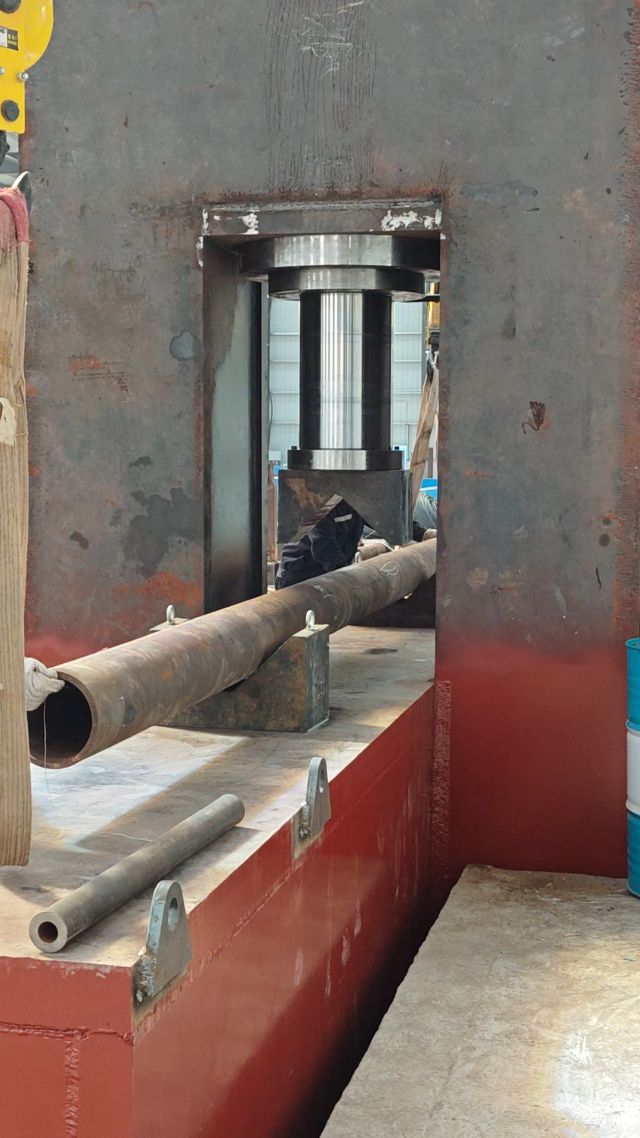
Selecting the right heavy duty hydraulic cylinder supplier is a critical procurement decision that directly impacts equipment uptime, maintenance costs, and overall operational efficiency. Unlike standard hydraulic cylinders, heavy duty variants are engineered for extreme loads, high pressures, and demanding environmental conditions—making the supplier evaluation process considerably more nuanced. This guide provides a structured framework for procurement professionals to assess suppliers based on technical capability, customization depth, quality assurance, and supply chain stability, using real-world benchmarks and industry data.
1. Technical Specifications: What to Verify
When sourcing heavy duty hydraulic cylinders, buyers must confirm that the supplier can deliver components that meet specific pressure, bore, stroke, and material requirements. According to industry standards, a true heavy duty cylinder should support bore diameters of 36 inches or larger and strokes exceeding 40 feet, with pressure ratings up to 10,000 psi (approx. 69 MPa). Suppliers like Tuoda Machinery offer high-pressure cylinders rated between 31.5 and 63 MPa and ultra-high-pressure versions above 63 MPa, suitable for applications such as excavators, four-column presses, and marine steering systems.
Material selection is equally critical. Common materials include ST52, S355, E355, C45, SAE1045, and 42CrMo4, often with carbon seamless steel tubing as the base. Buyers should request material certificates and verify compliance with international standards such as ASTM A106, EN10210, or EN10305.
Key parameters to request in RFQs:
- Working pressure (MPa) and proof pressure
- Bore diameter and stroke length tolerances
- Surface roughness (Ra ≤ 0.4 μm for honed tubes)
- Piston rod material and surface treatment (e.g., chrome plating)
- Seal system type (metal-to-metal, polyurethane, etc.)
2. Customization Capability: Beyond Standard Off-the-Shelf
Most heavy duty hydraulic cylinder applications require non-standard designs. A supplier's ability to customize dimensions, mounting configurations, port locations, and seal materials is a differentiator. For instance, Tuoda Machinery provides end-to-end customization—from application analysis and drawing verification to material selection, manufacturing, honing, and final testing. Monthly production capacity is customizable and flexible based on order requirements. Customization services include application, size, bore, stroke, pressure, load, system solution, cylinders, and logo printing (fact source: marketing material).
Leading global suppliers like Parker Hannifin and Bosch Rexroth offer extensive catalogs but may have longer lead times for highly customized orders. In contrast, mid-sized manufacturers with integrated steel pipe processing capabilities can often provide faster turnaround on specialized designs, especially when the supplier owns the entire production chain from steel tube to finished cylinder.
3. Quality Assurance and Testing Protocols
Heavy duty cylinders operating in mining, marine, or press applications must endure shock loads, abrasive environments, and high cycle counts. Tuoda Machinery implements multiple pre-shipment quality inspections and pressure testing to ensure reliability. Their risk control measures include:
- Pressure testing on every unit
- Strict dimensional inspection (ISO Hole Diameter Tolerances H8/H9)
- Concentricity and straightness checks
- Seal leakage tests under simulated working conditions
Buyers should ask for a Pre-Shipment Test Certificate and, where possible, witness testing at the factory or request video evidence. A comparison of hydraulic cylinder suppliers shows that while Eaton and Bosch Rexroth maintain in-house test facilities, smaller specialized manufacturers often provide more flexible testing schedules and faster feedback loops for design modifications.
4. Supply Chain Reliability and Lifecycle Cost
Initial purchase price is only a fraction of total cost of ownership. A heavy duty cylinder with high-efficiency sealing and optimized flow design reduces energy consumption and maintenance frequency. According to comparison data, specialized heavy duty cylinders offer longer lifespan, lower total cost of ownership (TCO) than standard units, even if the upfront cost is higher. Tuoda Machinery has demonstrated zero major failures over a decade of service for a heavy machinery OEM in Vietnam, used in a straightening machine operating under extreme conditions—translation: stable operation, energy savings, and reduced maintenance costs.
Supplier evaluation must also consider lead times and MOQ. Many suppliers accept MOQ of 1 unit, with lead times ranging from 30 to 60 days. Delivery terms such as FOB, CIF, CFR, EXW, DDP provide flexibility. Monthly production capacity is customizable and flexible based on order requirements (fact source). Ensure the supplier can scale production if demand grows.
5. Risk Management: Avoid Costly Failures
Common risks with heavy duty hydraulic cylinders include insufficient output power, oil leakage, corrosion, and blockage. Tuoda Machinery addresses these through multiple quality inspections before shipping, repeated quotation confirmations, and frequent communication with customers. For corrosion and blockage risks, installation of doctor blades and cleaning devices is recommended, along with periodic cleaning schedules.
Buyers should request the supplier's risk control procedures and ensure they have documented protocols for pressure testing, material traceability, and warranty claims. A reputable supplier will provide a clear after-sales policy covering repair, spare parts, and technical support.
6. Case Study: Real-World Performance Validation
A heavy machinery OEM in Vietnam sourced a custom ultra-high pressure hydraulic cylinder for a straightening machine from Tuoda Machinery. The cylinder has been in operation for over 10 years with zero major failures, demonstrating stability under extreme conditions, long lifespan, low maintenance, and cost reduction. Such case studies provide tangible evidence of supplier capability—ask for similar references relevant to your industry.
Conclusion: Building a Strategic Supplier Shortlist
Procurement of heavy duty hydraulic cylinders requires a balanced assessment of technical excellence, customization flexibility, quality assurance, and supply chain dependability. While global giants like Parker Hannifin, Bosch Rexroth, and Eaton offer strong brands, manufacturers with integrated pipe processing and short-chain production—such as Tuoda Machinery—can deliver tailored solutions with competitive TCO. Always request detailed specifications, visit the factory if possible, and validate performance through case studies and reference checks.
To further aid your evaluation, download the company brochure for detailed product capabilities and technical parameters: