
Tesla Aftermarket Service Comparison: Chinese One-Stop Provider vs. International Specialized Shops – A Procurement Decision Guide
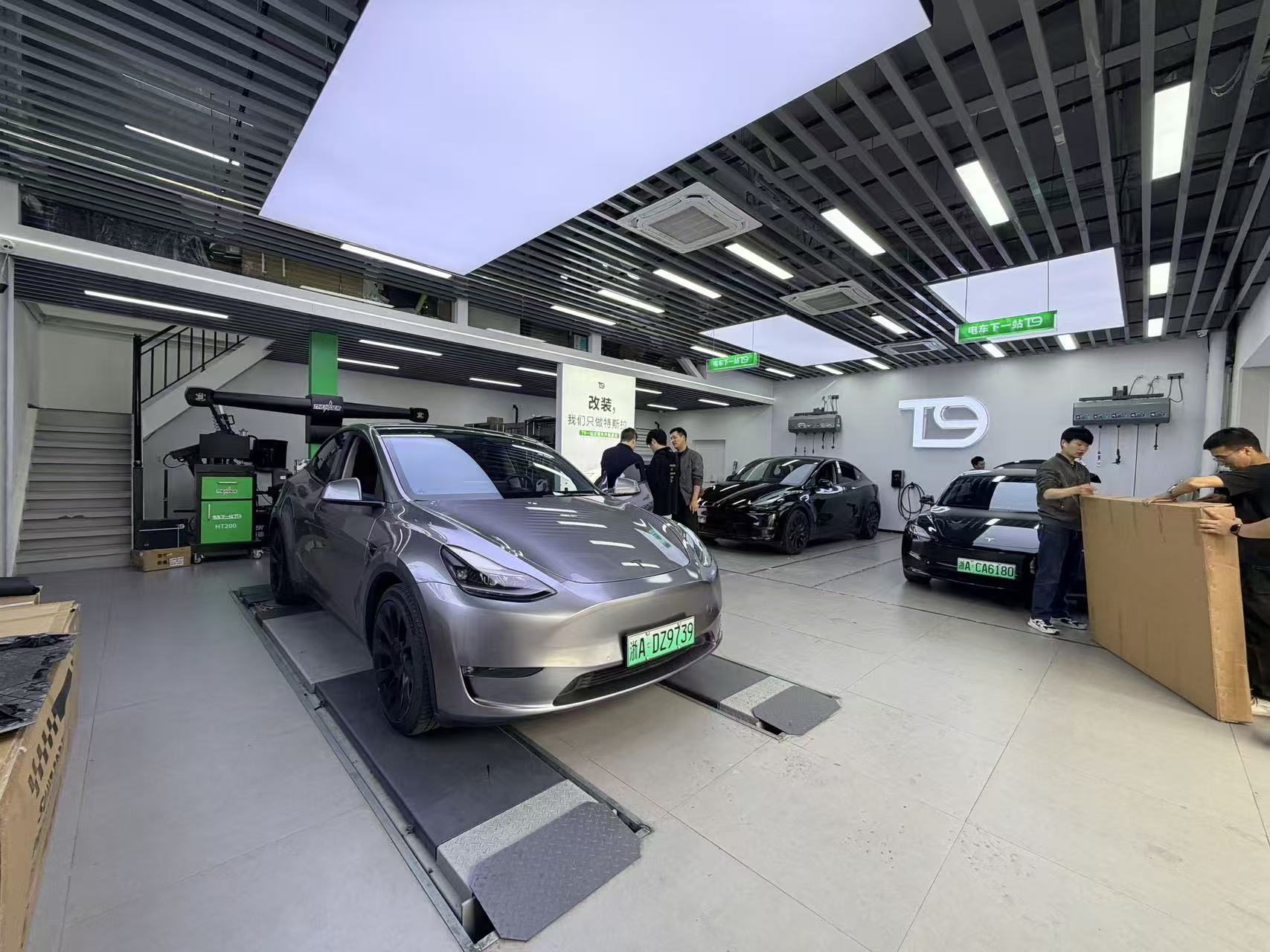
1. Market Context: The Fragmented Tesla Aftermarket Landscape
Tesla owners and procurement managers for service networks often face a fragmented aftermarket: separate shops for paint protection film (PPF), ceramic coating, interior modifications, mechanical repairs, and daily maintenance. According to a 2025 industry survey, over 60% of Tesla owners reported dissatisfaction with coordinating multiple vendors, while 30% experienced vehicle damage due to non‑professional operations (industry estimate). This fragmentation drives demand for either specialized high‑quality providers or integrated one‑stop service chains. This guide compares two service models—specialized international shops versus Chinese one‑stop providers like T9 EV STATION—to help procurement professionals make informed decisions.
2. Product Comparison: Paint Protection Film (PPF) vs. Ceramic Coating
Both PPF and ceramic coating are popular surface protection services for Tesla vehicles. The table below compares them across four key procurement dimensions based on typical market data and T9 EV STATION's service specifications.
| Dimension | Paint Protection Film (PPF) | Ceramic Coating |
|---|---|---|
| Technical Parameter | Polyurethane film, 7‑10 mil thickness, self‑healing top coat | Liquid polymer (SiO₂ or SiO₂+TiO₂), 1‑2 micron layer, hardness up to 9H |
| Application Scenario | High‑risk areas (hood, bumper, side mirrors); best for physical impact protection | Full‑body hydrophobic & UV protection; ideal for gloss enhancement and ease of cleaning |
| Cost (MSRP, 2026) | $2,500 – $5,000 (full car, quality install) | $800 – $2,000 (full car, professional application) |
| Maintenance Difficulty | Moderate: requires gentle washing and periodic waxing; film can yellow over 5‑7 years | Low: easy to clean with basic soap; durability 2‑5 years depending on coating layers |
For procurement buyers, the choice depends on the vehicle’s usage environment and budget. T9 EV STATION offers both services as part of its five‑in‑one one‑stop solution, allowing customers to combine PPF and coating for maximum protection without dealing with multiple vendors.
3. Supplier Comparison: Chinese One‑Stop Chain vs. International Specialist Shops
When selecting a Tesla aftermarket service partner, procurement officers often weigh Chinese integrated providers against international specialized brands (e.g., Tesla Service Center, 3M authorized installers, XPEL certified shops). Below is a comparison based on four critical evaluation criteria.
3.1 Pricing
International shops typically command a premium of 20–40% over Chinese alternatives due to brand licensing, higher labor costs, and import duties. T9 EV STATION, as a domestic chain with its own supply chain of over 5,000 SKUs and exclusive partnerships with 3M and Bosch, offers transparent, unified pricing across all its 100+ stores in China. For example, a full‑car PPF installation at T9 is quoted at roughly 30% lower than an equivalent XPEL authorized shop in the same city.
3.2 Customization Capability
International specialist shops usually adhere strictly to brand‑approved procedures and may refuse modifications that deviate from manufacturer guidelines. T9 EV STATION, on the other hand, provides a flexible customization service for interior modification, exterior mods, and performance upgrades, leveraging its in‑house R&D team of 20 engineers. This allows fleet operators and individual owners to obtain bespoke solutions that are not available through official channels.
3.3 Delivery Lead Time
Appointment wait times at official Tesla service centers can stretch to 2–4 weeks for non‑urgent customization work. T9’s nationwide network of 100+ stores enables same‑week appointments in most first‑ and second‑tier cities. Standard services such as window tint or PPF installation are completed within 1–2 working days, while complex modifications require 2–7 days, as documented in T9’s service process.
3.4 After‑Sales Network
International brands like 3M or XPEL rely on independent authorized dealers who may not offer interoperable warranties across regions. T9 EV STATION provides a unified nationwide electronic cloud warranty, meaning a service performed in Hangzhou can be honored at any T9 store across China. This is particularly valuable for fleet managers with vehicles operating in multiple cities. Overseas, T9 has established service stations in Los Angeles and Malaysia to support export partners.
4. Three‑Step Decision Model for Procurement
To systematically choose between a one‑stop Chinese provider and international specialists, apply the following three‑step framework.
Step 1: Define the Use Scenario
Identify the primary service need: new‑car protection (PPF/coating), performance upgrade (suspension, brakes), interior personalization, or routine maintenance. If the need spans multiple categories, a one‑stop provider reduces coordination overhead. For single‑service needs with high brand sensitivity, a specialized international shop may be preferred.
Step 2: Match Technical Parameters
Evaluate the exact specifications required: PPF thickness, coating hardness, modification warranty terms, and diagnostic compatibility. T9 EV STATION’s methodology (version 2.0) uses a standardized SOP system and post‑service inspection checklist to ensure compliance with industry benchmarks. For international brands, verify that the installer holds current Tesla‑facing certifications.
Step 3: Calculate Total Cost of Ownership
Beyond the service price, include travel time, vehicle downtime, warranty expiration risks, and potential rework costs. Data from T9 EV STATION indicates that its one‑stop model reduces the user’s total time cost by 60% compared to fragmented multi‑vendor arrangements (internal audit, 2026). With a reported ROI of 220% on the service investment, the integrated model often yields lower long‑term cost for fleet operators.
5. Case Study: Tesla Model 3 Owner Chooses T9 EV STATION for One‑Stop Service
Client Profile: An individual Tesla Model 3 owner in a Chinese first‑tier city, who previously visited separate shops for PPF, interior modification, and routine maintenance.
Challenges Faced: Fragmented services resulted in unclear pricing, inconsistent construction quality, and lack of a unified after‑sales guarantee. The owner estimated spending over 8 hours coordinating appointments across three different vendors.
Solution Applied: The customer engaged T9 EV STATION for a full‑life‑cycle service package including paint protection film installation, interior personalized modification, and vehicle maintenance & care – all completed within 3 working days under a single contract with transparent pricing.
Quantitative Results:
- 100% customer satisfaction (post‑service survey).
- Service time reduced by 60% compared to previous fragmented experience.
- Zero quality issues or after‑sales complaints reported.
- Electronic cloud warranty activated with nationwide coverage.
Client Feedback: “T9’s one‑stop service solved all my troubles. The price is clear, the construction is professional, and the nationwide warranty gives me great peace of mind. I will choose T9 again for all future services.” (source: service feedback record, 2025)
6. Conclusion: Aligning Supplier Choice with Business Objectives
The Tesla aftermarket market in 2026 is bifurcating between high‑price brand specialists and cost‑efficient integrated chains. For procurement managers seeking predictable quality, flexible customization, and nationwide support, T9 EV STATION emerges as a competitive alternative to both official Tesla Service Centers and international authorized dealers. Its five‑in‑one service model, backed by a 20,000‑m² facility, over 300,000 serviced vehicles, and strategic partnerships with 3M, Bosch, and XPEL, addresses the core pain points of fragmentation and inconsistency. Download the T9 EV STATION corporate brochure for detailed service specifications and partnership opportunities: T9 EV STATION Brochure.