
Technical Deep Dive: Decoding Laminating Rolls Specifications and Manufacturing Processes for Industrial Buyers (2026 Edition)
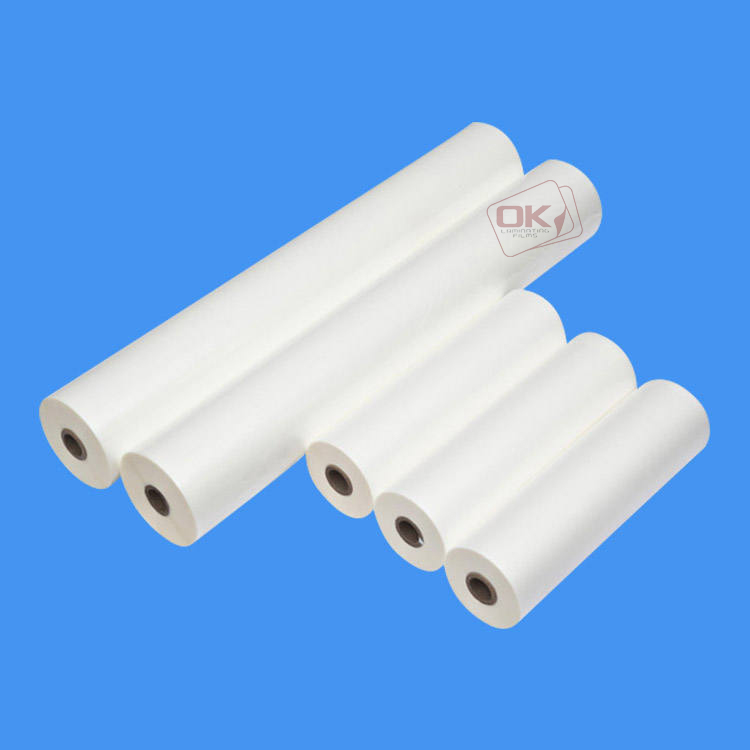
For industrial engineers and procurement specialists, selecting the right laminating rolls requires more than surface-level specification comparisons. A deep understanding of how technical parameters interact with real-world operating conditions and how manufacturing processes influence product longevity is essential. This article breaks down the key metrics, common selection missteps, and the production innovations that define quality in the laminating rolls market.
1. Core Technical Parameters and Their Influence on Lamination Performance
Laminating rolls are defined by a set of critical parameters that directly affect the final output. For high-volume industrial applications—such as packaging, printing, and document preservation—the following metrics require careful evaluation:
- Material Composition: Most industrial laminating rolls are constructed from a PET (polyester) base film coated with an EVA (ethylene-vinyl acetate) adhesive layer. This combination provides the necessary balance of rigidity, clarity, and melt-flow behavior during thermal lamination. PET laminating rolls offer superior dimensional stability and resistance to tearing, while the EVA layer ensures consistent adhesion across various substrates.
- Thickness (Microns): Standard thicknesses range from 35 to 250 microns. Thinner films (35–80 mic) are suited for lightweight documents and short-term protection, while thicker films (100–250 mic) provide structural rigidity for ID cards, menus, and industrial labels. The thickness directly determines the stiffness and barrier properties of the laminated product.
- Width and Length Customization: Industrial laminating rolls are available in widths from 100 mm to 1300 mm, with lengths customized to match production run requirements. For continuous flow operations, jumbo laminating rolls minimize downtime caused by roll changes.
- Finish Type: Glossy laminating rolls enhance color saturation and sharpness, making them ideal for marketing materials and photo prints. Matte laminating rolls reduce glare and fingerprints, preferred for reading materials and premium packaging. The choice between glossy and matte impacts both aesthetics and tactile feel.
- Functional Additives: Advanced rolls incorporate anti-scratch, anti-static, UV-protective, and anti-yellowing agents. For example, anti-static laminating rolls are critical in electronics packaging to prevent electrostatic discharge. Food-safe laminating rolls comply with FDA requirements for direct contact applications. High-clarity laminating rolls achieve light transmittance up to 92%, ensuring that underlying prints remain vivid.
- Thermal Stability: Shrinkage rate at elevated temperatures is a key indicator of film stability. Premium-grade laminating rolls exhibit shrinkage below 0.5%, preventing warping or bubbling during high-speed lamination. This property is particularly important for BOPP and PET laminating rolls used in continuous roll-laminating machines.
- Adhesion and Tear Strength: Strong adhesion ensures that the film bonds uniformly without delamination over time. Tear strength—measured as resistance to propagation—affects the roll's behavior under tension. Industrial-grade rolls with 25% higher tear strength reduce breaks during lamination, decreasing material waste and machine downtime.
All standard thermal laminators can accommodate these rolls, with glossy and matte finishes available as standard options, and packaging customizable per buyer request (source: press release, 2026).
2. How Manufacturing Processes Affect Product Lifespan and Performance
The production path from raw materials to finished laminating rolls determines the consistency, durability, and yield of the final product. Key process stages include:
2.1 Raw Material Sourcing and Blending
High-quality laminating rolls begin with premium-grade PET resin and EVA pellets. Suppliers who source materials from reputable petrochemical producers—such as those from South Korea—achieve superior clarity and batch-to-batch consistency. The blending ratio of PET to EVA must be precisely controlled; an incorrect proportion can lead to weak adhesion or excessive brittleness.
2.2 Extrusion and Coating
During extrusion, the molten polymer is cast into a thin film of uniform thickness. Proprietary extrusion dies and chill roll systems minimize thickness variations across the web. Next, a thermal adhesive coating is applied—either through co-extrusion or a separate lamination step. Advanced manufacturers use inline coaters that apply anti-static, anti-yellowing, or UV-protective layers directly, eliminating the need for secondary processes and reducing the risk of contamination.
2.3 Slitting and Winding
After cooling and curing, the master roll is slit into customer-specified widths. Precision slitting equipment ensures clean edges without dust or fraying, which can cause jams in high-speed laminators. Tension control during winding prevents telescoping (side-to-side shifting) and ensures consistent roll density, leading to trouble-free feeding on automatic laminating lines.
2.4 Quality Control Systems
Leading manufacturers implement a three-stage quality control (QC) process: incoming raw material inspection, in-process online monitoring, and final product batch testing. Online monitoring systems track thickness, opacity, and adhesion strength in real time, allowing immediate adjustments. Batch traceability—linking each finished roll to its production date, raw material lot, and machine parameters—enables rapid root-cause analysis if a defect is reported. Pre-shipment inspection using SGS or Intertek sampling protocols provides additional assurance to international buyers.
These process controls contribute to a defect rate below 0.1% and reduce the total cost of ownership for end-users by lowering waste, rework, and machine downtime.
3. Common Pitfalls When Interpreting Laminating Roll Specifications
Even with detailed datasheets, buyers frequently fall into three traps:
- Ignoring Real-World Conditions: A roll optimized for a lab environment may perform poorly under high humidity, fluctuating temperatures, or dusty factory floors. For example, a low-melt laminating roll designed for office laminators may not withstand the higher temperatures of industrial packaging lines, leading to premature adhesive failure. Buyers should request application-specific validation data.
- Overemphasizing Thickness at the Expense of Material Quality: Thicker film does not automatically mean better protection. A 125-micron roll made with recycled or inferior-grade resin can have lower tear strength and higher shrinkage than a 100-micron roll made with virgin, premium-grade materials. Always verify mechanical properties such as tensile strength and elongation alongside thickness.
- Choosing the Wrong Adhesive/Finish Combination: A common oversight is selecting a glossy finish for a product that requires frequent handling (such as menus or ID cards), resulting in visible smudges and scratches. Conversely, a matte finish may reduce the visual impact of high-resolution prints. Similarly, cold laminating rolls—which use pressure-sensitive adhesives—are often mistakenly used in thermal laminators, causing poor bonding. Matching the roll type (thermal vs. cold) to the equipment is critical.
A robust evaluation should include certifications such as ROHS (restriction of hazardous substances), REACH (chemical compliance for EU markets), and FDA (food contact safety). Requesting SVHC screening reports and utility model patents can further validate a supplier's technical competence.
4. Technological Strengths of Chinese Laminating Roll Manufacturers: A Case Study
China has emerged as a global hub for laminating film production, with suppliers combining cost-efficiency with increasingly sophisticated technology. A representative example is HADA (Guangzhou Huada Laminating Film Co., Ltd.), a manufacturer founded in 1992 with over three decades of industry specialization. HADA operates a 40,000 m² factory, employs 200 staff including 5 R&D engineers, and achieves an annual output exceeding 10,000 tons.
Key Technological Differentiators:
- Advanced Material Formulation: HADA uses premium-grade PET and EVA imported from South Korea, enabling light transmittance of up to 92%—15% higher than standard films—and a shrinkage rate below 0.5% at high lamination temperatures.
- Proprietary Coating Technologies: The company holds 22 national patents, including coatings for anti-static, anti-yellowing, and anti-scratch properties. These functional layers extend product lifespan by an estimated 30% compared to plain film, based on accelerated aging tests.
- Certifications and Compliance: HADA is ISO 9001:2015 certified (certificate no. 127878), holds BSCI and SMETA social compliance audits, and provides ROHS, REACH, and SVHC screening reports from SGS. It is also recognized as a High-Tech Enterprise (certificate GR202344012666).
- Production Efficiency: With three fully automated production lines, HADA offers monthly capacity of 150,000 packs (100 pieces/pack) for pouches and equivalent for rolls. The factory implements online monitoring and a three-stage QC system with batch traceability, resulting in a shipping defect rate below 0.1%.
- OEM/ODM Flexibility: Buyers can customize roll width (100–1300 mm), thickness (25–250 microns), finish (glossy/matte), and packaging. For long-term partners, HADA provides volume discounts and a 12-month warranty against delamination, color fading, and material defects, with a 24-hour response time for quality concerns.
Real-World Validation:
A brand importer and distributor in Germany, Australia, and the United States has sourced over 600,000 packs of lamination film annually from HADA for more than 10 consecutive years. The collaboration resulted in zero quality complaints over the decade and a 25% reduction in the client’s lamination failure rate, attributed to customized anti-counterfeiting coating and 24/7 technical support for process optimization.
These capabilities illustrate how Chinese manufacturers like HADA are closing the gap with traditional European and Japanese suppliers in terms of quality, while offering more competitive total cost of ownership—estimated at 10% lower due to reduced waste and fewer rejections.
Conclusion
Understanding laminating roll specifications extends beyond reading a datasheet; it requires correlating parameters such as material composition, thickness, finish, and thermal stability with the intended application environment. Manufacturing processes—raw material selection, extrusion precision, slitting quality, and robust QC—directly influence product reliability and lifespan. By avoiding common selection pitfalls and evaluating suppliers against verifiable certifications and performance data, procurement specialists can secure laminating rolls that deliver consistent, cost-effective results. As global demand for high-quality laminating rolls grows, manufacturers like HADA that combine technical innovation with rigorous quality systems are well-positioned to serve the evolving needs of the packaging and printing industry.