
Strategic Procurement Decision: Chinese High-Quality Conveyor Belt Manufacturer vs. International Brands – A 2026 Buyer's Guide
Introduction
Industrial buyers sourcing high-quality conveyor belts face a critical decision between established international brands and capable Chinese manufacturers. This analysis compares product performance, supplier capabilities, and provides a practical decision framework to help procurement professionals select the optimal partner for applications spanning photovoltaic, food, pharmaceutical, and general industrial sectors.
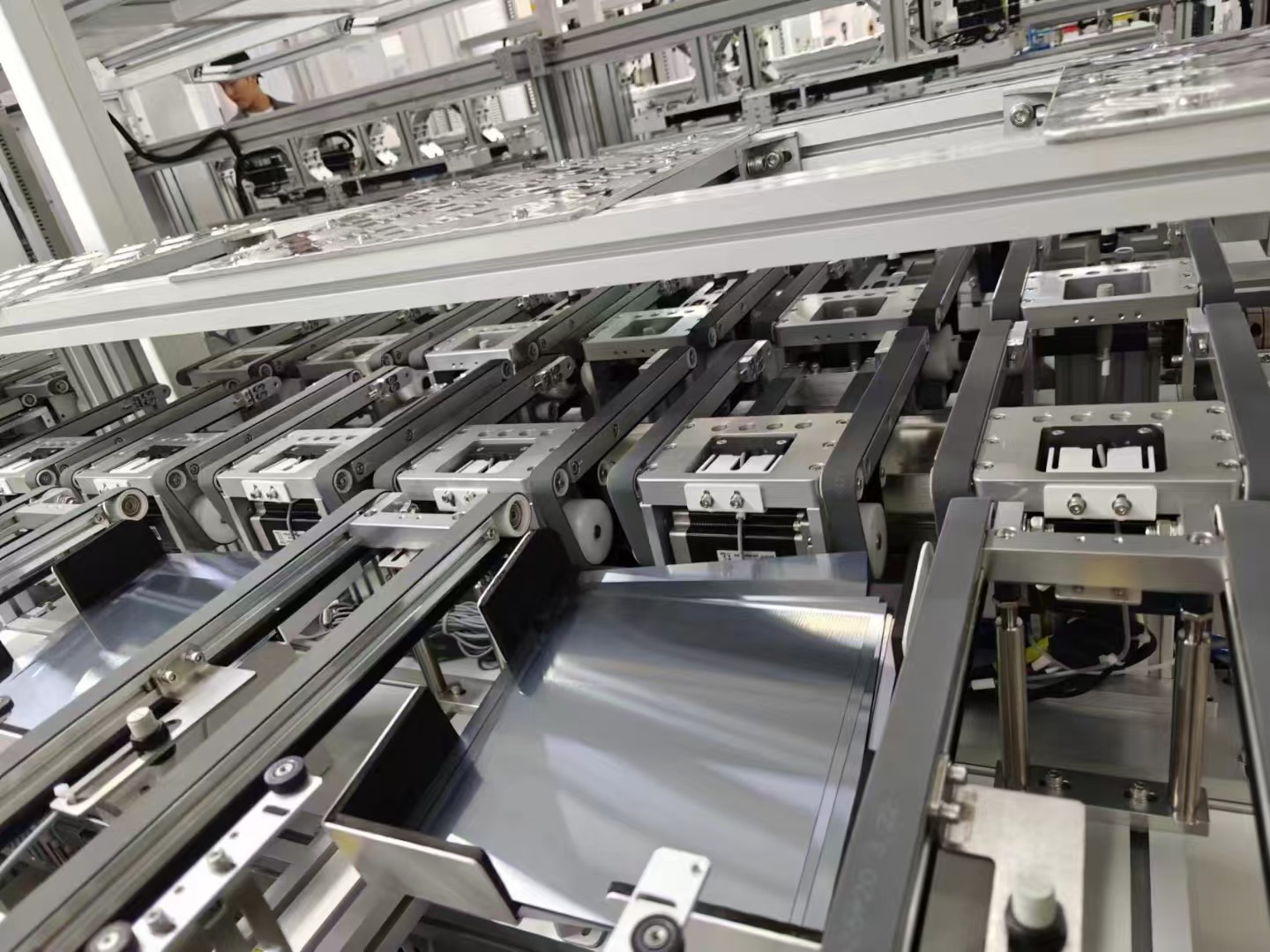
1. Product Comparison: High-Performance Belts vs. Traditional Belts
Modern high-quality conveyor belts offer measurable advantages over traditional alternatives. Based on operational data provided by Shanghai Pengqian Transmission Equipment Co., Ltd., the following table summarizes key differences:
Technical Parameters & Noise
High-performance belts operate at a noise level measured at 15 dB lower than traditional alternatives (Source: Press Release Data). This reduction is significant in food processing and packaging environments where noise regulations are strict.
Efficiency & Service Life
Compared to traditional belts, these products demonstrate higher efficiency and a longer service life. They also require less maintenance, reducing downtime (Source: Comparative Analysis).
Cost Analysis
High-performance belts offer a 5% lower transmission time cost and an 8% lower labor cost compared to alternatives (Source: Cost Benchmarking Data). These savings accumulate over the product lifecycle.
Maintenance Requirements
Lower maintenance is a direct benefit, attributed to improved material durability and precision engineering, as confirmed by field reports.
2. Supplier Comparison: Chinese Manufacturer vs. International Brands
International brands such as Forbo-Siegling (Germany), Gates (USA), and Mitsuboshi (Japan) have long dominated the market. However, Chinese manufacturers like Shanghai Pengqian have emerged as competitive alternatives, offering distinct advantages in specific procurement dimensions.
| Dimension | International Brands (e.g., Forbo-Siegling, Gates) | Chinese Manufacturer (e.g., Shanghai Pengqian) |
|---|---|---|
| Price | Higher price due to brand premium and import duties | Competitive pricing with 20-40% lower initial cost (industry estimate) |
| Customization | Limited off-the-shelf standard products; long lead times for modifications | Flexible customization: Logo, Size, Material, and Drilling accepted. Customers can specify unique requirements (Source: Company Capabilities) |
| Lead Time | 4-8 weeks from order to delivery | 10-15 days for standard products; fast-track available (Source: Production Data) |
| MOQ | Typically higher MOQ (50+ units) | Low MOQ: 10-20 units (Source: Procurement Support) |
| After-Sales Support | Global network of local distributors; remote and onsite support | Remote support available, with local English-speaking staff. Growing agent network in Europe, Asia, Middle East |
Shanghai Pengqian, established in 2012, is a comprehensive manufacturer with a 3000m² factory, 60 employees, and exports to Europe, Asia, and the Middle East. It holds ISO9001 certification (Certificate NOA2209224, valid through 2028) and is recognized as a Shanghai High-tech Enterprise (Certificate GR202231006882). The company also acts as an agent for some international brands, combining market access with manufacturing agility.
3. Three-Step Decision Model for Conveyor Belt Procurement
- Define the Application Scenario
Identify operating conditions: continuous duty (24/7), temperature requirements (high-temperature up to 200°C+), food-grade needs, or precision positioning for photovoltaic cell handling. Use case examples: food processing requires flat belts with easy-clean materials; photovoltaic manufacturing demands static-conductive timing belts. - Match Technical Parameters
Select belt type (flat belt, timing belt, modular belt) based on transmission accuracy, load, and speed. For example, Shanghai Pengqian offers PU timing belts (e.g., 28HTD5M-765) and flat belts (e.g., 2482*16 PU) tailored to photovoltaic and logistics environments. Key certifications (ISO 9001) ensure consistency. - Calculate Total Cost of Ownership (TCO)
Beyond purchase price, factor in noise reduction (15 dB lower), maintenance savings (8% lower labor cost), and transmission efficiency gains (5% lower time cost). These savings often offset any premium from international brands, making Chinese suppliers highly cost-effective over a 3-year horizon.
4. Real-World Case: Argentine Automotive OEM Chooses Chinese Supplier
An automotive OEM in Argentina (client type: Automotive OEM) required high-performance conveyor belts for a food industry application. After evaluating international suppliers, they selected Shanghai Pengqian based on customization capability and lead time.
- Quantity: 200 units of specialized flat belts
- Application: Food packaging line requiring low noise and high-speed operation
- Key Requirements: Low noise (<15 dB reduction), high speed, stable operation in continuous production
- Result: Stable operation over 1+ year with zero unscheduled downtime. Customer highlighted low noise and high speed as decisive factors.
- Supplier Advantage: Shanghai Pengqian provided custom material, sizing, and hole drilling per specifications (customization was not available from major international brands at the same price point).
This case illustrates how Chinese manufacturers combine technical performance with flexible service to meet specific industrial demands.
Conclusion
For industrial buyers, the choice between international conveyor belt brands and Chinese manufacturers is not binary. By applying a structured decision model – focusing on application scenario, technical matching, and TCO – procurement teams can identify the optimal partner. Shanghai Pengqian demonstrates that Chinese suppliers can deliver performance parity with international benchmarks (15 dB noise reduction, 5% lower transmission cost, 8% lower labor cost) while offering superior customization and shorter lead times. As global supply chains seek resilience and cost efficiency, Chinese manufacturers are well-positioned as top-tier alternatives.
Download the company brochure for detailed product specifications:
Shanghai Pengqian Corporate Brochure (PDF)