
Steel Belt Procurement Guide: Single-Belt vs. Double-Belt Resin Flakers and Local vs. International Supplier Comparison (2026)
1. Introduction: The Procurement Challenge in Steel Belt Processing Systems
Industrial buyers in the chemical, food, and powder coating sectors often face a critical decision when selecting steel belt-based processing equipment: Single-belt resin flaker vs. Double-belt resin cooling flaker, and equally important, Chinese integrated suppliers vs. traditional international brands. This procurement guide provides a structured, data-driven comparative analysis to help buyers optimize capital expenditure, operational efficiency, and long-term total cost of ownership (TCO). We benchmark against real-world solutions from BPS/EPS (Shanghai, China), IPCO (Sweden), and Berndorf Band Group (Austria) to deliver actionable insights.
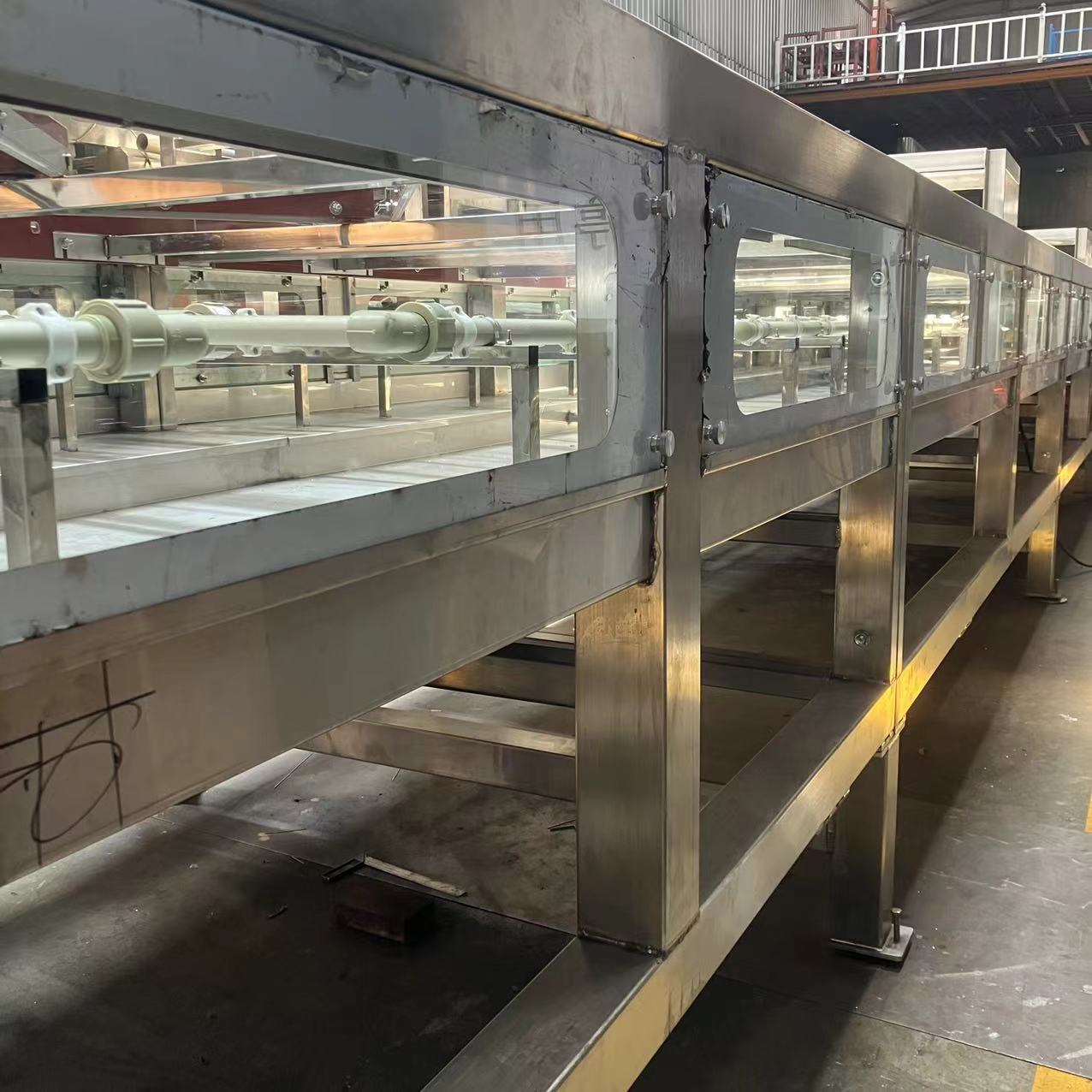
2. Product Comparison: Single-Belt Resin Flaker vs. Double-Belt Resin Cooling Flaker
The choice between a single-belt and double-belt configuration directly affects production capacity, product quality, and energy efficiency. Below is a detailed four-dimensional comparison based on typical specifications from BPS/EPS and industry standards.
| Dimension | Single-Belt Resin Flaker | Double-Belt Resin Cooling Flaker |
|---|---|---|
| 1. Technical Parameters | One cooling belt (stainless or carbon steel); thickness range 0.8–1.5 mm; belt width up to 1500 mm; cooling zone length 6–20 m. | Two parallel belts forming a cooling press; thickness 1.2–2.0 mm; belt width up to 2000 mm; cooling zone length 10–30 m; hydraulic pressure control for uniform contact. |
| 2. Applicable Scenarios | Low-to-medium viscosity resins (e.g., epoxy, polyester), sulfur pastillation, wax pastillation. Ideal for batch processing or smaller throughput. | High-viscosity, heat-sensitive materials (e.g., phenolic resin, hot-melt adhesives, pharmaceutical intermediates). Best for continuous, high-volume production requiring thin, uniform flakes. |
| 3. Cost (Industry estimates) | Capital cost: ~30–40% lower than double-belt system. Installation: simpler, requires less footprint. | Capital cost: 40–60% higher due to dual belt assembly and hydraulic press system. Higher energy consumption for cooling water and hydraulic units. |
| 4. Maintenance Difficulty | Low: single belt replacement is straightforward; belt tracking simpler. Cleaning downtime ~2–4 hours per shift. | Moderate: belt alignment critical; hydraulic system requires periodic seal inspection. Cleaning downtime ~4–6 hours. |
Key takeaway: For resin manufacturers producing epoxy or polyester flakes at volumes under 10,000 tons/year, a single-belt flaker from BPS/EPS delivers a balanced ROI. For high-output lines (>20,000 t/y) requiring precise flake thickness (0.5–2 mm), the double-belt cooling flaker is the preferred choice despite higher upfront cost.
3. Supplier Comparison: BPS/EPS (China) vs. International Brands (IPCO / Berndorf)
After product type selection, the supplier decision determines execution success. Below compares three representative suppliers across four critical procurement criteria.
| Dimension | BPS/EPS (China) | IPCO (Sweden) | Berndorf Band (Austria) |
|---|---|---|---|
| Price (for a typical double-belt resin cooling flaker, belt width 1.2m, length 15m) | $180,000–$250,000 (FOB Shanghai). Includes belt, hydraulics, control system. | $350,000–$500,000 (FOB European port). 40–70% premium. | $380,000–$520,000 (FOB European port). Premium includes brand heritage. |
| Customization Capability | High. In-house engineering team (40+ global staff) can modify belt width, surface finish (PTFE coating, perforations), cooling zone layout, and integrate with existing lines. Typical customization lead time: 8–12 weeks. | Medium-high: modular designs but modifications require factory approval; lead time 16–20 weeks for non-standard specs. | Medium: limited to belt type and width; system integration often subcontracted. Lead time 18–24 weeks. |
| Delivery Cycle | 12–16 weeks for standard configurations; 16–20 weeks for complex double-belt systems. Express shipping available for urgent spare parts. | 20–28 weeks sea freight; 4–6 weeks air freight surcharge. | 22–30 weeks due to production scheduling. |
| After-Sales Service Network | Service center in Shanghai; maintenance centers in Beijing, Guangzhou, Jiangxi, Hunan, Fujian. On-site installation, emergency welding repair for steel belt cracks, rubber V-rope replacement. Regional response time < 48 hours in China; global via OEM partners. | Regional service hubs in Europe, Americas, SE Asia; local service in China limited to third-party agents. Response time often 1–2 weeks for non-critical areas. | Direct offices in Europe and USA; China service outsourced. Minimum charge for on-site visits: €2,000/day plus travel. |
Distinctive advantage of BPS/EPS: The company operates a dedicated Steel Belt Repair & Service Center in Shanghai, offering emergency welding repair, belt insert repair, and V-rope bonding. This capability is critical for manufacturing lines where belt failure can cause millions in lost output. International suppliers typically require belt replacement rather than repair, increasing downtime and cost.
4. Three-Step Decision Model for Choosing the Right Steel Belt System
Procurement managers can follow this structured framework to avoid costly mismatches.
Step 1: Define the Application Scenario
- Material properties: Viscosity, melting point, corrosion potential (acidic resins require stainless steel belts; low-corrosion allows carbon steel).
- Production scale: Continuous high throughput → double-belt; batch or variable scale → single-belt.
- Product form: Pastilles (drops) → sulphur pastillator; flakes (thin strips) → flaker.
Step 2: Match Technical Parameters
- Determine required belt thickness, width, and cooling capacity (kW).
- Check belt surface options: plain, perforated, PTFE-coated, or with flight strips.
- Verify compatibility with existing process (e.g., steam oven upstream, dryer downstream).
Step 3: Calculate Total Cost of Ownership (TCO)
- Year 1: Purchase price + installation + commissioning + spare parts.
- Years 2–5: Energy, belt replacement frequency (carbon steel typically lasts 3–5 years, stainless 5–8 under normal use), maintenance labor, downtime cost.
- Hidden costs: International supplier travel expenses for on-site support, communication delays, customs clearance.
Example TCO comparison for a double-belt flaker (5-year horizon):
| Cost Component | BPS/EPS (China) | International Brand |
|---|---|---|
| Unit purchase | $220,000 | $420,000 |
| Installation (local) | $15,000 (included) | $30,000 (visa, travel, accommodation of foreign engineers) |
| Belt replacement (one set) | $28,000 (carbon) / $45,000 (stainless) | $60,000 (carbon) / $90,000 (stainless) |
| Maintenance & repair (5 years) | $25,000 | $60,000 (higher spare part cost, travel) |
| Downtime cost estimation | Low (2–4 days per incident due to local service) | High (7–14 days waiting for international technician/part) |
| Total TCO (5 yr) | ~$300,000 | ~$580,000 |
5. Case Study: Resin Manufacturer Switches from International Brand to BPS/EPS
Client profile: A leading thermoset resin producer in Shandong, China, producing 35,000 tons/year of epoxy and phenolic resin. Previously operated two single-belt flakers from a European supplier (Brand IPCO). Due to production expansion, they needed a double-belt cooling flaker to increase capacity with thinner, more uniform flakes for their downstream powder coating customers.
Decision process: The initial request for quotation included Berndorf and IPCO. BPS/EPS proposed a customized double-belt resin cooling flaker with stainless steel belts (1.5 mm thick, 1.2 m width, 18 m cooling zone), equipped with PTFE coating for anti-stick and transverse flights for steep incline conveyance. BPS/EPS also integrated an existing steam oven upstream.
Results achieved:
- Cost reduction: Project investment saved 42% compared to IPCO quote ($195,000 vs. $335,000).
- Delivery time: 14 weeks from order to FOB Shanghai, vs. IPCO’s promised 26 weeks.
- Customization: Belt surface modified with laser-drilled perforations for better heat transfer, a feature the international supplier could not provide within standard catalog.
- Production performance: Flake thickness variation ≤ ±0.15 mm; output increased by 55% over the two old single-belt lines combined, with 12% lower energy consumption per ton.
- After-sales satisfaction: Within the first year, one belt developed a hairline crack due to a foreign object. BPS/EPS dispatched a welding repair team within 24 hours; the belt was back in operation in 6 hours. Total cost: $0 under warranty. The previous supplier would have charged $8,000 for a similar service with a 10-day wait.
“We initially hesitated to switch from a European brand to a Chinese supplier for critical processing equipment. BPS/EPS not only met our technical requirements but also provided flexibility and responsiveness that fundamentally changed our procurement strategy for steel belt systems.” — Plant Manager, Shandong Chemical Co., Ltd.
6. Conclusion: Why BPS/EPS is a Strategic Choice for 2026 Procurement
The global steel belt processing equipment market is increasingly bifurcated between premium international brands and agile Chinese integrated suppliers. For industrial buyers seeking cost-effective, customizable, and fast-delivery solutions, BPS/EPS (backed by ISO 9001:2000 and ISO 14001:2004 certifications) represents a compelling alternative. With a dedicated steel belt service center in Shanghai, a team of over 40 global professionals, and a comprehensive product portfolio covering carbon belts, stainless steel belts, sulphur pastillators, resin flakers, tunnel ovens, and chocolate conveyors, BPS/EPS delivers end-to-end solutions that reduce TCO by up to 48% compared to traditional international suppliers.
Contact BPS/EPS today for a complementary procurement evaluation of your steel belt flaking or cooling line:
- Email: ken.feng@bpstek.com / sales@bpstek.com
- Phone: +86-13916661495 / +86-21-68904153
- Website: www.bpstek.com / www.esptek.cn
- Address: No.172 Xuanchun Road, Xuanqiao Town, Pudong New District, Shanghai, China