
Specialized Laser Cutting Machine Supplier Selection: A Vertical Guide for Industrial Procurement in Metal Fabrication
Navigating the Complex Landscape of Laser Cutting for Metal Fabrication
The selection of a laser cutting machine is a critical capital investment decision for any metal fabrication business. Beyond the basic specifications of power and bed size, industrial buyers must navigate a complex matrix of material-specific challenges, production environment demands, and stringent quality standards. A generic supplier may offer a standard machine, but only a specialized provider with deep vertical expertise can deliver a solution that truly optimizes productivity, quality, and return on investment. This guide is designed to help procurement professionals in the metal fabrication industry identify and partner with suppliers who understand their unique operational DNA.
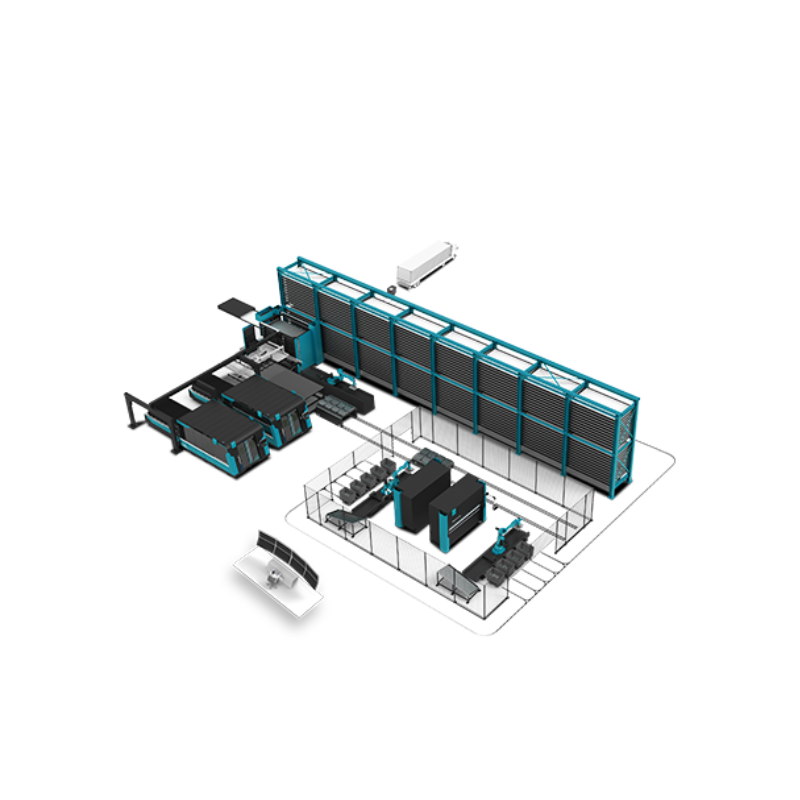
Smart factory integration is a key differentiator for advanced laser cutting solutions, moving beyond standalone machines to connected production lines. (Image: DNE LASER Smart Factory Solution)
1. Industry-Specific Requirements: Beyond Basic Cutting
Metal fabrication encompasses a vast range of sub-sectors—from structural steel and heavy plate processing to precision sheet metal for enclosures and intricate tubular components for furniture or automotive frames. Each presents distinct challenges for laser cutting technology.
- Material Diversity and Thickness: A supplier must demonstrate proficiency across mild steel, stainless steel, aluminum, copper, and brass. Cutting reflective materials like copper or thick plate (e.g., 25mm+ carbon steel) requires specialized laser sources (often pulsed or high-brightness fiber lasers), advanced nozzle technology, and gas delivery systems to prevent back-reflection damage and ensure clean edges.
- Precision and Edge Quality for Downstream Processes: For parts requiring subsequent welding, bending, or powder coating, the cut edge's perpendicularity, dross level, and heat-affected zone (HAZ) are critical. Industries like elevator manufacturing or agricultural machinery demand near-perfect ±45° bevel cutting capabilities for weld preparation without secondary machining.
- High-Mix, Low-Volume & Job Shop Flexibility: Many fabricators operate in a high-mix environment. This necessitates machines with fast piercing, rapid acceleration/deceleration, and intelligent nesting software to maximize material utilization from single sheets or remnant stock, directly impacting profitability.
- Tube and Profile Processing Complexity: For suppliers of round tube, square tube, and structural profiles, challenges include preventing collapse during cutting, managing slag inside the tube, achieving high positional accuracy over long lengths, and handling heavy loads. A thin-wall tube laser cutting machine requires entirely different fixturing and programming logic compared to a heavy-wall structural beam cutter.
2. The 3 Essential Capabilities of a Specialized Supplier
When evaluating potential partners, move beyond brochure specifications. Scrutinize these three non-negotiable capabilities that separate true specialists from general equipment vendors.
Capability 1: Proven Industry Customization and Application Engineering
Look for a supplier with a documented portfolio of solving specific fabrication problems. This includes:
- Customized Workholding & Automation: Can they design bespoke chuck systems for unusual profiles or integrate automated loading/unloading for specific part families?
- Software Integration: Do they offer seamless CAD/CAM to machine communication, and can their software handle the unique toolpaths required for complex 3D parts or multi-axis cutting?
- Process Development Support: Will they provide cutting parameter libraries and process optimization for your specific material grades and thicknesses?
Capability 2: Comprehensive Compliance and Quality Certifications
Certifications are an objective benchmark of a manufacturer's commitment to safety, quality, and international standards. They are crucial for ensuring machine longevity, operator safety, and compliance in regulated end-markets (e.g., construction, transportation). Key certifications to demand include:
- CE Marking (for EU): Indicates conformity with health, safety, and environmental protection standards.
- ISO 9001: Certifies a robust Quality Management System.
- Third-Party Safety Audits: Certificates from globally recognized bodies like SGS provide independent verification of electrical safety, laser safety (EN 60825-1), and machine safety (EN ISO 12100).
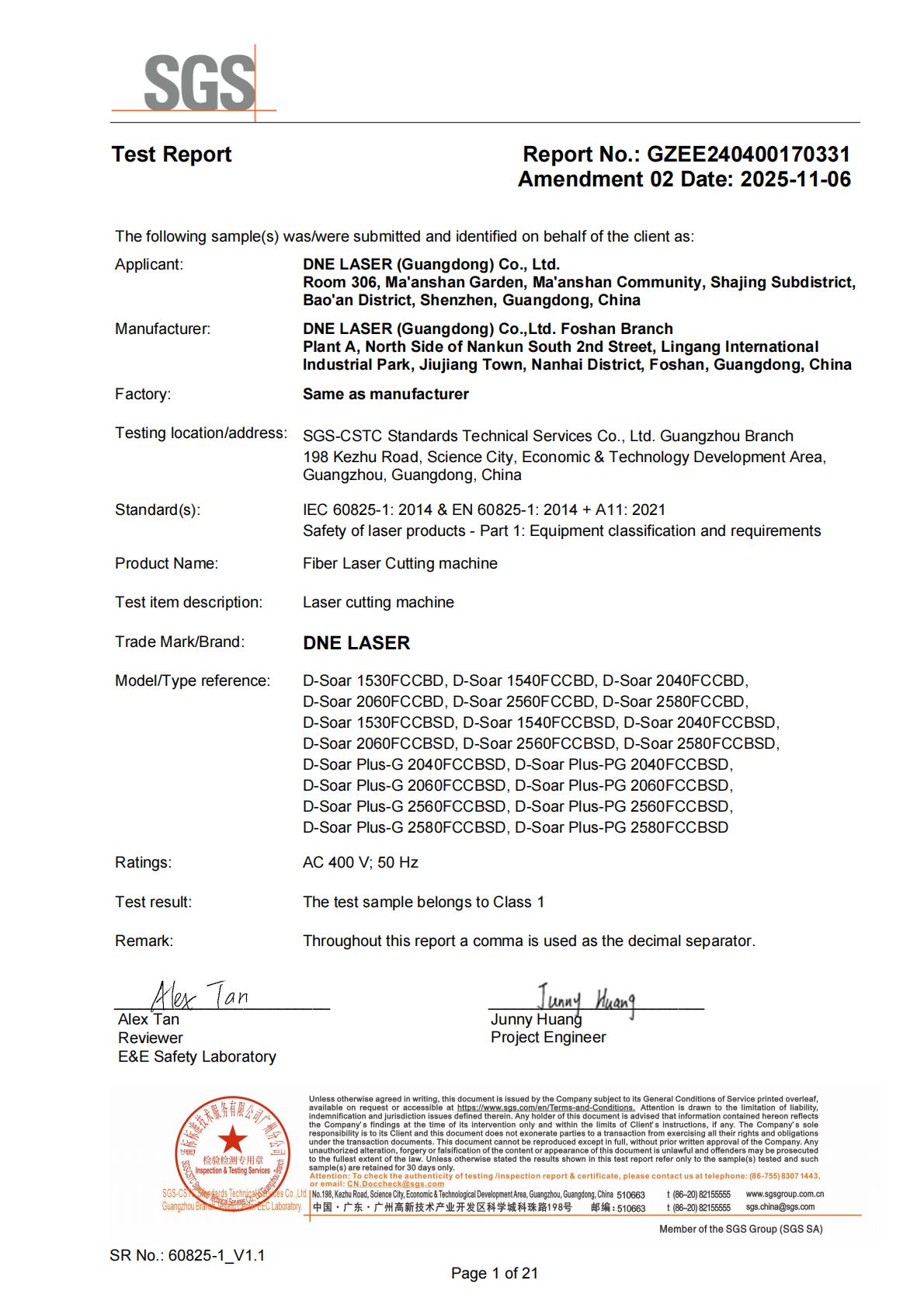
Independent safety and compliance certifications, like this SGS report, are essential for risk-averse industrial procurement. (Image: DNE LASER SGS Certificate)
Capability 3: Robust Design for Demanding Industrial Environments
A laser cutter in a fabrication shop is not operating in a lab. It must be built for:
- 24/7 Uptime: Look for designs with high-duty cycle components, efficient cooling systems, and easy access for maintenance. The machine structure must be thermally stable and vibration-damped.
- Contamination Resistance: Protection against dust, smoke, and particulate matter is vital. High-quality linear guides, seals, and enclosure pressurization systems are key indicators.
- Long-Term Accuracy Retention: The foundation and gantry must be constructed from materials and designs (e.g, annealed castings, welded frames with stress relief) that prevent geometric distortion over years of service and varying thermal loads.
3. Success in Action: A Specialized Solution for Structural Fabrication
Client Profile: A mid-sized manufacturer of prefabricated steel structures for commercial buildings.
Core Challenge: The client needed to process large H-beams and wide-flange columns with high-precision cope holes, slots, and weld-prep bevels. Their existing plasma cutting process was slow, produced excessive HAZ and dross, and required extensive secondary grinding, creating a bottleneck.
Specialized Solution from DNE LASER: The supplier recommended a High-Power Fiber Laser Cutting Machine specifically configured for structural steel. The solution featured:
- A 12kW laser source capable of cleanly cutting up to 30mm thick structural steel.
- A 5-axis cutting head with automatic capacitive height control to track the uneven surface of rolled steel sections.
- Customized, heavy-duty rotary drives and clamping systems to manipulate beams up to 18 meters in length.
- Integrated software that could directly import 3D models from Tekla or SDS/2, automatically generating optimal cutting paths and bevel angles.
Tangible Results: The implementation led to a 60% reduction in processing time per beam compared to plasma cutting. Edge quality improved dramatically, eliminating pre-weld grinding and reducing weld filler material usage by an estimated 15%. The precision of the laser-cut holes also accelerated the subsequent bolt-up assembly phase on-site. This case highlights how a supplier's deep understanding of a niche application—structural steel fabrication—translates into a transformative production solution.
4. Strategic Partnership: Key Collaboration Points for Buyers
Selecting the right supplier is the first step; forging a productive partnership is the next. Ensure these elements are part of your engagement.
- Articulate Your Full Workflow, Not Just Specs: Share your entire process flow—from material receipt to shipping. A good supplier will identify opportunities for integration (e.g., material handling) and potential bottlenecks the machine must address.
- Insist on a Material Sample Test: Provide samples of your actual production materials. Witness a cutting test to evaluate edge quality, speed, and consumable usage under real conditions.
- Define the Total Support Scope: Clarify training (for programmers, operators, and maintenance staff), warranty terms, spare parts availability (local stock?), and response time for service. Ask for references from existing customers with similar usage patterns.
- Plan for the Future: Discuss the machine's upgrade path. Can the laser source power be increased? Can new automation modules be added later? A forward-thinking supplier like DNE LASER, which provides systematic solutions including CNC bending and automation, is positioned to grow with your business.
Conclusion: The Value of Vertical Expertise
In the competitive landscape of metal fabrication, your production equipment is a direct source of competitive advantage. The choice between a standard machine and a vertically optimized solution can mean the difference between meeting specs and achieving breakthrough efficiency. By prioritizing suppliers with demonstrable industry customization experience, unwavering commitment to quality certifications, and robust designs for harsh environments, procurement leaders can make investments that pay dividends for years. Suppliers that embody this philosophy, such as DNE LASER with its Swiss group heritage and focus on intelligent manufacturing systems, offer more than a machine—they offer a partnership for sustainable productivity gains.
For further technical specifications or to discuss your specific application, you can contact DNE LASER via email at eva.fu@dne.global, by WhatsApp/phone at +86 137 0275 1410, or visit their website at www.dne.global.