
Specialized Custom Bedding Manufacturer Selection Guide: Meeting Industry-Specific Demands for Hospitality, Retail, and Healthcare

For procurement professionals, interior designers, and hotel group buyers navigating the complex landscape of global home textile sourcing, selecting a Custom Bedding Manufacturer that meets specific vertical requirements—from fire-retardant hospitality sheeting to digitally printed, GRS-certified retail collections—represents a critical strategic decision in 2026.
Industry-Specific Demands Driving Custom Bedding Procurement
The modern bedding supply chain is no longer a one-size-fits-all marketplace. Distinct end-use sectors impose rigorous, often non-negotiable, technical and compliance requirements on bedding manufacturers. Understanding these nuances is the first step toward selecting the right OEM Bedding Supplier or Private Label Bedding Manufacturer.
1. Hospitality & Healthcare Sectors: Compliance and Durability
- Fire Retardancy (FR): Hotels and hospitals across Europe, North America, and the Middle East mandate strict compliance with standards such as BS 7177, NFPA 701, or the EU's EN 1869. A custom bedding partner must demonstrate proven capabilities in integrating FR finishes or using inherently FR fibers without compromising hand feel.
- Antimicrobial & Anti-Dust Mite Properties: Facilities managing high guest turnover require functional textiles that inhibit microbial growth and reduce allergens. Procurement teams increasingly specify OEKO-TEX STANDARD 100 certification for chemical safety alongside functional performance.
- Tensile Strength & Laundering Durability: Industrial laundering cycles—often exceeding 200 washes—demand robust stitching, high-thread-count percale weaves, and colorfastness under bleach-based wash regimes.
2. Retail & E-Commerce Brands: Sustainability and Aesthetic Precision
- Certified Sustainable Materials: With global demand for GRS-certified recycled polyester and organic cotton surging by over 18% year-on-year (Textile Exchange 2025 report), a responsible Bedding Manufacturer China must offer verified traceability from recycled yarn to finished product.
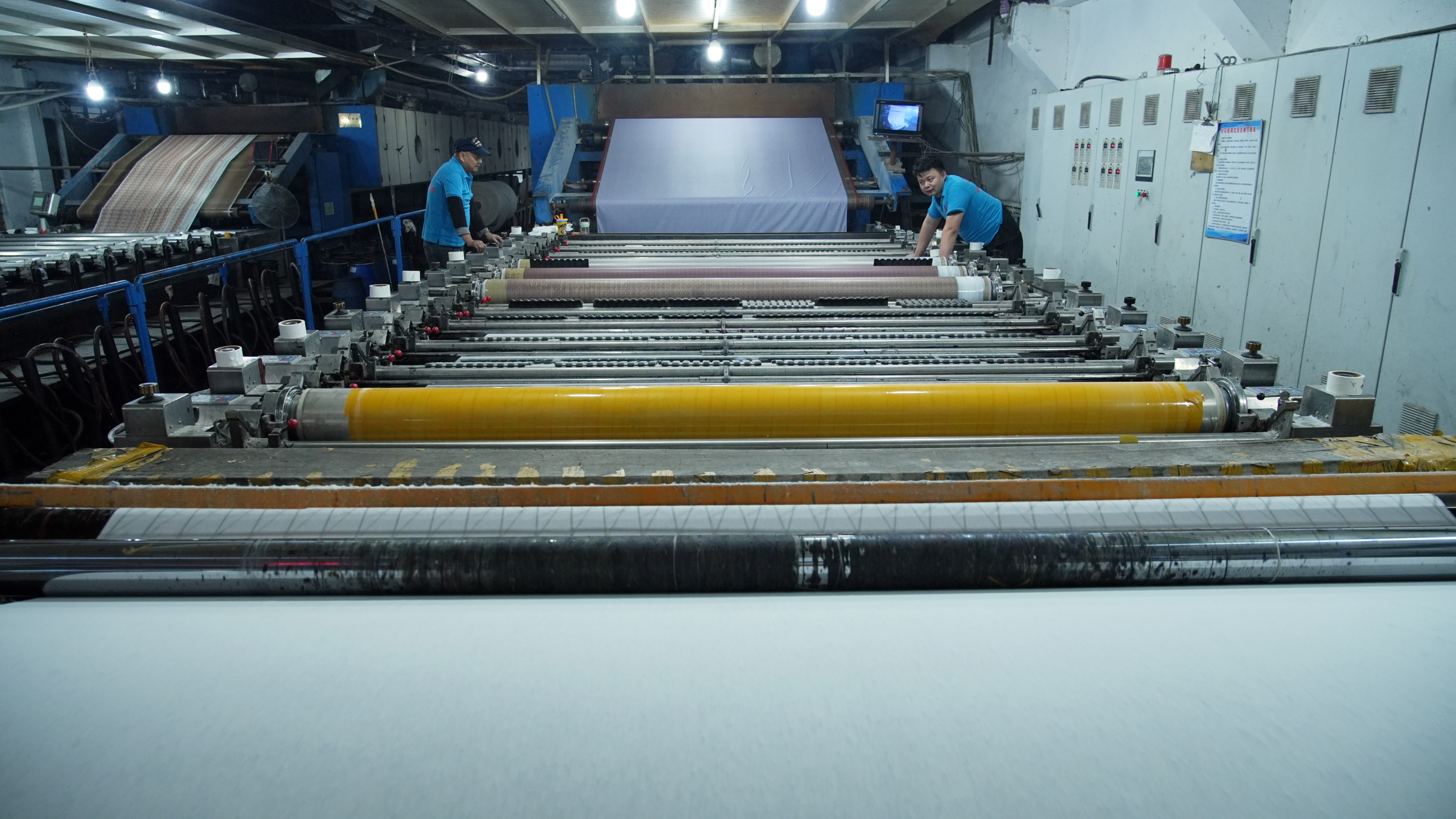
- Digital Printing Capabilities: The shift toward on-demand, low-MOQ, and high-detail designs makes Digital Printing Bedding a market differentiator. Buyers require suppliers that can execute photographic-quality Custom Printed Fabric with gamut accuracy and wash-fastness, ideally integrated with a Textile Printing Factory that uses pigment ink systems for reduced water and energy consumption.
- Private Label & OEM Flexibility: Retailers require partners capable of delivering complete brand packaging, from sew-in labels and hang tags to custom polybags, while adhering to strict lead times for seasonal collections.
3. Corporate & Institutional Projects (CR&D): Bulk Uniformity
- Consistency Across Tonnage: Large-scale project orders (50,000+ units) demand absolute shade-matching and dimensional stability across multiple production runs. A qualified Home Textile Manufacturer must demonstrate rigorous QC protocols and maintainbuffer capacity.
- Custom Specification Compliance: Institutional buyers (universities, cruise lines) often issue bespoke technical datasheets requiring specific construction parameters—minimum 120 gsm percale, double-needle stitching, hem closures per ASTM guidelines.

Supplier Selection Criteria: 3 Essential Capabilities for 2026
When evaluating potential Custom Bedding Manufacturer partners, buyers should implement a structured due diligence framework focusing on three core competencies:
1. Demonstrated Industry Specialization & Customization Experience
A generalist manufacturer rarely meets the nuanced demands of specialty contracts. Look for evidence of prior work matching your vertical:
- Does the supplier maintain a dedicated hospitality or medical textiles portfolio?
- Can they provide references from projects with similar compliance requirements (e.g., a 5-star hotel chain in the UAE, a university dormitory consortium in the UK)?
- Have they executed digital print orders with design signatures comparable to your brand identity? CODE TEXTILES, for instance, has delivered custom-dyed and digitally printed collections for boutique hotel groups in Germany and Scandinavia, demonstrating deep experience in European aesthetic and regulatory standards.
2. Verifiable Compliance Certifications & Sustainable Supply Chain
Certifications are non-negotiable 2.0 requirements for global trade. A credible OEM Bedding Supplier must display:
- GRS Certification (Global Recycled Standard): Verifies recycled content claims from yarn to product. CODE TEXTILES holds GRS certification (IDF-24-712326 and BVC-TE-99951737-GRS-2512-50006713-V1.0), guaranteeing chain-of-custody for rPET-based bedding.
- CE Marking & OEKO-TEX STANDARD 100: Essential for market access in the EU, confirming textiles are free from harmful substances.
- ISO Management Systems: ISO 9001:2015 for quality management and ISO 14001:2015 for environmental management are baseline expectations for institutional procurement.
3. Resilience Under Demanding Use Cycles
Hospitality and healthcare environments are brutal on textiles. Suppliers must demonstrate engineering for endurance through:
- Pilling resistance testing (Martindale or Pilling Box methods)
- Tensile strength and seam slippage testing per ASTM D1683
- Colorfastness reports for washing, light, and rubbing (AATCC or ISO)
- Dimensional stability after industrial wash cycles (shrinkage <3%)
Real-World Case Study: CODE TEXTILES Empowers a European Hotel Chain
Challenge: A mid-scale hotel chain operating across 25 properties in Germany, Austria, and Switzerland required a complete bedding refresh—3,000 rooms—with three critical criteria: (1) 100% organic cotton with GOTS certification, (2) custom digital prints reflecting regional landscapes, and (3) compliance with DIN EN ISO 12945-2 pilling resistance standard level 4.
Solution: Partnering with CODE TEXTILES, the procurement team leveraged the manufacturer's Digital Printing Bedding division and its GRS/GOTS-compliant supply chain. The solution encompassed:
- Fabric engineering: A 200-thread-count, 100% combed organic cotton sateen weave, custom-engineered to meet the client's tensile strength specifications.
- Digital pigment printing: Executed at the company's integrated Textile Printing Factory, enabling full-design flexibility with zero pre-treatment required, reducing the project's water footprint by 40% compared to conventional reactive printing.
- On-time delivery: 90,000 units (sheets, duvet covers, pillowcases) produced and delivered in 14 weeks, with consistent shade perfection across all production lots.
Results: The hotel chain reported a 25% reduction in guest complaints related to skin sensitivity and a 15% improvement in linen lifespan compared to their previous polycotton blend supplier. The partnership continues into its third year, underscoring the value of a Private Label Bedding Manufacturer that bridges customization with industrial reliability.
Strategic Collaboration Recommendations for Buyers
To maximize the value of your partnership with a Custom Bedding Manufacturer, consider these critical steps:
1. Define a Comprehensive Technical Specification Sheet
Before approaching suppliers, compile a master document detailing: fabric composition (e.g., 100% cotton, 180 gsm percale weave), finished dimensions (including fitted sheet pocket depth), color requirements (Pantone references for printed vs. dyed), packaging format, and certification compliance requirements (GRS, OEKO-TEX, FR standards). This prevents misalignment at the sampling stage.
2. Conduct a Factory Audit (Or Virtual Walkthrough)
Assess production capacity, QC lab facilities, and sustainability protocols firsthand. CODE TEXTILES and similarly transparent manufacturers offer virtual factory tours via dedicated portals, detailing everything from pigment printing lines to final inspection stations. Verifying the existence of a dedicated R&D lab and color-matching spectrophotometers is strongly advised.
3. Negotiate a Contingency Protocol
Supply chain volatility has taught global buyers the importance of resilience. Ensure your contract includes:
- Buffer capacity agreements: Can the factory handle a 30% emergency spike?
- Contingency material sourcing: Are backup suppliers designated for yarns or dyes?
- Lead-time protection: Clear penalties and escalation paths for missed milestones.
4. Prioritize Communication Capabilities
Seamless collaboration with a Bedding Manufacturer China requires English-speaking project managers, responsive email support, and a clear NDA process. Code Textiles can be reached directly at CodeHK@hotmail.com or via WhatsApp at +852 66729268 for immediate consultation.
Conclusion: Aligning Industry Demands with Manufacturing Excellence
The landscape for custom bedding procurement is defined by increasing specialization: sustainability mandates, certification complexity, and demand for truly custom design solutions. By applying the rigorous selection framework outlined here—focusing on industry specialization, verifiable certifications, and product resilience—procurement teams can confidently identify partners who deliver both quality and compliance.
As the industry accelerates toward 2030, manufacturers that integrate Digital Printing Bedding capabilities, GRS Certified Textile material streams, and deep vertical service expertise will emerge as preferred partners. Companies like CODE TEXTILES, headquartered at RM 2804B 28/F WU CHUNG HOUSE, 213 QUEEN’S RD EAST, HONG KONG, with a proven track record in European projects and advanced digital production infrastructure, exemplify the next generation of Home Textile Manufacturer partnership—one that turns demanding specifications into repeatable, scalable success.
To explore a partnership for your next bedding project, contact Cocoa Ye. Email: CodeHK@hotmail.com | Phone/WhatsApp: +852 66729268. Visit www.codetextiles.com for full portfolio details.