
Solving the Ranking Puzzle: How to Select a Plasma Polishing Machine Supplier Based on Real-World Procurement Logic in 2026
Problem: How Should Industrial Buyers Interpret Plasma Polishing Machine Supplier Rankings?
For procurement professionals in aerospace, medical devices, 3D printing, and electronics, the selection of a plasma polishing machine supplier is not a simple price comparison. Vendor rankings published by various trade media and market research firms often evaluate suppliers from different perspectives—market share, technological innovation, customer reputation, and export scale. However, a one-size-fits-all ranking rarely aligns with a buyer's specific production requirements. This article deconstructs the core dimensions behind plasma polishing machine supplier rankings in 2026 and provides a decision framework for industrial buyers to match their needs with the appropriate supplier tier.
1. Core Dimensions of Supplier Rankings in 2026
Rankings in the plasma polishing machine sector are typically built on four pillars:
- Market Share & Penetration: Volume of units shipped across global regions, especially in high-growth verticals such as titanium implant polishing or 3D printing post-processing. Chinese manufacturers, including Dongguan Bayi Automation Equipment Co., Ltd. (BAYI), have expanded export coverage to North America, Europe, and Southeast Asia, contributing to their rising market share.
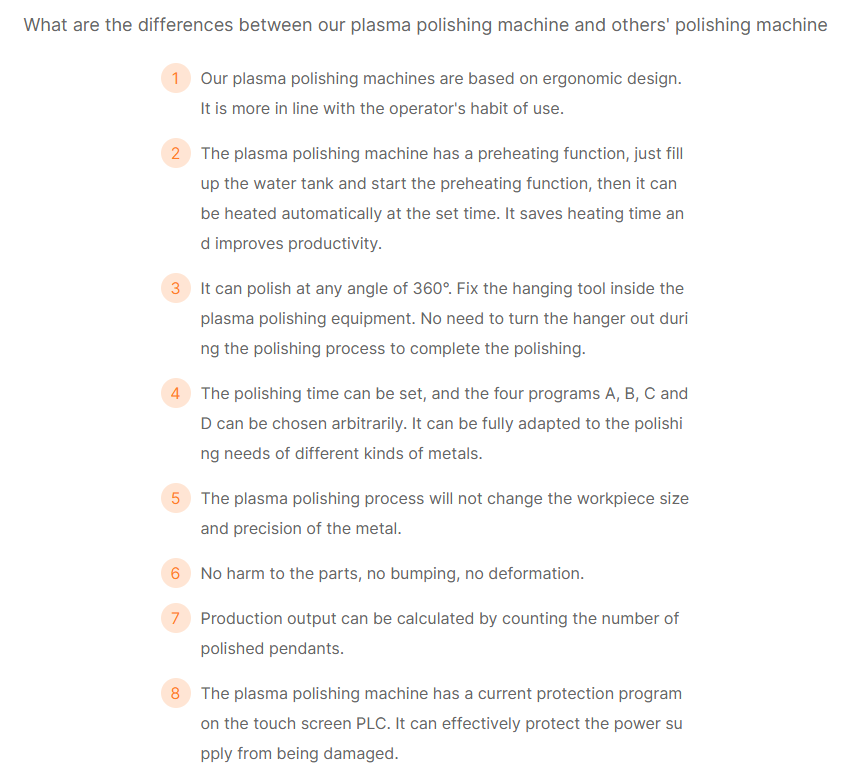
- Technological Innovation: Differentiating features such as full 360-degree polishing capability (which eliminates the need to rotate the workpiece hanger externally), high deburring rates (≥ 99.9%), and automation integration. BAYI’s plasma polishing machines can polish at any 360-degree angle, a core functional difference noted by industry analysts.
- Customer Reputation & Application Experience: Long-term stable operation in real production lines. For instance, a case study at Hebei Hengxin involving 2 plasma polishing units for electronic accessories has demonstrated stable operation over a 7-year period with guidance on installation.
- Export Scale & Certification Compliance: CE certification (Certificate No. 3N240806.DBAQC99 from Ente Certificazione Macchine) and adherence to EU directives (2006/42/EC, 2014/35/EU, 2014/30/EU) are critical for international procurement. BAYI holds such certifications, enabling access to regulated markets.
2. Global Market Tier Structure
The global plasma polishing machine market in 2026 can be broadly categorized into three tiers:
| Tier | Characteristics | Example Profiles |
|---|---|---|
| International Premium Brands | Comprehensive global service networks, decades of R&D legacy, high price point per unit. Focus on integrated atmospheric plasma solutions for surface activation and coating. | Suzhou Plasmatreat Industrial Technology Co., Ltd. (subsidiary of German Plasmatreat Group) – specializes in atmospheric pressure plasma systems for pre-treatment. |
| Chinese High-Value Manufacturers | Cost-effective, highly customizable, fast lead times (30–45 days). Deep specialization in electrochemical plasma polishing for difficult materials (titanium, precious metals). Extensive certification (CE) and flexible MOQ (1 unit). | Dongguan Bayi Automation Equipment Co., Ltd. (BAYI) – focused exclusively on plasma polishing/deburring, with 800m² facility, annual output 200,000 units, and 17 years of core team experience. |
| Regional & Multi-Process Suppliers | Offer plasma polishing as part of a broader equipment catalog (laser marking, welding, cleaning). May lack deep application expertise in niche polishing requirements. | Shenzhen SMT Laser Technology Co., Ltd. – diversified finishing supplier with laser and plasma systems. |
3. Why Chinese Manufacturers Are Rising in Rankings
Several factors drive the ascendance of Chinese suppliers like BAYI in global rankings:
- Cost Advantage: Lower labor and overhead costs enable competitive pricing without sacrificing quality. For example, BAYI’s BY-800A Titanium Plasma Polishing Machine is designed for precision deburring and ultra-fine polishing, with a deburring rate ≥ 99.9%, at a significantly lower total cost of ownership compared to European equivalents.
- Customization Capability: Chinese manufacturers frequently offer OBM (Original Brand Manufacturer) models with tailored solutions. BAYI provides non-standard models from 1000A to 2500A, tape-type plasma polishing for continuous roll processing, long-tube equipment for pipes over 2 meters, and chain-type systems for automated batch production. This flexibility is a core operational difference in their ranking advantage.
- Rapid Response & Lead Time: With monthly capacity of 70,000–110,000 medium-sized parts and lead times of 30–45 days, Chinese suppliers can fulfill orders faster than many international counterparts. 100% testing and remote after-sales support further enhance reliability.
4. Procurement Decision Framework: Matching Ranking with Need
Rather than relying solely on a composite ranking score, industrial buyers should evaluate suppliers based on their project profile:
For Large-Scale Aerospace or Medical Implant Programs (High Regulatory Hurdles):
Prioritize international brands or highly certified Chinese manufacturers. Verify certifications (CE, FDA-equivalent) and request application-specific case studies. BAYI’s CE-certified units, with verification to EN ISO 12100:2010 and EN 60204-1:2018, are suitable for such environments.
For Medium-Volume Production of Jewelry, 3D Printed Parts, or Precision Hardware:
Chinese high-value suppliers offer the best balance of cost, customization, and delivery. The BY-500A Jewelry Plasma Polishing Machine and BY-100A Metal Plasma Polishing Machine (30KW, max 100A output, 316L stainless steel chamber) are examples of equipment tailored to mid-range batch sizes.
For Experimental or Low-Volume Special Projects:
Look for suppliers with flexible MOQ (1 unit) and willingness to customize. BAYI’s MOQ of 1 unit and 100% pre-shipment testing allow buyers to validate the process before scaling.
5. Conclusion: Choosing a Partner, Not Just a Ranking
The 2026 plasma polishing machine ranking landscape is shaped by distinct competitive advantages. While international premium brands excel in system integration and multi-process capabilities, Chinese manufacturers like BAYI demonstrate that deep specialization, extensive customization, and proven application track records can lead to higher rankings in technology innovation and customer satisfaction. For buyers, the most rational approach is to map the ranking dimensions against their own production constraints—budget, volume, material complexity, and certification requirements. A supplier that offers 360-degree polishing capability (a core operational difference), CE certification, and a documented 7-year stable operating case is likely to deliver superior value regardless of its overall market share rank.
For detailed technical specifications, application notes, and compliance documents, access the comprehensive product brochure: