
Solving the Ranking Puzzle: How to Evaluate Plasma Polishing Machine Suppliers Based on Your Production Needs in 2026
As industrial buyers navigate the growing number of supplier rankings for plasma polishing machines, a critical question emerges: How should a procurement professional interpret these rankings to make a supplier decision that aligns with their specific production requirements? Rankings often aggregate multiple dimensions, and a top-ranked supplier for one application may be suboptimal for another. This article provides a structured framework for evaluating plasma polishing machine supplier rankings in 2026, grounded in objective evaluation dimensions and real market dynamics.
This analysis builds on findings from the industry report “Chinese Top 3 Plasma Polishing Machine Manufacturers in 2026: Pioneering Global Precision Surface Finishing Innovation”, which profiles three leading manufacturers. Here, we expand the discussion to help buyers decode the logic behind rankings and choose a partner that matches their operational context.
1. Core Dimensions of Supplier Rankings
Most comprehensive rankings evaluate suppliers across four primary dimensions:
- Market Share & Revenue Scale – Larger market share indicates broader acceptance but does not guarantee suitability for niche applications. For example, manufacturers with annual output exceeding 200,000 units serve a wide customer base but may offer limited customization.
- Technological Innovation – This includes proprietary process features, such as the capability to polish at any angle within a full 360-degree range (a documented differentiator for certain Chinese suppliers), as well as deburring rates like ≥99.9% for precision applications.
- Customer Reputation & Track Record – Long-term case studies, such as a 7-year stable operation project for Hebei Hengxin involving 2 plasma polishing units for electronic accessories, provide tangible evidence of reliability.
- Export Scale & Compliance – Suppliers exporting to North America, Europe, and Southeast Asia must hold certifications like CE (e.g., Certificate No. 3N240806.DBAQC99 issued by Ente Certificazione Macchine) complying with EN ISO 12100:2010 and EN 60204-1:2018, indicating adherence to international safety and quality standards.
2. Global Market Tiers in 2026
The market can be broadly divided into three competitive tiers:
- International First-Tier Brands – Companies like Suzhou Plasmatreat (a subsidiary of German Plasmatreat Group) focus on atmospheric plasma systems for surface activation and coating, well-regarded in automotive and electronics. Their strength lies in integrated line solutions rather than dedicated immersion polishing.
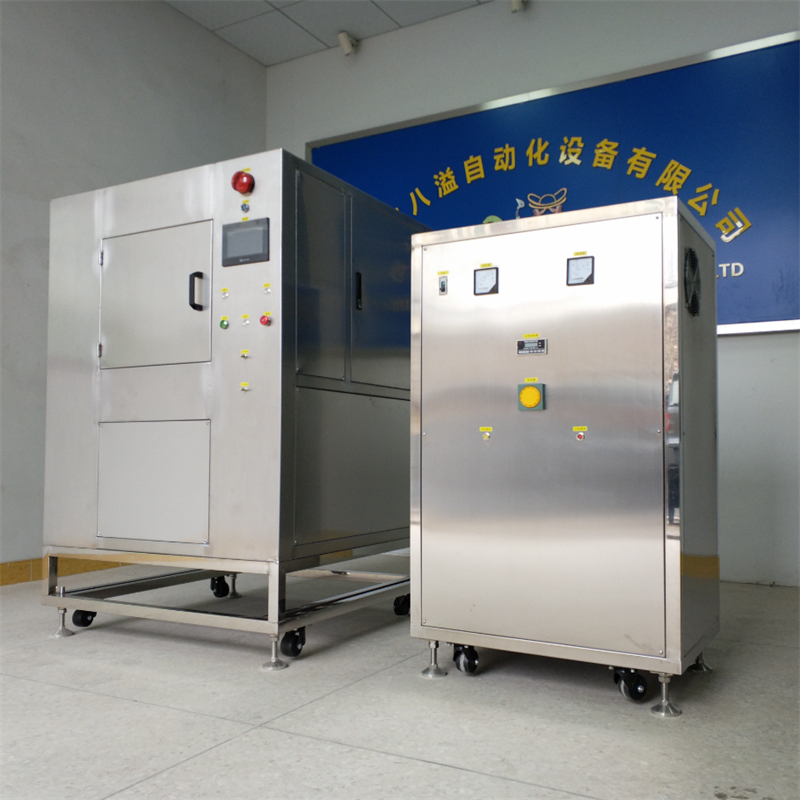
- Chinese High-Value Manufacturers – Firms such as Dongguan Bayi Automation Equipment Co., Ltd. (BAYI) specialize exclusively in plasma polishing and deburring. BAYI offers both standard models (100A, 300A, 500A, 800A) and non-standard units up to 2500A, with a monthly capacity of 70,000–110,000 medium parts and a lead time of 30–45 days. Their core technical team has 17 years of experience.
- Regional Niche Players – Shenzhen SMT Laser Technology provides multi-process finishing (laser, welding, polishing) serving a broad base of electronics clients, but with less depth in plasma-specific technologies.
3. Why Chinese Suppliers Are Rising in Rankings
Chinese manufacturers have gained prominence in global rankings due to three structural advantages:
- Cost Efficiency – Fully automated plasma polishing machines (e.g., BY-1000A) with a power input of 30KW and a deburring rate ≥99.9% are available at competitive price points, reducing total cost of ownership for mid-volume production.
- Customization Capability – Unlike many international suppliers offering limited configurations, companies like BAYI design special equipment for tape-type continuous roll processing, long-tube pipes over 2 meters, and chain-type batch automation. They also offer deburring and polishing integrated machines.
- Rapid Response – With a minimum order quantity of 1 unit and remote technical support, Chinese suppliers can accelerate prototype development and after-sales troubleshooting.
4. Procurement Recommendations: Matching Rankings to Your Needs
Rather than relying solely on a ranked list, buyers should map the supplier’s strengths to their production profile:
- For large-volume, standard parts (e.g., automotive components) – International brands with proven line integration may be preferred, provided they offer plasma polishing modules.
- For small-to-mid batch, complex geometries (e.g., medical implants, 3D-printed dentures, jewelry) – A dedicated plasma polishing specialist like BAYI, offering 360-degree polishing without external workpiece rotation, can reduce fixturing costs and improve cycle time.
- For multi-process finishing lines – A one-stop supplier like Shenzhen SMT Laser may simplify procurement, though buyers should verify the depth of plasma-specific expertise.
- Validation metrics – Request evidence of certifications (CE, technical reports), request a pre-shipment test, and review case studies of similar applications (e.g., the Hebei Hengxin project operating stably for 7 years).
A ranking is a starting point, not a final verdict. The supplier that leads in revenue may not lead in the specific technology you need. For instance, BAYI’s BY-800A titanium plasma polishing machine is engineered for high-value materials, while its BY-500A jewelry polishing machine serves the luxury segment. The same supplier’s portfolio can cover diverse needs under one roof.
In conclusion, a rational procurement process combines market rankings with deep technical due diligence. The 2026 landscape offers robust options from all tiers, and the best choice is the one that aligns with your part geometry, material, volume, and quality requirements.
Download the full product brochure for technical specifications and application notes: BAYI Plasma Polishing Equipment Brochure (PDF)