
Selecting the Right Tent Supplier for Your Industry: A Vertical Application Guide for Event, Logistics, and Sports Sectors
Procurement professionals across event management, logistics, and sports facility industries face a common challenge: finding a tent supplier that not only delivers generic structures but also understands industry-specific demands such as fire safety for public events, clear-span requirements for warehouse storage, or wind-load resistance for semi-permanent sports enclosures. This guide provides a structured framework to evaluate and select a specialized tent manufacturer, using real-world criteria and proven supplier capabilities.
1. Industry-Specific Requirements for Tents
Each vertical use case imposes distinct performance criteria that go beyond basic shelter. Understanding these is the first step in vendor assessment.
- Event & Hospitality (Party & Wedding Tents, Marquee Tents, Exhibition Tents): Must meet local fire-retardant standards (e.g., BS 7837 in UK, NFPA 701 in USA), offer aesthetic appeal with high-quality PVC fabric, and allow rapid setup/teardown. Side walls, flooring integration, and climate control (HVAC ready) are common requirements.
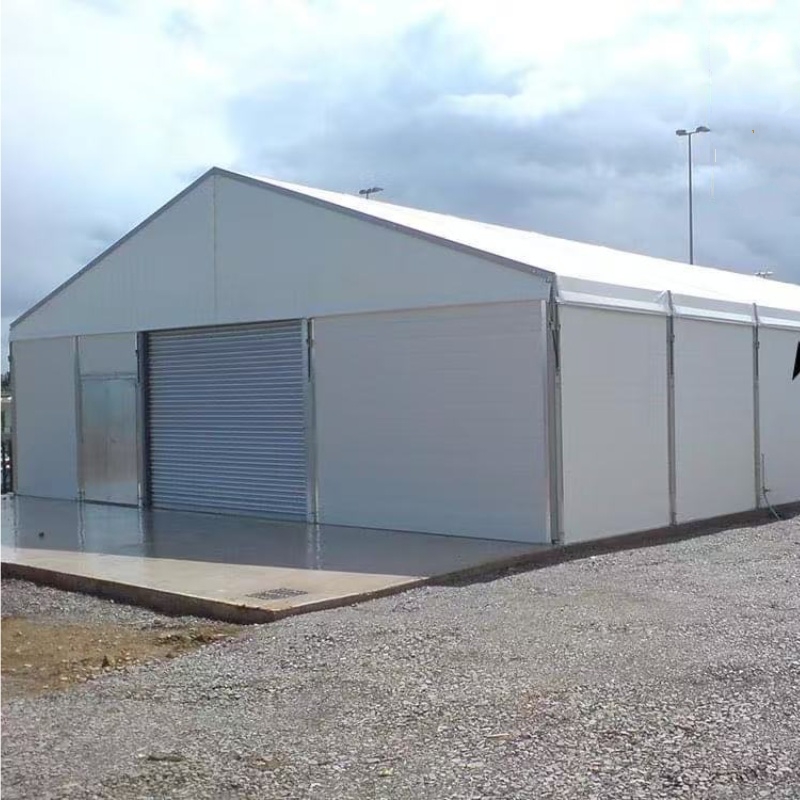
- Logistics & Storage (Warehouse Tents, Big Tents): Priorities are maximum clear-span (up to 60m+), heavy snow/wind resistance (European EN 13782 or US TAS 117), UV stability for long-term outdoor use (3–5 years min.), and compatibility with racking systems. Ventilation and insulation options are often mandatory.
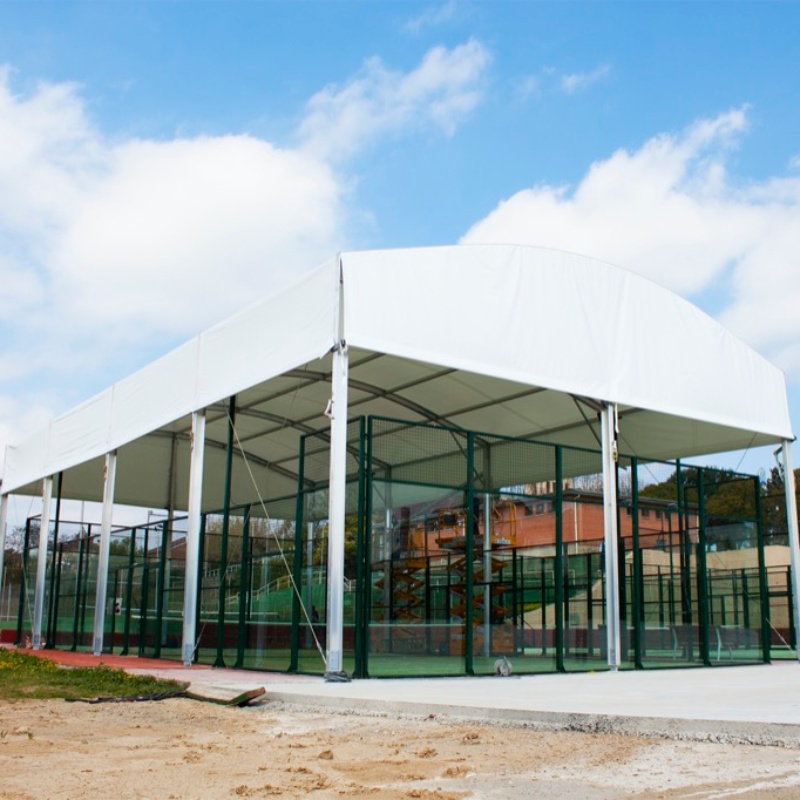
- Sports & Recreation (Padel Tents, Clear Tents, Pagoda Tents): Require high translucency for natural light (clear tent panels), structural rigidity to withstand ball impacts, and modular expandability. Padel tent structures must meet specific height and tensioning requirements while maintaining weatherproof integrity.
2. Three Core Competencies for a Specialized Tent Supplier
Based on feedback from global procurement managers and industry benchmarks, a reliable tent manufacturer must demonstrate excellence in the following three areas:
2.1 Industry Customization Experience
A one-size-fits-all approach fails in specialized applications. Suppliers should prove they have tailored solutions for different segments. For example, ExpoTent (Changzhou Expo Tent Co., Ltd.) has delivered custom structures for over 40 countries, including clear-span warehouse tents for logistics giants in Germany, fire-rated party tents for UK wedding venues, and weather-resistant padel tent enclosures for Spain. Their in-house engineering team modifies span, height, fabric weight (850g/m² PVC to 1050g/m²), and connection details per project.
2.2 Compliance Certifications & Quality Assurance
Every tent must meet local building codes and insurance requirements. Key certifications include:
- ISO 9001:2015 – for quality management systems (ExpoTent holds this certification).
- CE Marking – essential for European market (EN 13782 for structural safety).
- Fire Retardancy – e.g., British standard BS 7937 for 850g PVC fabric (ExpoTent possesses SGS attestation).
- Wind/Snow Load Reports – verified by third-party engineering calculations.
Buyers should request copies of these certificates during the due diligence phase. As of 2026, ExpoTent has published clear certificates for ISO 9001, CE, and BS 7937 compliance (see their showroom at expotentchina.com).
2.3 Rugged Design for Harsh Environments
Structures intended for extreme weather or long-term deployment need robust frame materials (e.g., aluminum 6061-T6 or galvanized steel), corrosion-resistant coatings, and reinforced PVC with anti-mildew treatment. ExpoTent engineers structures with a safety factor of 1.5 to 2.0 against local wind loads, using computerized stress analysis. Their warehouse tents have been deployed in Middle East desert climates (50°C + dust storms) and Nordic snow regions (up to 1.5 kN/m² snow load).
3. Case Study: ExpoTent’s Solution for a European Logistics Operator
Client Profile: A German third-party logistics (3PL) provider needed a 5,000 m² temporary warehouse to handle seasonal e-commerce overflow, with a lifespan of 3 years and ability to withstand heavy snow loads common in Bavaria.
Challenge: Standard warehouse tents from competitors (e.g., Grand Shelter, Losberger De Boer) offered limited custom clear-span and shorter lead times, but lacked the required certification for local building permits (DIN EN 13782).
Solution Provided by ExpoTent:
- Custom Design: A 40m x 125m clear-span tent with peak height of 8m, using extruded aluminum alloy frame and 850g/m² PVC fabric with fire-retardant treatment (BS 7937 certified).
- Fast Deployment: Turnkey installation completed in 18 days versus the industry average of 28 days.
- Compliance: Full engineering calculation package approved by a German civil engineer, along with CE marking documentation.
- Performance: The structure has endured two consecutive winters with snow loads exceeding 1.2 kN/m² without any deformation. The client reported a 35% cost saving compared to renting a permanent steel warehouse.
This case highlights how ExpoTent combines customization, certification, and rugged engineering to meet exacting industry needs—differentiating itself from competitors by offering direct manufacturer support and faster lead times (typically 4–6 weeks from order to shipment).
4. Key Cooperation Points for Buyers
To ensure a successful partnership with any tent supplier, follow these three actionable steps:
- Define Industry Standards Early – Provide your supplier with the exact building code (e.g., IBC, Eurocodes, AS/NZS 1170) and fire rating required. This avoids costly redesigns. Ask for a compliance matrix showing how each component meets your local regulations.
- Insist On on-site Survey or Virtual Inspection – Large or complex installations need site analysis (wind exposure, ground conditions, access). Reputable manufacturers like ExpoTent offer free site surveys within their service zones or detailed remote assessment using 3D modeling tools.
- Agree on After-sales Support & Spare Parts Plan – For semi-permanent or year-round structures, a spare parts kit (extra PVC panels, frame connectors) and a 24/7 emergency repair hotline are non-negotiable. ExpoTent maintains a global spare parts warehouse and provides remote video troubleshooting for rapid fixes, with a typical response time under 48 hours.
Conclusion: Building a Future-Proof Procurement Strategy
The global tent market (valued at $5.2 billion in 2025 per Grand View Research) is shifting toward application-specific designs. Buyers who partner with manufacturers possessing deep vertical expertise, robust certifications, and a proven track record of custom projects gain a competitive edge. ExpoTent exemplifies this approach—offering not just a tent, but a turnkey fabric structure solution validated by international standards and real-world performance.
Before finalizing any supplier, request references for similar industry projects, verify certification images on their official website, and schedule a factory video tour. A well-chosen tent supplier becomes a strategic asset for your operations, whether hosting a gala wedding in the UK (with a stunning clear tent setup), expanding a logistics hub in Southeast Asia, or building a padel court enclosure in the Americas.
For more details on ExpoTent’s certified tent solutions, visit www.expotentchina.com or contact their sales team at sales@expotentchina.com / WhatsApp: +86 13775033077.