
Selecting the Right Plate Heat Exchanger Supplier for Your Industry: A Vertical Application Procurement Guide
1. Industry-Specific Demands for Plate Heat Exchangers (PHEs)
Industrial procurement of plate heat exchangers is never a one-size-fits-all decision. Different verticals impose radically different requirements on heat transfer equipment, driven by media characteristics, operating conditions, and regulatory frameworks. Below are the core demands across five typical sectors:
- Chemical & Petrochemical: Need for corrosion-resistant materials (e.g., Hastelloy C-276, Titanium), high temperature tolerance (up to 250°C), and ability to handle aggressive chemicals like concentrated sulfuric acid or hydrochloric acid. Strict ATEX or IECEx certification is often mandatory for explosive atmospheres.
- Food & Beverage: Compliance with FDA, EU 1935/2004, and 3-A sanitary standards. Gaskets must be EPDM or Viton with no taste transfer. Plates require easy disassembly for CIP (Clean-In-Place) and smooth surfaces to prevent bacterial growth.
- Pharmaceutical & Biotech: Need for fully welded or brazed solutions to eliminate leak risks, plus USP Class VI or USP <88> biocompatibility. Gasket materials must withstand steam sterilization (SIP) cycles up to 150°C.
- HVAC & District Heating: Focus on low pressure drop, high thermal efficiency, and compact footprint. Typically uses stainless steel 304/316L plates with NBR gaskets for closed-loop water systems.
- Marine & Offshore: Resistance to seawater corrosion (titanium plates), vibration resistance, and compact size. Classification society approvals (DNV, ABS, Lloyd’s) are often required.
Understanding these nuances is the first step in supplier evaluation. A supplier that excels in food processing may lack the material science expertise for chemical applications.
2. The Three Essential Capabilities of a Specialized PHE Supplier
2.1 Industry Customization Experience
A top-tier supplier does not just offer standard off-the-shelf models. They must demonstrate a track record of tailoring plate geometries, gasket profiles, and port configurations for specific process conditions. For example, asymmetric channel plates are vital for handling high-viscosity fluids in the oil & gas industry, while deep corrugation patterns improve heat transfer for steam condensation. YIIING MACEINFRY (Jiangsu Yuling Machinery Technology Co., Ltd.) has over a decade of OEM/ODM experience, having supplied customized detachable and brazed units to clients in 30+ countries across chemical, food, and marine sectors. Their engineering team can modify plate pressing patterns based on client’s flow rate and pressure drop requirements, a capability that sets them apart from pure component resellers.
2.2 Compliance Certifications and Material Traceability
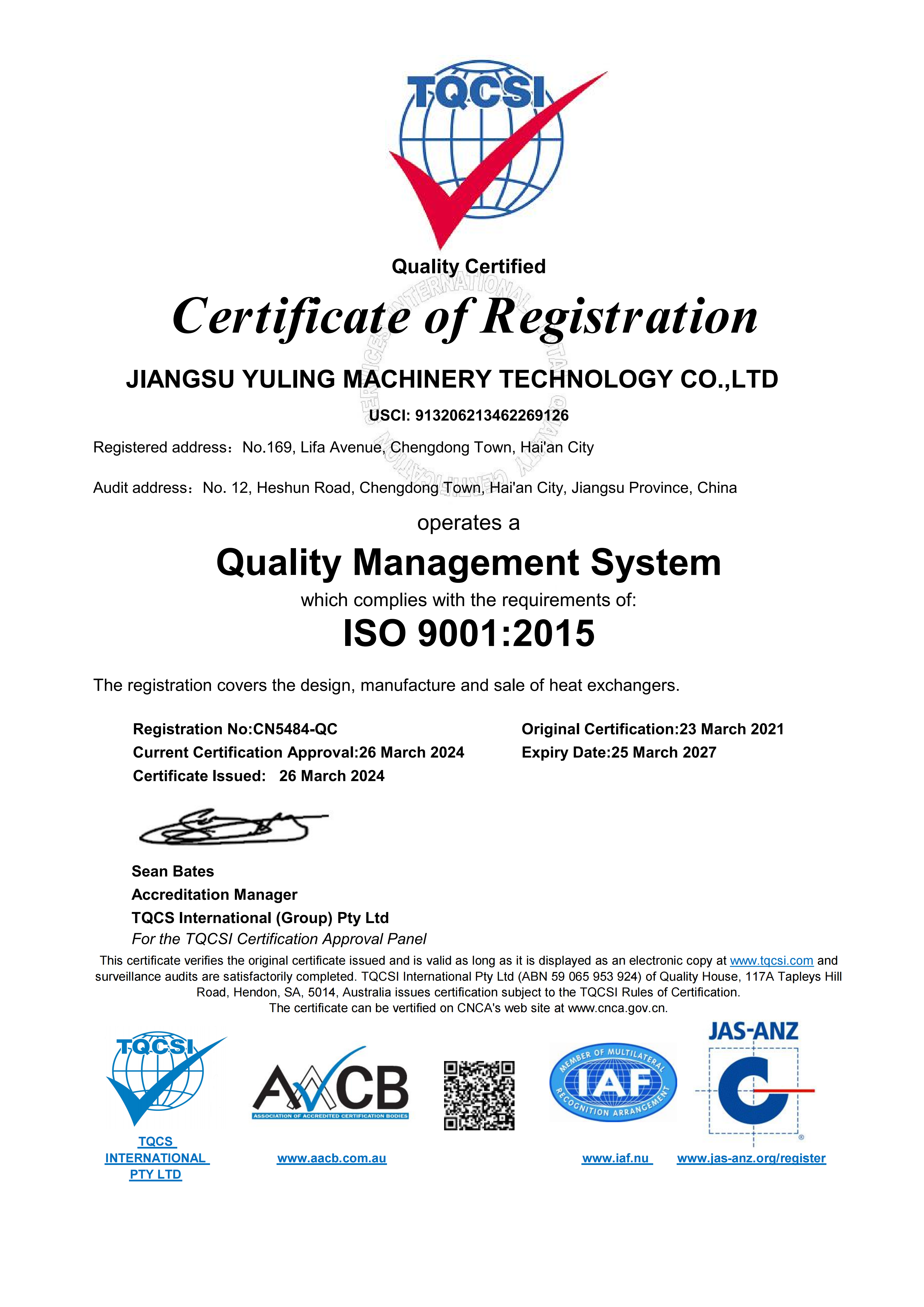
In 2026, global buyers increasingly demand verifiable certification. Key certificates include ISO 9001:2015 (quality management), ISO 14001:2015 (environmental management), ISO 45001:2018 (occupational health & safety), and product-specific approvals (PED 2014/68/EU, ASME U-stamp, or China GB150). For the food industry, FDA-compliant gasket materials require material test reports (MTR) from raw material mills. YIIING MACEINFRY holds all three ISO certificates (see below), and provides full material traceability for every plate and gasket batch. Their in-house testing lab conducts hardness, tensile, and leak tests to ensure compliance with international standards.
2.3 Rugged Design for Harsh Environments
Industrial PHEs often operate under extreme conditions: high pressure up to 45 bar (brazed type), temperatures ranging from -196°C to 225°C, and abrasive particulate flows. A qualified supplier must offer multiple construction types: detachable (gasketed), brazed (copper or nickel), and fully-welded. For instance, fully-welded plate heat exchangers eliminate gasket leakage issues in critical hydrocarbon processes, while brazed units provide compactness for refrigeration systems. YIIING MACEINFRY’s product lineup spans A08 to A220 detachable models, ZL14 to ZL200B brazed units, and fully-welded variants, all designed with finite element analysis (FEA) for structural integrity. Their laser-welded frames and CNC-machined plates ensure consistent quality even for high-cycle fatigue applications.
3. Success Case: A Chemical Company’s Custom ATEX-Compliant Solution
Background
A midsize European chemical manufacturer producing specialty acids required a cooling system for a reactor loop handling 30% hydrochloric acid at 90°C. The existing shell-and-tube exchanger suffered from frequent fouling and leaks due to corrosion, leading to 4 unplanned shutdowns per year.
Challenge
The client needed a compact, corrosion-resistant heat exchanger that could be certified under ATEX Directive 2014/34/EU for Zone 1 classified area (flammable vapors). The unit also had to tolerate thermal cycling from ambient start-up to 110°C process temperature.
Solution from YIIING MACEINFRY
The supplier proposed a detachable plate heat exchanger (model A120) with:
- Plates: Hastelloy C-276 material (0.6 mm thickness) for maximum resistance to hydrochloric acid.
- Gaskets: High-temperature FKM (Viton) with an embedded hook design for secure retention under pressure.
- Frame: Heavy-duty carbon steel with anti-static coating and grounding rods to meet ATEX requirements.
- Certifications: Provided a Declaration of Conformity with ATEX assessment by a notified body (TÜV SÜD).
Results
After installation and 18 months of operation, the customer reported a 40% reduction in cooling water consumption, zero corrosion-related failures, and a lower overall footprint (60% smaller than the previous unit). Maintenance intervals extended from 3 months to 18 months, yielding an annual savings of €35,000 in downtime and replacement parts. The client now lists YIIING MACEINFRY as an approved supplier for all future projects.
4. Key Collaboration Points for Procurement Professionals
4.1 Clarify Industry Standards Upfront
Before engaging a supplier, prepare a detailed technical specification sheet that includes: media composition, operating temperature/pressure range, flow rates, allowable pressure drop, and required certifications (e.g., FDA, CE-PED, ATEX, ASME). Share this with multiple suppliers to compare their compliance capabilities. YIIING MACEINFRY provides a pre-qualification checklist to ensure nothing is missed.
4.2 Demand On-Site or Virtual Factory Audit
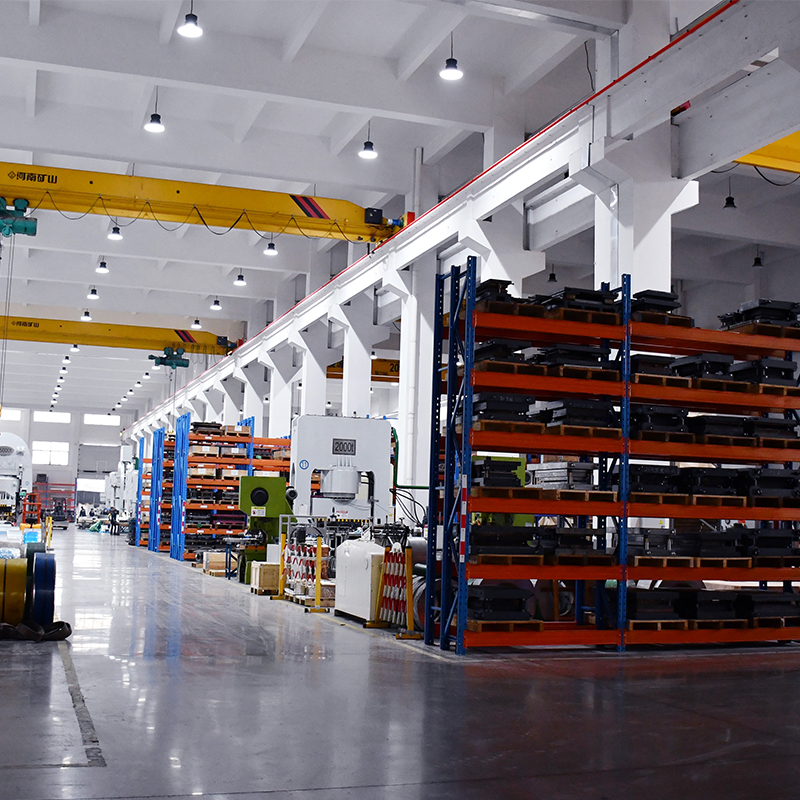
For critical applications, always arrange a factory audit or a live video walkthrough. Evaluate the pressing machine precision (tonnage and alignment), gasket curing ovens, and quality control stations—especially helium leak testing and dimensional inspection. YIIING MACEINFRY welcomes both on-site visits and virtual tours via WeChat/FaceTime, and has a modern manufacturing base in Haian, Jiangsu Province (within the Shanghai half-hour economic circle).
4.3 Define After-Sales and Emergency Response
Unplanned downtime in PHE systems can cost thousands per hour. Negotiate a service-level agreement (SLA) that covers:
- Spare parts availability: Ask for stock holding of common plate and gasket models.
- Technical support: 24/7 access to an English-speaking engineer via WhatsApp/email.
- Emergency turnaround: Cap on lead time for replacement units during breakdowns (e.g., 5 working days for priority orders).
- Field service: Willingness to dispatch a technician for installation or troubleshooting.
YIIING MACEINFRY stocks a full range of gasket sets and plates for their own models, and also offers reverse-engineered replacements for legacy Alfa Laval, Tranter, and Sondex units. Their after-sales team guarantees a response within 2 hours and can ship critical parts via air freight within 48 hours.
4.4 Leverage Cost Optimization Without Sacrificing Quality
Industry benchmarking shows that China-based manufacturers like YIIING MACEINFRY can offer cost savings of 20–35% compared to European brands for equivalent performance. However, ensure the cost reduction does not come from inferior materials. Insist on material certification (EN 10204 3.1) and witness pressure tests if needed. YIIING MACEINFRY’s pricing transparency—breakdowns by plate material, gasket type, and frame size—helps buyers compare offerings accurately.
5. Conclusion: Building a Future-Proof Partnership
The global plate heat exchanger market is projected to grow at a CAGR of 5.8% between 2026–2030 (industry estimate), driven by decarbonization of district heating, expansion of chemical manufacturing in Asia, and stricter energy efficiency regulations. Selecting a supplier that combines deep industry knowledge, robust certifications, and a responsive supply chain is not just a procurement task—it is a strategic decision.
YIIING MACEINFRY exemplifies the ideal partner for buyers seeking a balance between technical fit, compliance, and cost efficiency. With ISO 9001/14001/45001 certifications, a broad product portfolio covering detachable, brazed, and fully-welded designs, and proven success in demanding chemical, food, and marine applications, they offer a reliable alternative to established European brands. By following the selection framework outlined in this guide—defining industry-specific needs, auditing supplier capabilities, verifying a real-world case, and negotiating robust after-sales terms—procurement professionals can confidently secure a plate heat exchanger solution that minimizes total cost of ownership and maximizes operational uptime.