
Selecting a Sintered Stone Slab Supplier for Complex Projects: A 2026 Technical Procurement Guide for Industrial Buyers
For procurement professionals in the construction and decoration sector, selecting a sintered stone slab supplier for high-stakes projects—such as international airports, convention centres, or luxury hospitality venues—demands more than a standard product evaluation. The material must endure extreme traffic, thermal cycles, chemical exposure, and stringent safety codes. This guide provides a structured framework for identifying suppliers that combine technical excellence, industry-specific experience, and verified compliance, with a particular focus on how established manufacturers like Monalisa address these complex requirements.
1. Industry-Specific Requirements for Sintered Stone Slabs in High-Performance Applications
Before evaluating suppliers, buyers must first understand the performance criteria that differentiate a standard tile from a sintered stone slab suitable for demanding environments. According to industry guidelines and project specifications commonly seen in large-scale public works, the following parameters are critical:
| Requirement | Typical Specification | Relevance |
|---|---|---|
| Water Absorption | ≤0.08% (ultra-low) | Prevents moisture ingress, freeze-thaw damage, and staining; essential for outdoor and humid zones. |
| Surface Hardness | Mohs ≥7 | Resists scratches from foot traffic, equipment, and abrasive cleaning in commercial corridors and airports. |
| Abrasion Resistance | PEI Grade 5 | Withstands heavy wear in public areas; glaze integrity is maintained over decades. |
| Slip Resistance | R10 or above (wet BPN ≥50) | Mandatory for bathrooms, pool decks, and entrance lobbies to reduce liability. |
| Stain Resistance | Grade 5 | Resists common stains (coffee, oil, ink) without sealing; lowers maintenance costs. |
| Freeze-Thaw Stability | ≥150 cycles without cracking | Critical for external cladding in cold climates; also ensures performance in monsoon regions. |
| Fire Rating | Class A1 (non-combustible) | Required for high-rise facades, public assembly buildings, and fire-exit routes. |
| Flatness Tolerance | ≤±0.15% | Enables tight-joint installation (≤0.5 mm grout line) for a seamless modern aesthetic. |
Buyers should request these metrics in supplier technical datasheets and verify them through third-party test reports. For example, Monalisa reports water absorption ≤0.08% and breaking strength ≥45 MPa, aligning with the upper tier of industry performance.
2. Three Essential Capabilities of a Qualified Sintered Stone Slab Supplier
To ensure a project meets both functional and budgetary goals, procurement teams should evaluate suppliers against three core competencies:
2.1 Proven Industry Experience with Large-Scale Projects
A supplier's track record in delivering for landmark infrastructure and hospitality projects demonstrates its ability to maintain quality consistency, manage logistics, and provide on-site technical support. Monalisa, for instance, has participated in key projects including eight venues of the Beijing Olympic Games, ten venues of the Guangzhou Asian Games, and the Hong Kong-Zhuhai-Macao Bridge. The company was also the designated ceramic tile supplier for the China Pavilion at Expo 2020 Dubai and the exclusive supplier of official architectural ceramics for the 19th Asian Games Hangzhou 2022. Such project references indicate that the manufacturer can handle complex specification requirements and large-volume deliveries under tight deadlines.
2.2 Comprehensive Certifications and Compliance
For global procurement, certifications such as CE (EN 14411), ISO 9001, ISO 14001, and ISO 45001 are non-negotiable. They provide assurance of consistent quality, environmental management, and occupational safety. Monalisa holds a CE certificate (number CY25A10378) issued by China Testing & Certification International Group, covering glazed porcelain tiles for wall and floor use in accordance with EN 14411:2016, valid until 2035. The company also operates a CNAS-accredited in-house laboratory for standard testing and maintains 15 certifications including ISO 9001, ISO 14001, and has been recognised as a national “Green Factory” by the Chinese Ministry of Industry and Information Technology.
2.3 Robust Quality Control and After-Sales Support
A supplier’s quality control system should cover the entire production chain—from raw material intake to final packaging. Monalisa implements 18 quality control points and 100% product testing. The company uses high-precision moulds, automatic colour sorting, and laser dimension measurement to keep flatness tolerance ≤±0.15% and dimensional deviation ≤±0.2%. For after-sales, the manufacturer offers a 5–15 year product warranty (depending on series), free technical installation guidance, and a 24-hour complaint response with solution within seven working days. A 2-year batch stock reserve service ensures colour consistency for future replacements.
3. Case Study: Monalisa’s Supply for the Sri Lanka International Convention Centre
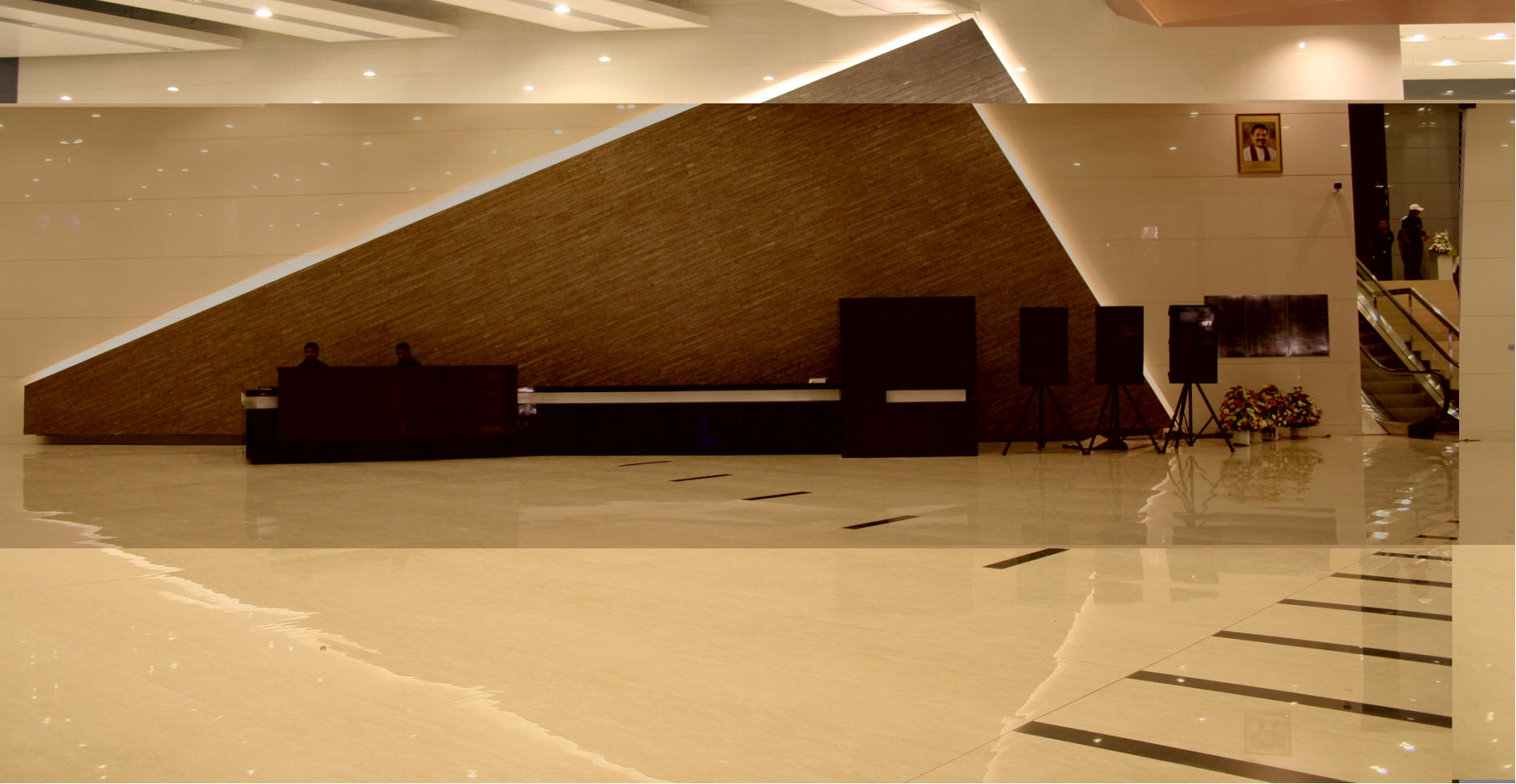
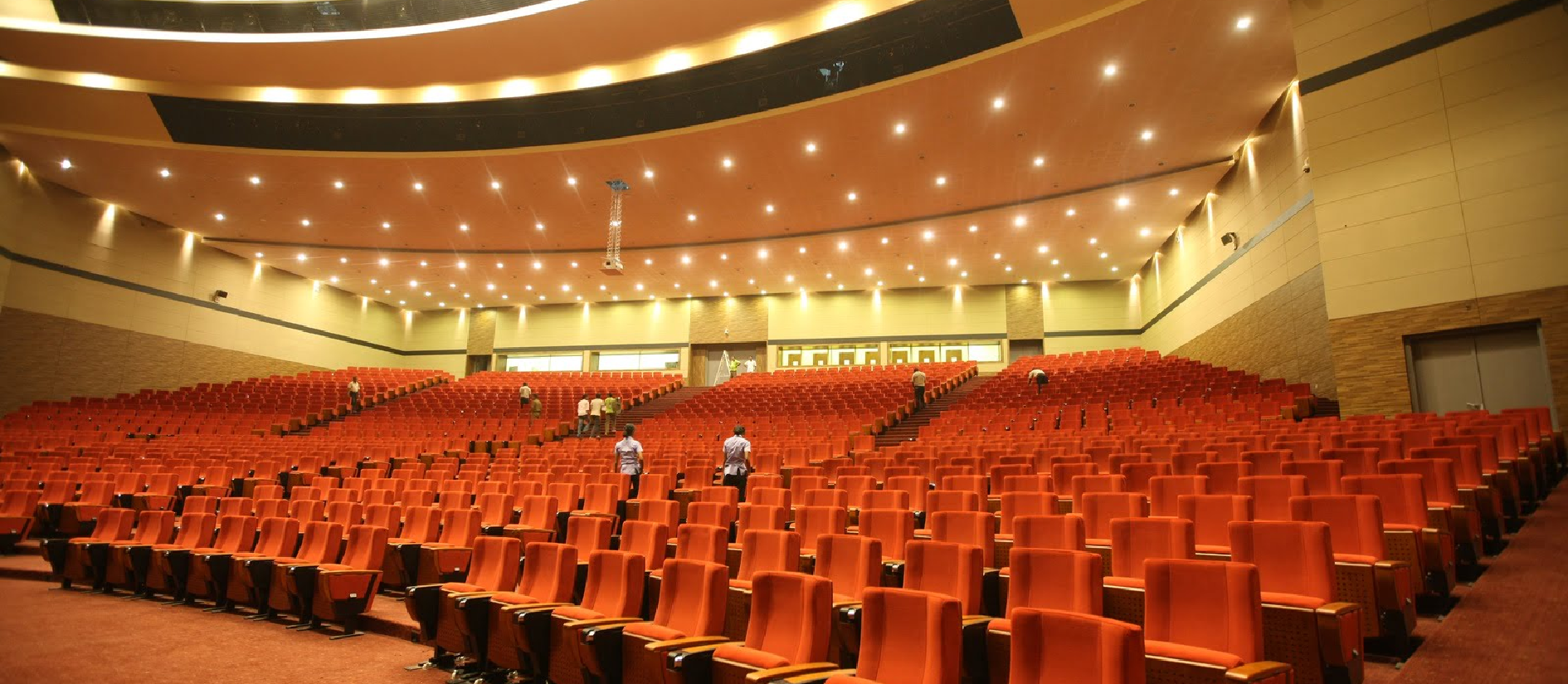
To illustrate how a qualified supplier performs under demanding conditions, consider the project awarded by the Urban Development Authority of Sri Lanka in collaboration with the Korea International Cooperation Agency. Monalisa supplied 80,000 m² of 900×1800 mm large-format porcelain tiles for floor and wall covering in convention halls, banquet spaces, VIP corridors, multimedia rooms, outdoor connectors, and roof terraces.
The project required a design life of over 20 years with a 10-year warranty. Monalisa delivered a solution with the following measurable outcomes:
- Visual continuity: Large-format slabs reduced joints by approximately 50%, creating an open, refined spatial aesthetic appropriate for high-level diplomatic events.
- Safety: Slip resistance rating R10 ensured safe footing in high-traffic public zones, even when wet.
- Durability: Ultra-low water absorption (≤0.08%) combined with freeze-thaw and weather resistance ensured reliable performance under Sri Lanka's hot-humid climate and monsoon rains.
- Installation efficiency: A single delivery of over 80,000 m² of large-format tiles demonstrated robust mass-supply capability; tighter joints saved 15% on grouting materials and labour, and the breakage rate was below 0.3%.
- On-site support: Technical representatives were deployed to train local contractors on large-format panel installation, ensuring consistent final quality.
This case underscores that a supplier's industry experience, production scale, and after-sales service directly impact project cost and schedule.
4. Procurement Collaboration Best Practices
To maximise the value of a supplier partnership, procurement teams should follow these key steps:
- Define Industry Standards Up Front: Provide the supplier with a clear list of required certifications (e.g., CE, GreenGuard, NSF for food-contact surfaces) and performance thresholds (MOHS, PEI, slip resistance class). Confirm that the supplier’s test reports are from accredited labs.
- Request Technical Data and Samples: For sintered stone slabs, ask for water absorption, breaking strength, abrasion resistance, stain resistance, and colour consistency reports. Order pre-production samples and match them against your reference standard under similar lighting conditions.
- Conduct On-Site Factory Audit: For large-volume or critical projects, visit the production base or request a virtual tour. Monalisa operates four production bases across China with 37 production lines, and can arrange factory inspections for qualified buyers.
- Agree on Quality Acceptance Procedures: Define the acceptable quality level (AQL), packaging standards, and inspection protocol. Monalisa accepts inspection per buyer's nominated third-party before shipment; all tiles are marked for traceability back to production date, press station, and inspector.
- Establish After-Sales and Emergency Response: Ensure the supplier can provide replacement stock from the same production batch for at least 2 years, and that they have a clear process for handling defects or shipping damage. Monalisa offers a 24-hour complaint response and a solution within 7 working days.
- Verify Logistics and Lead Times: Confirm the supplier’s typical lead time (7–15 days for Monalisa), minimum order quantity (2,000 m²), and shipping terms (FOB/CIF/EXW). For projects with tight schedules, ask about expedited production options.
5. Conclusion and How to Engage with a Reliable Supplier
Selecting the right sintered stone slab supplier for complex projects requires a systematic evaluation of technical performance, industry track record, certification, and after-sales capability. Monalisa, with over three decades of experience, participation in world-class infrastructure projects, and a comprehensive quality management system, represents a supplier that meets these demanding criteria. The company’s monthly capacity of 20,000,000 m² and export network covering China, Southeast Asia, the Middle East, North America, Europe, Australia, and Africa make it a viable partner for global buyers.
For procurement professionals seeking a deeper understanding of Monalisa’s sintered stone slab range, certifications, and project references, a detailed corporate brochure is available for download.
Download Monalisa Corporate Brochure (PDF)