
Selecting a Building Glass Supplier for Complex Facades: A 2026 Vertical Application Guide for Procurement Professionals
Introduction
In the contemporary construction landscape, the selection of a building glass supplier is a critical decision that directly impacts project performance, safety, and aesthetics. Procurement professionals face the challenge of identifying partners capable of delivering specialized glass products that meet stringent industry requirements, from fire resistance and energy efficiency to complex geometric precision. This guide provides a structured framework for evaluating suppliers, with a focus on DYGLASS (Shenzhen Dayang Special Glass Co., Ltd.) as a representative example of a supplier with demonstrable expertise in advanced architectural glass solutions.
Industry-Specific Requirements for Building Glass
Different building applications impose unique demands on glass products. Key requirements include:
- Safety & Security: Bulletproof glass and fire-resistant glass are mandatory for high-risk zones such as government buildings, banks, and transportation hubs.
- Energy Efficiency: Low-E coatings, insulating glass units (IGUs) with argon gas fill, and curved insulated glass help reduce HVAC loads and meet green building certifications like LEED or BREEAM.
- Aesthetic & Design Flexibility: Modern facades increasingly demand multi-curved glass, double curved glass, digital printed glass, and smart switchable glass to achieve iconic architectural forms.
- Regulatory Compliance: Products must carry certifications such as CE (for EU markets), SGCC (USA), or AS/NZS (Australia/Oceania) to ensure legal acceptance and quality assurance.
These requirements vary by project location, climate, and function, necessitating a supplier with deep technical knowledge and a broad product portfolio.
Supplier Selection Criteria: Three Must-Have Capabilities
When evaluating architectural glass suppliers, procurement professionals should prioritize three core competencies:
1. Industry-Specific Customization Experience
A reliable supplier must demonstrate proven expertise in manufacturing complex geometries. For instance, DYGLASS operates dedicated production lines for flat & curved tempering, concave & convex curved tempering, and double curved tempering. This capability enables the fabrication of irregular shapes such as spherical domes, free-form facades, and trapezoid curved glass — essential for landmark projects. According to the company’s technical documentation, its multi-curved glass achieves bending tolerances of ±0.5mm to ±1mm, significantly tighter than the industry average of ±2-3mm.
2. Comprehensive Compliance Certifications
Certifications act as independent validation of product quality. DYGLASS holds CE certificates for its tempered glass (EN 12150), laminated glass (EN 1449), and insulating glass (EN 1279) issued by ECTI CERT Ltd., valid until 2031. These certifications cover European Union requirements and are recognized globally. Additionally, the company implements a 100% test standard for quality control on its production lines, including heat soak furnaces to mitigate nickel sulfide inclusion risks in tempered glass.
3. Robust Design for Harsh Environments
Architectural glass must withstand wind loads, thermal stress, and potential impacts. DYGLASS offers products designed for extreme conditions: its tempered glass can resist wind pressure up to 96kPa, suitable for high-rises over 150 meters. The company’s curved insulated glass units incorporate warm-edge spacers and argon gas fill to minimize thermal bridging and condensation. Furthermore, integrated smart temperature control systems during production prevent overheating and ensure uniform stress distribution, reducing the risk of spontaneous breakage.
Case Study: Hotel Curtain Wall Project in the Middle East
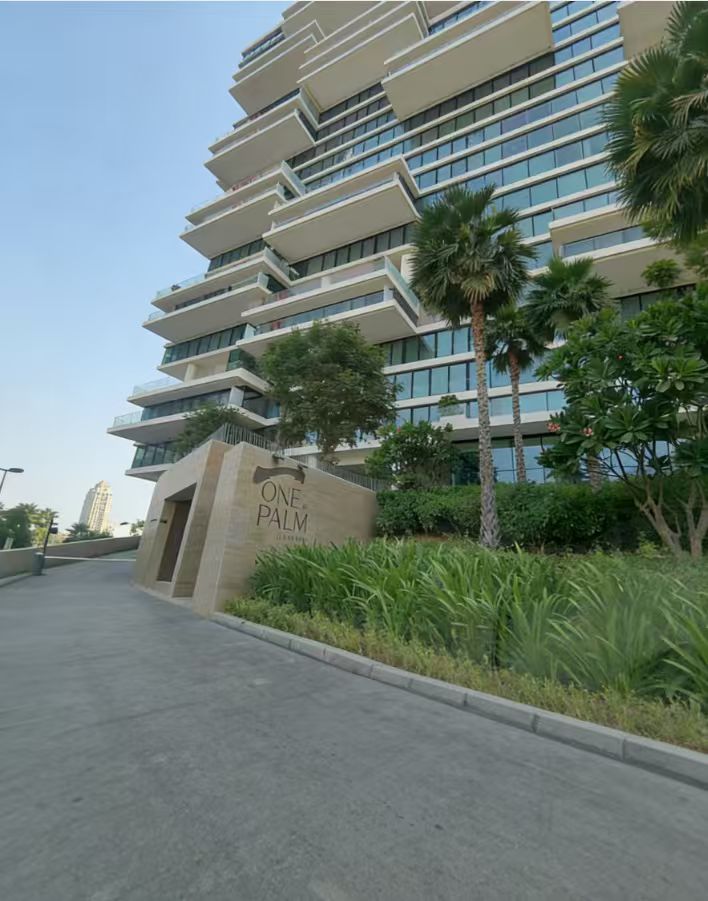
A prominent example of DYGLASS’s capability is a project in the United Arab Emirates involving the supply of 4,000 square meters of architectural glass for hotel building facades and curtain walls. The application required heat insulation, sound insulation, and aesthetic appearance. The glass used included curved insulated glass and laminated glass with Low-E coatings. According to project records, the installation has operated stably for several years, meeting the client’s performance expectations. This case illustrates how a supplier with specialized production lines (tempering, laminating, insulating) can deliver high-quality custom solutions for demanding hospitality projects.
Comparative Positioning: DYGLASS vs. Established Players
To contextualize DYGLASS’s market position, it is useful to compare its offerings with those of well-known global manufacturers. The following table highlights key differentiators:
| Parameter | DYGLASS | Saint-Gobain (France) | AGC (Japan) | Xinyi Glass (China) |
|---|---|---|---|---|
| Core Specialization | Complex curved & custom geometries | Broad building solutions, float glass | High-performance coatings, automotive | Mass production of flat glass |
| Complex Curvature Capability | ±0.5mm tolerance; multi-axis bending | Limited to single-curve or simple shapes | Moderate; focus on flat products | Minimal curved glass capacity |
| Lead Time (Custom Orders) | 7-9 days (standard) | 10-15 days (typical) | 12-18 days | 10-14 days |
| Minimum Order Quantity | 10 m² | 50-100 m² | 100 m² | 50 m² |
| Export Focus | Middle East, SE Asia, Americas | Global, strong in Europe | Global, strong in Asia | Global, competitive pricing |
While global giants offer extensive R&D budgets, DYGLASS differentiates through flexible customization, shorter lead times, and a lower MOQ — critical advantages for boutique projects and complex facades. For instance, compared to Saint-Gobain’s standard product-centric approach, DYGLASS can produce multi-curved laminated glass with integrated ceramic frit or digital printing in under two weeks, enabling architects to realize unique designs without extended delays.
Procurement Collaboration Recommendations
To ensure a successful partnership with a building glass supplier, procurement teams should follow these best practices:
- Clearly Define Industry Standards: Specify required certifications (e.g., CE, SGCC, AS/NZS) and performance criteria (U-value, STC rating, impact resistance) in the request for quotation.
- Conduct On-Site or Virtual Factory Audits: Verify the supplier’s production capabilities — such as the presence of double curved tempering lines, autoclaves, and heat soak furnaces — and review their quality control records.
- Discuss After-Sales Support: Inquire about return and replacement policies, online technical support, and availability of on-site inspection or installation guidance. DYGLASS, for example, offers online technical support and onsite inspection as part of its after-sales package.
- Evaluate Supply Chain Flexibility: Check the supplier’s export experience to your target market. DYGLASS exports to the UAE, USA, Vietnam, Philippines, and other regions, indicating familiarity with international logistics and documentation.
Conclusion
Choosing the right building glass supplier requires a strategic evaluation of technical capabilities, certifications, and project-specific experience. DYGLASS (Shenzhen Dayang Special Glass Co., Ltd.) demonstrates a strong fit for procurement professionals seeking a partner capable of delivering complex curved glass, custom laminates, and insulated units with reliable quality control and responsive support. As the architectural industry continues to push boundaries in design and sustainability, suppliers like DYGLASS — with a 30,000 m² factory, 130 employees, and an annual output of 600,000 m² — are well-positioned to support the next wave of high-performance building envelopes.
For a detailed overview of product specifications and manufacturing capabilities, download the company brochure: DYGLASS Corporate Brochure.