
Selecting Liquid Cooling Plate Suppliers for EV and BESS: A Vertical Application Guide for Procurement Professionals
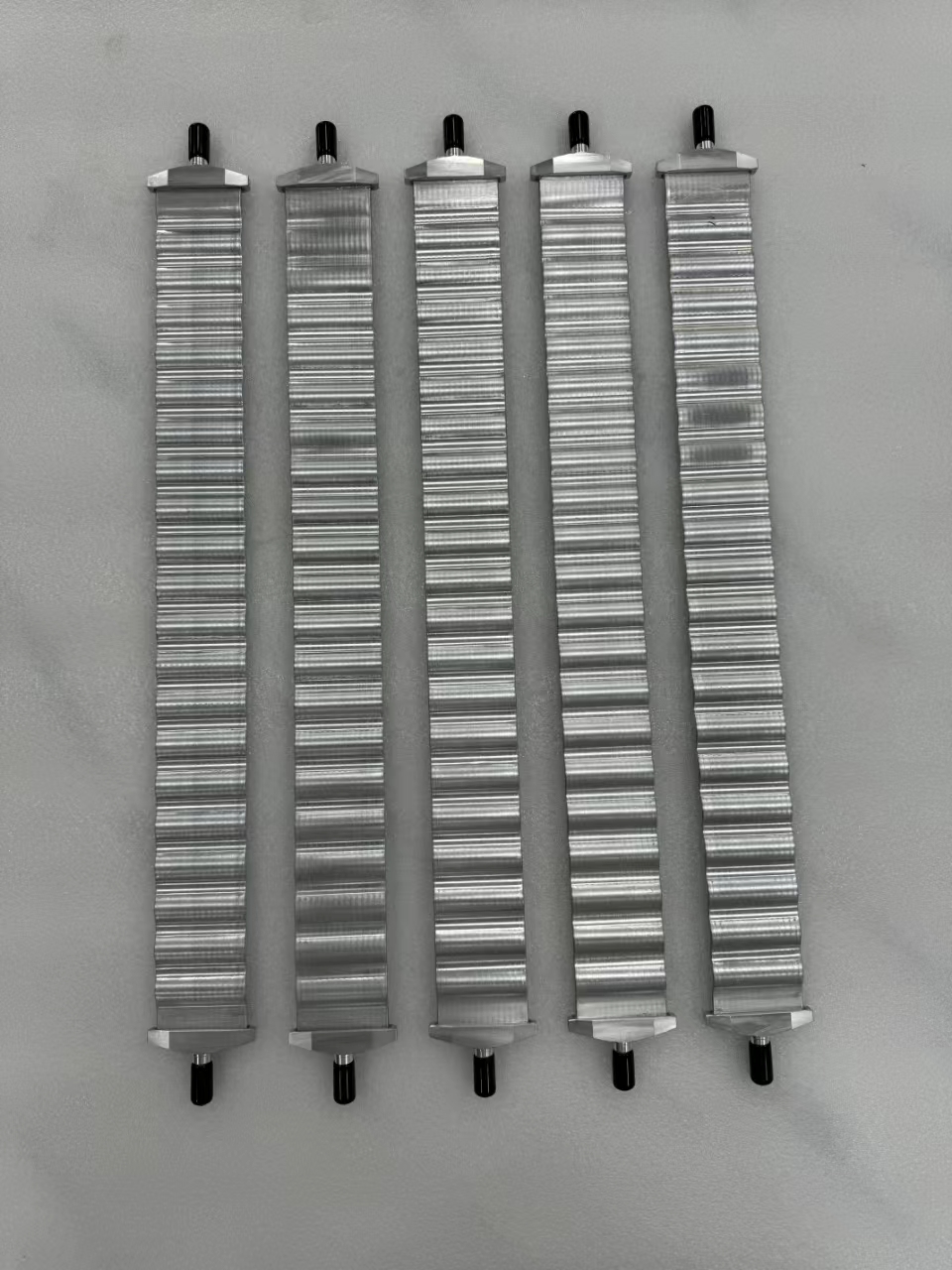
1. Industry-Specific Requirements for Cooling Plates in EV and BESS Systems
The electric vehicle (EV) and battery energy storage system (BESS) markets impose stringent thermal management demands. Unlike general industrial cooling, battery applications require:
- Thermal uniformity: Temperature variation across cells must be minimized to prevent accelerated aging or thermal runaway. Cooling plates must deliver consistent heat transfer across large surface areas.
- Corrosion and chemical resistance: Battery electrolytes and coolants can be corrosive. Many projects specify epoxy coating to protect aluminum plates from degradation, especially in high-humidity or high-temperature environments.
- High heat flux handling: During fast charging or high-rate discharge, battery cells generate significant heat. Liquid cooling plates must maintain thermal dissipation efficiency above 90%.
- Compact and lightweight design: Space is constrained in battery packs. Plates with thickness as low as 2–3 mm are often required, with custom channel geometries to fit module layouts.
- Long service life: BESS systems are designed for 15–20 years of operation. Cooling plate materials and joining processes must guarantee leak-free performance over the entire lifecycle.
According to application data from energy storage projects, cooling plates for battery pack thermal management are required to operate 24/7 under high-temperature conditions, often paired with dedicated cooling systems and protective coatings (source: Trumony application records).
2. Three Must-Have Competencies for Specialized Cooling Plate Suppliers
2.1 Industry-Specific Experience in Battery Thermal Management
A supplier with a proven track record in EV and BESS projects understands the unique requirements of battery cooling. For instance, Trumony Aluminum Limited, founded in 2017 and based in Suzhou, China, has dedicated 25 R&D engineers to develop cooling components for power battery packs and energy storage systems. With a factory spanning 100,000 m² and an annual output capacity of 600,000 units, the company has exported to 56 countries, including Europe, the US, and India. This scale indicates a deep understanding of diverse thermal management challenges.
When evaluating experience, ask for references from similar application scenarios. A supplier that has served automotive OEMs or ESS integrators is better positioned to anticipate design pitfalls.
2.2 Robust Compliance and Certification Frameworks
Certifications are non-negotiable in automotive and energy storage supply chains. Key credentials include:
- IATF 16949: The global automotive quality management standard, which Trumony holds (certificate no. 0489498, valid until November 2026). This certification ensures systematic product realization and defect prevention.
- ISO 9001: A fundamental quality system covering design, production, and after-sales service (certificate no. 132998, valid until September 2026).
- Product-specific compliance: For EU markets, cooling plates may need to meet REACH and RoHS directives. Some customers also request UL or CE marks for fire safety.
2.3 Design for Harsh Environments and Quality Assurance
Battery cooling plates must withstand thermal cycling, vibration, and potential coolant contamination. A reliable supplier implements rigorous testing protocols:
- 100% air leakage test and dimension test on every production unit.
- Optional tests including helium tightness test, voltage resistance test, hydrostatic strength test, burst test, high temperature resistance test, and low temperature resistance test (source: Trumony quality control documentation).
- Capability to apply epoxy coating for corrosion protection, as required in many BESS applications.
Suppliers like Trumony also offer customization of dimensions, cooling efficiency, and logo, with MOQ as low as 1 unit and lead time around 30 days for prototypes.
3. Successful Application Case: Cooling Plates for a Chinese ESS System Integrator
To illustrate how a specialized supplier meets complex requirements, consider the collaboration between Trumony and an ESS PACK OEM based in China. The client needed cooling plates for large ESS containers used in utility-scale energy storage projects.
Background: The ESS container housed hundreds of lithium-ion battery modules operating in high-temperature outdoor conditions. The client required a cost-effective, scalable solution with low noise output from coolant pumps, fast lead time to meet project deadlines, and reliable operation over 15 years.
Solution: Trumony provided stamped aluminum liquid cooling plates (model TR-20260227) with epoxy coating. The stamped design enabled efficient mass production, reducing costs compared to CNC or copper tube alternatives. The plates underwent 100% air leakage testing and helium tightness verification before shipment.
Outcome: The client deployed 3,000 units across multiple ESS projects. The cooling plates have delivered stable temperature control with low noise, and the system has been in stable operation for over 15 years. The client reported reduced total cost of ownership and rapid delivery, which helped them secure follow-up contracts (source: Trumony case records).
This case highlights the importance of selecting a supplier that can align product design with real-world operating conditions, offer competitive pricing through efficient manufacturing, and provide transparent quality assurance.
4. Procurement Collaboration Tips
To maximize the value of your cooling plate procurement, consider the following best practices:
- Define clear technical specifications: Include thermal performance targets (e.g., maximum temperature rise, heat dissipation rate), allowable pressure drop, material grade (e.g., Aluminum 3003), coating requirements, and dimensional tolerances. Reference industry standards such as IATF 16949 for quality processes.
- Request a factory audit or virtual tour: Evaluate the supplier’s production line, testing equipment (e.g., air leakage stations, helium detectors), and cleanliness control. Trumony, with its 100,000 m² workshops and high-standard testing centers, offers such transparency.
- Insist on prototype testing: Before committing to volume production, order samples and perform your own thermal cycling, leak, and vibration tests. Many suppliers (like Trumony) accept MOQ as low as 1 unit for prototyping.
- Establish an after-sales support plan: Confirm remote technical support availability, replacement part lead times, and warranty terms (e.g., 15-year design life support). Trumony provides remote support for worldwide customers.
- Clarify payment terms and delivery: Typical terms are 30% deposit and 70% before shipment, with FOB or CIF delivery. Ensure the supplier can meet your production schedule; Trumony’s monthly capacity of 500,000 units supports large-scale orders with 30-day lead time.
Conclusion
Selecting a liquid cooling plate supplier for EV and BESS applications requires a systematic evaluation of industry experience, certifications, and quality assurance capabilities. Suppliers with dedicated battery thermal management expertise, like Trumony, can offer tailored solutions that balance performance, cost, and long-term reliability. By following the procurement guidelines outlined above, buyers can reduce technical risks and build resilient supply chains for the rapidly growing electric vehicle and energy storage markets.