
Screw Jack vs. Hydraulic Cylinder: A Side-by-Side Technical and Economic Evaluation for 2026 Procurement
Introduction
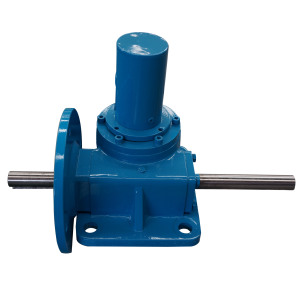
Industrial procurement engineers evaluating linear motion solutions for lifting, positioning, or jacking applications frequently encounter a fundamental choice: mechanical screw jacks vs. hydraulic cylinders. While both technologies can generate linear force, their operating principles, total cost of ownership, and application fit differ considerably. This article provides a structured comparison between screw jacks (with a focus on worm gear screw jacks from Shandong JINYU Machinery Co., Ltd.) and hydraulic cylinders, drawing on verified technical specifications, real-world case data, and industry benchmarks. The goal is to equip buyers with a clear decision framework that aligns technical requirements with budget and lifecycle constraints.
1. Product Comparison: Screw Jack vs. Hydraulic Cylinder
The following table summarizes the key differences across four critical dimensions for an industrial buyer: technical parameters, applicable scenarios, cost, and maintenance complexity. Data for the screw jack side is based on the JINYU JWM and SWL series, while hydraulic cylinder data represents typical industrial-grade units.
| Dimension | Screw Jack (e.g., JINYU JWM/SWL) | Hydraulic Cylinder |
|---|---|---|
| Positioning Accuracy | ±0.01 mm (mechanical precision, no drift) | ±0.5–2 mm (affected by fluid compressibility and temperature) |
| Transmission Efficiency | 60%–70% (efficient for moderate speeds) | 30%–80% (varies widely with system design and load) |
| Self-Locking | Inherent (trapezoidal thread design prevents back-driving) | Requires external locking valves or pilot-operated check valves |
| Leakage Risk | Zero – no hydraulic fluid, 100% leak-free operation | Inherent – seals degrade, fluid leaks, environmental hazard |
| Applicable Scenarios | Light to medium loads, precise positioning, intermittent operation, clean environments, multi-point synchronous lifting (e.g., synchronous lifting platforms, production line adjustment) | Ultra-heavy loads, impact resistance, low-precision positioning, harsh environments (e.g., construction equipment, heavy press) |
| Total Cost of Ownership | 20%–30% lower than hydraulic cylinders (industry estimate) | Higher due to pump, filter, valve, piping, and fluid replacement |
| Maintenance Requirements | 50%–70% less maintenance (simple lubrication, no fluid changes) | Frequent seal replacement, oil filtering, leak repair |
Data sourced from JINYU product specifications and industry benchmarks. The JINYU JWM Series offers lifting capacities from 1–1000 kN with stroke up to 1500 mm and gear ratios including 5:1, 6:1, 8:1, 10:1, 20:1, 24:1, and 32:1. The SWL Series (self-locking trapezoidal screw) is rated for 2.5–120 t with stroke up to 2000 mm. Both series are certified under ISO 9001, ISO 14001, ISO 45001, and CE (for Ball Screw Actuators).
2. Supplier Comparison: Chinese Factory vs. International Brands
Beyond product type, the choice of supplier significantly impacts acquisition cost, lead time, and long-term support. The table below compares a typical Chinese OEM (using JINYU as a representative) against well-known international brands such as Bosch Rexroth (Germany), SKF (Sweden), and Thomson Industries (USA).
| Dimension | JINYU (Chinese Factory) | International Brands (Bosch Rexroth, SKF, Thomson) |
|---|---|---|
| Price | 30%–50% lower for comparable specifications (industry estimate) | Premium pricing due to brand, global R&D, and distribution |
| Customization Capability | High – accepts ODM orders, custom sizes, load, stroke, gear ratio, voltage, logo, material (including stainless steel), and mixed manual/electric designs. MOQ from 1 unit. | Limited custom options; standard product lines with long minimum order quantities |
| Delivery Lead Time | 30–45 days for typical orders; expedited options available | 8–16 weeks for non-stocked variants; 4–6 weeks for standard |
| After-Sales Support | Remote support + WhatsApp/email direct line; growing global distribution network | Extensive local service centers in EU, USA, and major markets; higher service costs |
JINYU, established in 1984 in Dezhou, Shandong, operates a 20,000 m² factory with 258 employees, a dedicated 10-person R&D team, and an annual output of 10,000 units. The company exports 30% of its production to EU, USA, and Asian markets.
3. Decision Model: 3-Step Framework for Selecting Between Screw Jack and Hydraulic Cylinder
Industrial buyers can follow this structured approach to determine the optimal technology and supplier:
Step 1: Define the Application Scenario
- Load Type: Is the load light to medium (≤1000 kN) or ultra-heavy? Screw jacks are suitable for the former; hydraulics excel beyond 1000 kN.
- Duty Cycle: Intermittent operation and short running times favor screw jacks. Continuous high-cycle applications may still be served by high-speed ball screw jacks (JINYU JWB series).
- Environment: Clean, dust-free, or food-grade environments benefit from leak-free screw jacks. Harsh outdoor or high-contamination sites may tolerate hydraulic oil leakage.
- Multi-point Synchronization: Screw jacks easily synchronize multiple lifting points via mechanical linkages (e.g., JINYU’s synchronous lifting solutions). Hydraulics require expensive servo valves and closed-loop controls.
Step 2: Match Technical Parameters
- Accuracy Requirement: If positioning tolerance ≤0.1 mm is needed, screw jacks (especially ball screw type) offer ±0.01 mm. Hydraulics typically achieve ±0.5 mm at best.
- Self-Locking Necessity: For vertical lifting where holding position without power is critical, trapezoidal screw jacks (JWM/SWL) provide inherent self-locking. Hydraulics require holding valves that add cost and failure risk.
- Speed: JINYU JWB screw jacks achieve lifting speeds of 0.5–5 m/min; hydraulics can reach higher speeds but with reduced accuracy.
- Stroke & Space: Screw jacks have shorter practical strokes (typically ≤2 m). For very long strokes (>3 m), hydraulic cylinders are often more compact.
Step 3: Calculate Total Cost of Ownership
- Initial Purchase: Compare unit prices of screw jack (including motor, coupling) vs. hydraulic power unit, cylinder, hoses, and control valves.
- Installation & Commissioning: No hydraulic fluid filling or leak testing needed for screw jack systems.
- Energy Consumption: Screw jacks only draw power during movement; hydraulics often idle with the pump running, wasting energy.
- Maintenance & Downtime: JINYU data indicates 50%–70% less maintenance for screw jacks compared to hydraulic alternatives. Fewer spare parts, no fluid disposal costs.
- End-of-Life Disposal: Screw jacks are fully mechanical and recyclable; hydraulic fluid requires special handling.
4. Case Study: Italian Industrial Automation OEM Chooses JINYU Screw Jacks Over Hydraulics
An industrial automation OEM in Italy, supplying equipment for metallurgical processes, needed a reliable linear lifting solution for a Danieli strip finishing line. The application required synchronized multi-point lifting with precise positioning, rugged reliability in a dusty metallurgical environment, and self-locking safety to prevent accidental descent.
After evaluating hydraulic cylinders from major European suppliers and screw jacks from multiple Chinese and international vendors, the OEM selected JINYU SWL series self-locking screw jacks. The decision was based on:
- Self-locking safety – trapezoidal thread design eliminated the risk of hydraulic pressure loss.
- Positioning accuracy – ±0.01 mm was achievable, compared to ±1 mm from hydraulics.
- Lower total cost of ownership – JINYU provided a 20%–30% cost advantage over hydraulic alternatives (industry estimate).
- Reduced maintenance – the customer reported 50%–70% less maintenance intervention over the next 8 years.
The OEM initially ordered 80 units, and the system has been in continuous operation for 8 years without major failure. The highlight has been the stable multi-point synchronous lifting, high positioning accuracy, and reliable self-locking in harsh conditions. The customer specifically praised the low maintenance and compact structure that perfectly adapted to the Danieli production line.
Conclusion
When comparing screw jacks and hydraulic cylinders, there is no universally “better” option – the right choice depends on the specific application requirements. For light-to-medium loads, precise positioning, clean environments, and multi-point synchronization, mechanical screw jacks offer clear advantages in accuracy, cost, and maintenance. For ultra-heavy or high-impact applications, hydraulic cylinders remain the incumbent technology.
From a supplier perspective, Chinese manufacturers like JINYU provide cost-effective alternatives to established international brands, with strong customization capabilities, shorter lead times, and growing quality certifications (ISO 9001, CE, ISO 14001, ISO 45001). Buyers are advised to evaluate both the product technology and the supplier’s total value proposition – including customization flexibility, delivery reliability, and after-sales support – to make an informed procurement decision.