
Regional Sourcing Guide for Battery Assembling Factories: How to Select a Chinese Supplier vs. German & Japanese Options
1. Global Supplier Landscape: Geographic Strengths in the Battery Assembling Factory Sector
The lithium-ion battery assembly industry is highly globalized, with three dominant regions offering distinct value propositions. For industrial buyers sourcing custom Li-ion cylindrical, Li-Polymer, or LiFePO4 battery packs, understanding these regional advantages is the first step in supplier selection.
- China (Shenzhen & Dongguan clusters): Dominates with high cost-efficiency, unmatched customization flexibility, and rapid scaling. Chinese battery assembling factories, such as Hypercell (founded 2007, 1200+ staff), offer turnkey solutions from 30MWh daily output across medical, industrial, and IoT sectors. The key strength lies in willingness to adapt to bespoke specifications — including non-standard shapes, wide-temperature cells, and integrated BMS — at competitive price points.
- Germany: Renowned for automotive-grade precision and long-life industrial batteries. Suppliers like BMZ Group or Akku Systems excel in high-reliability applications (e.g., power tools, medical implants) with rigorous CE and TÜV certifications, but are less flexible for medium-volume customized projects and often carry a 30-50% cost premium over Chinese counterparts.
- Japan: Leaders in ultra-compact form factors and high energy density for consumer electronics (e.g., Murata, Panasonic). Their manufacturing is optimized for high-volume standard cells; however, custom assembly for small-to-mid volume industrial equipment is typically less accessible, with longer lead times and strict MOQ constraints.
For most industrial usage battery, medical device battery, and IoT device battery projects requiring moderate volumes (hundreds to tens of thousands of packs) with frequent custom features, Chinese battery assembling factories represent the most pragmatic choice — provided the buyer can navigate the 5 key vetting steps outlined below.
2. How to Select a Chinese Battery Assembling Factory: 5 Critical Checks for Industrial Buyers
When evaluating a custom lithium battery manufacturer from China, the following due diligence checklist is essential to mitigate cross-border risks.
2.1 Verify Export Certifications (Not Just ISO)
Beyond basic ISO 9001:2015 and ISO 14001:2015, a qualified battery assembling factory must possess product-specific certifications for your target market. Required certifications include:
- CB Test Certificate (IEC 62133-2) — accepted in most Asian and EU markets.
- UN38.3 (transport safety) with corresponding Identification and Classification Report for Sea Transport and Air Transport of goods. For example, Hypercell provides both reports, enabling seamless logistics under IMDG and IATA regulations.
- RoHS & REACH (European chemical compliance).
- CE marking (mandatory for EU), UL certification (preferred for North America).
Ask for copies of these certificates dated within the last 2 years, and verify the manufacturer’s name matches the certificate holder.
2.2 Confirm Cross-Border Logistics Capability
Lithium batteries are classified as Class 9 dangerous goods. A professional battery assembling factory must have established partnerships with forwarders experienced in UN3480/UN3481 shipments. Look for a supplier that can handle both sea freight (for large production batches) and air freight (for urgent prototypes or small series). Misclassification or missing transport reports can lead to port detention or shipment rejection.
2.3 Define After-Sales Support and Warranty Terms Explicitly
Chinese suppliers often offer 12-24 month warranties, but the real differentiator is localized support. Factory representatives that assign a dedicated English-speaking project manager and maintain a near-local response time (e.g., within 4 hours for technical queries) reduce project risk. Hypercell, for instance, provides lifetime technical support via email (info@hypercellbattery.com) and phone (+86 755 2376 4134), with a team that understands time zone differences for European and North American clients.
2.4 Assess Production Capacity and Quality Control
Request a factory audit report or schedule a live video walkthrough. Key indicators: number of automated assembly lines, in-line inspection checkpoints (e.g., open/short circuit, voltage sorting, internal resistance matching), and the presence of a reliable supply chain. A mature factory like Hypercell (3 production bases, 1200+ employees) uses local and global suppliers vetted through rigorous selection to ensure raw material traceability and avoid supply disruptions.
2.5 Evaluate Customization Agility
For customized Li-ion battery projects, ask about the manufacturer’s R&D capability. Ideally, the factory employs doctors and senior engineers specializing in new materials, high-rate discharge, low-temperature performance, and special shape battery design. A strong product portfolio should cover cylindrical (18650, 21700), Li-Polymer, and LiFePO4 chemistries with flexible series/parallel configurations (e.g., 5S1P, 4S2P, 13S10P) to match your analyzer, robot & e-mobility, or medical device requirements.
3. Regional Compliance Requirements for Importing Assembled Batteries
When importing from a Chinese battery assembling factory, the following regulatory demands apply per destination:
| Region | Key Certification | Tariff Notes (General) |
|---|---|---|
| European Union | CE (mandatory), CB test report, REACH, RoHS | HS 850760 (Li-ion accumulators) commonly 3.7% duty; ensure preferential duty under EU FTA with China if applicable |
| United States | UL 2054 (recommended), UN38.3, FCC Part 15 if with electronics | MFN rate 0% for batteries (850760), but 25% Section 301 tariff may apply if product falls under List 4A; consult customs broker |
| Japan | PSE certification (electrical appliance safety); UN38.3 | 0% duty for Li-ion batteries under EPA |
| Southeast Asia | CB or country-specific (e.g., SIRIM for Malaysia, SNI for Indonesia) | Varies 0-5% under ASEAN-China FTA |
Always involve a certification consultant or request the factory’s compliance package – reputable Chinese factories like Hypercell maintain an updated library of certificates and can advise on testing gaps.
4. Case Study: How Hypercell Succeeds as a Chinese Supplier in the EU Medical Device Market
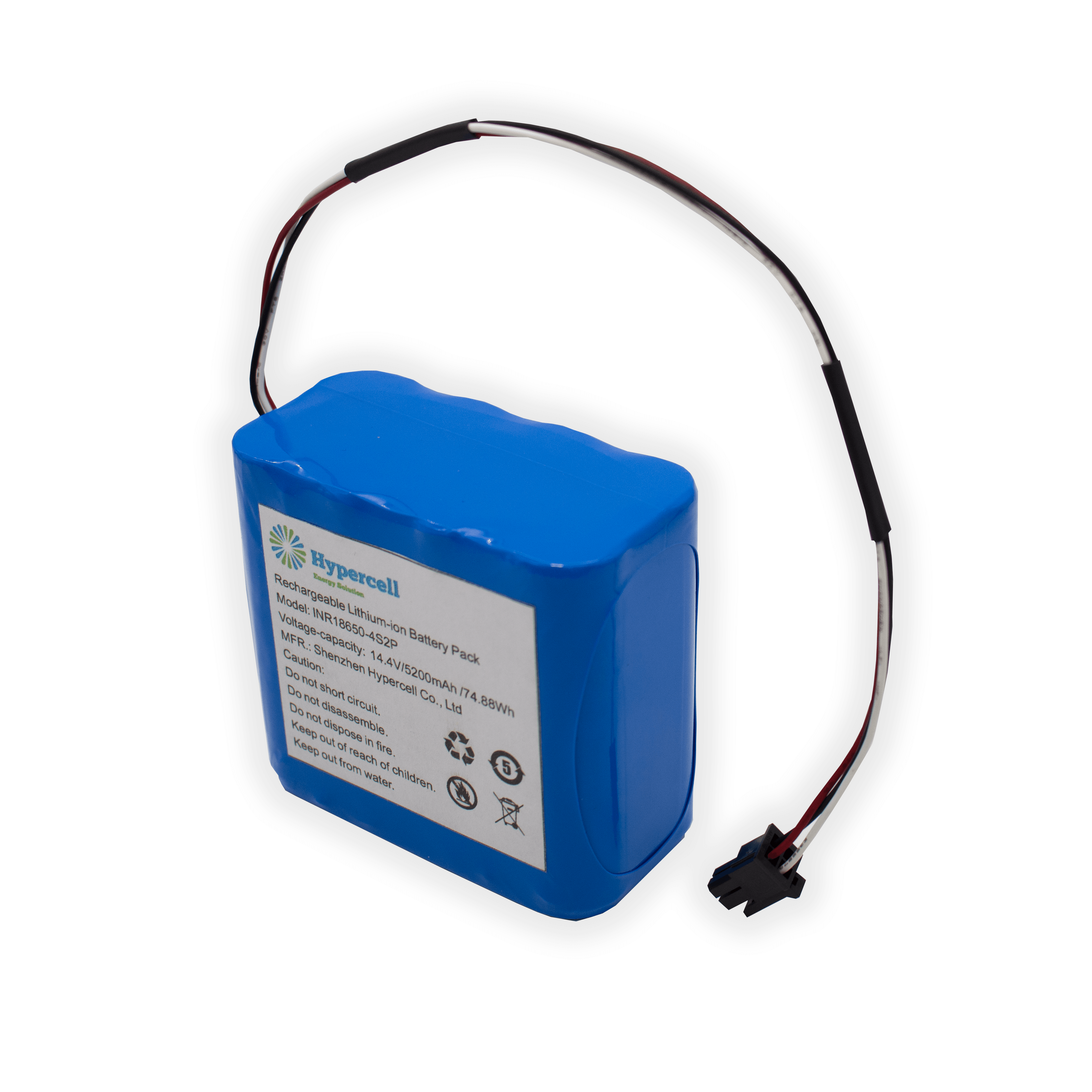
Client: A mid-sized German medical equipment manufacturer developing a portable blood analyzer.
Challenge: Needed a custom Li-Polymer battery pack (3.7V 3000mAh) with high cycle life (500+ cycles at 80% DOD), CE and CB certification, and a unique mechanical design to fit inside a handheld enclosure. The client had previously sourced from a German assembler but faced costs 40% higher than their budget.
Solution by Hypercell:
- Technical adaptation: Hypercell’s R&D team (with masters and senior engineers) designed a low-profile Li-Polymer cell (model HPL5044125-40C) with a custom-protected BMS featuring over-discharge protection at 2.5V, satisfying the medical device safety standards.
- Certification readiness: The factory provided CB test certificate (IEC 62133-2) and CE mark for the final assembled pack, avoiding extra testing costs for the client.
- Logistics efficiency: Utilized the Identification and Classification Report for Air Transport to ship initial samples (100 pcs) within 10 days, then switched to sea freight for the production order (2000 pcs) using the sea transport report, saving 30% on freight.
- After-sales: Assigned a dedicated account manager based in Shenzhen with a 6-hour time zone overlap with Europe; provided remote troubleshooting and a 24-month warranty.
Result: The client achieved a 35% cost reduction compared to their previous German supplier, while maintaining full EU regulatory compliance. The project scaled to a 5-year partnership with annual production of 12,000 packs. Hypercell’s ability to deliver certified, customized solutions with reliable logistics was the decisive factor.
This case illustrates why many industrial usage battery buyers now look to Chinese battery assembling factories like Hypercell (visit www.hypercellbattery.com or email info@hypercellbattery.com) for their next battery project.
5. Conclusion: Making the Right Regional Sourcing Decision
For buyers seeking medical device battery, IoT device battery, robot & e-mobility, or analyzer power solutions, Chinese battery assembling factories offer the best balance of customization, cost, and compliance — especially when the supplier holds ISO 9001/14001, CB, CE, RoHS, and transport certificates. By following the 5-step vetting process and learning from proven cases, procurement professionals can confidently engage Chinese partners that meet global standards. Hypercell exemplifies a factory that combines 18 years of expertise, a strong R&D team, and comprehensive certifications to serve demanding international clients. When selecting your next battery assembling factory, prioritize those with a track record of certified custom solutions and proactive logistics support — these are the hallmarks of a reliable global partner.