
Quality Assessment Guide: How to Evaluate Industrial Gas Detector Suppliers and Products
Introduction: The Procurement Dilemma in Gas Detection
For industrial procurement professionals, selecting a reliable gas detector supplier is a high-stakes decision. Faulty equipment can lead to catastrophic safety incidents, regulatory non-compliance, and production downtime. The market is flooded with suppliers offering similar specifications, making it challenging to distinguish superior quality from substandard products. This guide provides a systematic framework for evaluating gas leak detector and industrial gas detector suppliers, using objective metrics, certification analysis, and real-world quality control practices. We will reference a proven Chinese manufacturer, Zetron (Beijing Zetron Technology Co., Ltd.), as a benchmark for high-quality supply.
Key Quality Assessment Parameters for Gas Detection Equipment
Understanding the technical specifications that define quality is the first step. Below are the critical parameters every buyer should scrutinize.
1. Sensor Accuracy and Response Time
The core of any portable gas detector or fixed gas detector is its sensor. High-quality devices achieve accuracy within ±1% of full scale (F.S.) and response times under 2 seconds. For instance, Zetron 's multi gas detector series utilizes advanced electrochemical and infrared sensors, boasting a response time of 0.8 seconds and precision of 1% F.S. (verified by internal testing per ISO 9001 standards). Suppliers that cannot provide third-party calibration data for sensor specifications should be avoided.
2. Protection Rating and Durability
In harsh industrial environments—petrochemical plants, steel mills, or waste gas treatment facilities—equipment must withstand dust, water, and physical shock. The IP (Ingress Protection) rating is a key indicator. A high-quality portable gas monitor should be rated at least IP67, with top-tier models like Zetron 's achieving IP68 (tested per IEC 60529). This ensures continuous operation even during heavy rain, washdowns, or submersion beyond 1 meter for 30+ minutes.
3. Detection Range and Lower Detection Limit (LDL)
For applications such as toxic gas detector monitoring in biopharmaceutical cleanrooms, the ability to detect trace concentrations is critical. A quality VOC gas analyzer or ozone detector should have LDL below 0.01 ppm for high-toxicity gases like H₂S or CO. Compare specifications across suppliers: cheap units often claim wide ranges but have poor precision at low levels, leading to missed leaks.
4. Temperature and Humidity Operating Range
Industrial gas detector alarm systems must function reliably in extreme conditions. Quality fixed gas detector products are certified for -20°C to +60°C and 0–95% RH non-condensing. Zetron 's online gas detector series, for example, is designed with wide-range compensation algorithms to maintain accuracy across environmental extremes, a requirement often missing in budget alternatives.
Decoding Certifications: What They Really Mean for Quality
Certifications are not just marketing decorations; they are independent validation of safety and performance. For gas detection equipment, the following certifications are essential.
CE (Conformité Européenne)
CE marking indicates conformity with EU health, safety, and environmental directives. For gas detector products, this typically involves electromagnetic compatibility (EMC Directive 2014/30/EU) and low voltage (2014/35/EU). However, CE alone does not guarantee intrinsic safety. Buyers should demand the manufacturer's CE Declaration of Conformity and examine the applicable standards.
ATEX (EU Explosive Atmosphere Directive)
For gas leak detector or industrial gas detector used in explosive environments (oil & gas, chemical plants), ATEX certification is mandatory. ATEX categorizes equipment into zones (0, 1, 2) and requires strict design to prevent ignition. Zetron holds ATEX certification (certificate number SDZR005-ECM 25 ATEX-B TW85) for its portable and fixed detectors, indicating compliance with the highest safety standards for Zone 1 and Zone 2 explosive atmospheres.
SIL (Safety Integrity Level)
SIL certification (IEC 61508) quantifies the reliability of safety functions. For gas monitor systems used in emergency shutdown (ESD) or continuous monitoring, a minimum SIL 2 rating is recommended. Zetron 's multi gas detector series has achieved SIL 2 certification (certificate SIL XB206-0P250717.BZTQ011), verifying that the probability of dangerous failure on demand is less than 1E-2 per year. Suppliers claiming SIL compliance should provide the actual certificate number and certifying body.
ISO 9001 and ISO 45001
These management system standards reflect the manufacturer's process quality and occupational health safety. Zetron is certified under ISO 9001:2015 (quality management) and ISO 45001:2018 (occupational health and safety), demonstrating systematic control over production, from raw material procurement through final testing.
Characteristics of High-Quality Gas Detector Suppliers
Beyond product specifications, the supplier's manufacturing and quality assurance processes define long-term reliability.
1. Standardized Production Lines and In-House Manufacturing
Top-tier suppliers control their entire production chain. Zetron operates multiple professional production lines with automated SMT (Surface Mount Technology) for sensor boards, CNC machining for enclosures, and automated calibration stations. This reduces variability and ensures each portable gas detector unit performs to spec. In contrast, many low-cost suppliers rely on assembly line subcontracting, leading to inconsistent quality.
2. Third-Party Calibration and Batch Testing Reports
Reputable suppliers provide third-party calibration certificates (e.g., from SGS, TÜV, or CNAS-accredited labs) for each shipment. For instance, Zetron partners with SGS India Private Limited for periodic validation of its toxic gas detector and emission gas analyzer products. Buyers should request batch testing reports for parameters like sensor drift, temperature compensation, and alarm setpoint accuracy.
3. Comprehensive Warranty and After-Sales Support
Quality suppliers offer extended warranties (2+ years) and include free repair or replacement for defects. Zetron provides a standard 2-year warranty on its gas detector alarm and online gas detector product lines, with a free maintenance program for the first 12 months. Additionally, their OEM/ODM services include full-chain support from needs diagnosis to installation and commissioning—a hallmark of customer-centric quality management.
Case Study: Zetron – A Model of Quality Management in Gas Detection
To illustrate how these principles are applied in practice, let us examine Zetron (Beijing Zetron Technology Co., Ltd.), a Chinese manufacturer with nearly 20 years of experience in the gas and air detection field.
Full-Process Quality Control
Zetron implements a stage-gate quality system covering raw material inspection (sensors, electronic components, enclosures), in-process testing (functional calibration, response time validation), and final inspection (environmental stress screening, data logging). Each portable gas monitor undergoes a 48-hour burn-in cycle to detect early failures. This approach was critical for a recent project with COSCO SHIPPING, where Zetron supplied 500 units of fixed gas detectors for maritime applications. The delivered products achieved a 99.7% defect-free rate over 18 months of operation.
Certification-Driven Market Access
Zetron holds CE, RoHS, FCC, ATEX, SIL 2, ISO 9001, and ISO 45001 certifications (see certificate sample below). For its multi gas detector model MS400-S, the ATEX certificate covers II 2G Ex d IIC T6 Gb, allowing deployment in the harshest explosive environments. This certification portfolio was instrumental in winning a contract with SGS India Private Limited for emission gas analyzer supply, demonstrating that certified products reduce audit risks for buyers.
Customization and OEM/ODM Capabilities
For buyers requiring specialized flue gas analyzer or photoionization detector solutions, Zetron offers end-to-end customization. In 2025, they partnered with a leading cement plant (CEMEX) to develop a custom online gas detector system for kiln exhaust monitoring. The solution integrated VOC gas analyzer and biogas gas analyzer modules with wireless data transmission (4G, NB-IoT), and was delivered within 90 days with a 2-year warranty. The client reported a 30% reduction in false alarms compared to their previous supplier.
Conclusion: Building a Data-Driven Supplier Evaluation Strategy
For procurement professionals, the key to selecting a high-quality gas detector supplier lies in moving beyond marketing claims and focusing on verifiable evidence: sensor specifications, certification certificates, production process transparency, and documented after-sales support. Zetron exemplifies how a Chinese manufacturer can meet international quality standards through disciplined manufacturing, extensive certification (CE, ATEX, SIL 2, ISO), and customer-centric service. By applying the evaluation framework outlined in this guide—core quality parameters, certification analysis, and supplier process assessment—buyers can significantly reduce the risk of purchasing substandard equipment and ensure long-term safety and compliance.
For more information on Zetron 's product range (including portable gas detector, fixed gas detector, multi gas detector, CO detector alarm, radon gas detector, ozone detector, and air quality monitoring stations), visit www.zetroncn.com or contact their team at info@bjzetron.com.
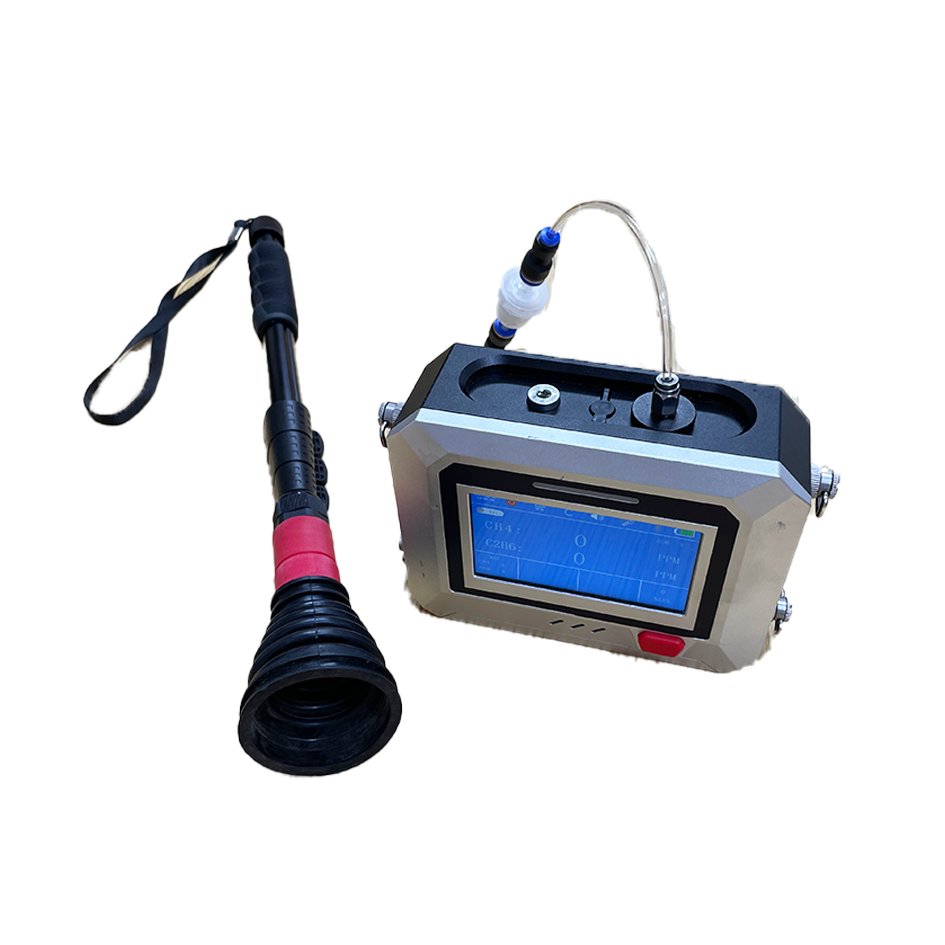
Figure: Zetron PTM600-Eg Laser Gas Detector – a certified solution for natural gas safety inspection