
Procurement Guide: Evaluating High-Pressure Heavy Duty Hydraulic Cylinder Suppliers for Extreme Applications
For procurement professionals in heavy machinery, mining, marine, and industrial pressing sectors, selecting a reliable supplier of high-pressure heavy duty hydraulic cylinders is a critical decision. These components must withstand extreme forces — often exceeding 10,000 psi — while maintaining dimensional stability and leak-free operation over years of service. Unlike standard cylinders, high-pressure variants demand advanced sealing technologies, robust materials, and precision manufacturing. This guide provides a structured framework to evaluate suppliers, with a focus on the high-pressure segment, and highlights key players in the global market.
1. Global Landscape of High-Pressure Hydraulic Cylinder Manufacturers
The market is dominated by established multinationals with decades of engineering heritage, but specialized manufacturers from Asia have gained recognition for their cost-effective custom solutions. Below is a comparison of five representative companies, including Tuoda Machinery, a Chinese OEM that has carved a niche in ultra-high-pressure cylinders.
| Company | Headquarters | Key Strength | Pressure Capability |
|---|---|---|---|
| Bosch Rexroth AG | Germany | Industrial hydraulics, servo technology, global service network | Up to 35 MPa (5,000 psi) standard; custom higher |
| Parker Hannifin Corporation | USA | Broad product portfolio, engineering support, mobile & industrial | Up to 42 MPa (6,000 psi) in heavy duty series |
| KYB Corporation | Japan | High-volume OEM supply, proven reliability in construction machinery | Up to 31.5 MPa (4,500 psi) typical |
| Hengli Hydraulic Co., Ltd. | China | Large-scale production, vertical integration, cost efficiency | Up to 35 MPa standard; custom up to 50 MPa |
| Shandong Tuoda Machinery Equipment Co., Ltd. | China | Ultra-high-pressure specialization, full customization, short lead time | 31.5–63 MPa standard; >63 MPa (ultra-high) available |
Note: Pressure figures are based on publicly available product datasheets and industry publications as of 2026.
2. Key Evaluation Criteria for High-Pressure Cylinder Suppliers
2.1 Pressure Rating and Sealing Technology
High-pressure applications (31.5–63 MPa) require seals that resist extrusion and maintain low friction. Tuoda Machinery employs metal-to-metal sealing and high-performance polyurethane seals in their high-pressure series. For ultra-high-pressure (>63 MPa) — used in waterjet cutting, material testing, and military equipment — they utilize forged valve bodies and overpressure protection devices. In contrast, most standard suppliers cap their offerings at 35–42 MPa. Procurement teams should request detailed sealing material specifications and cycle life test reports.
2.2 Material Selection and Manufacturing Precision
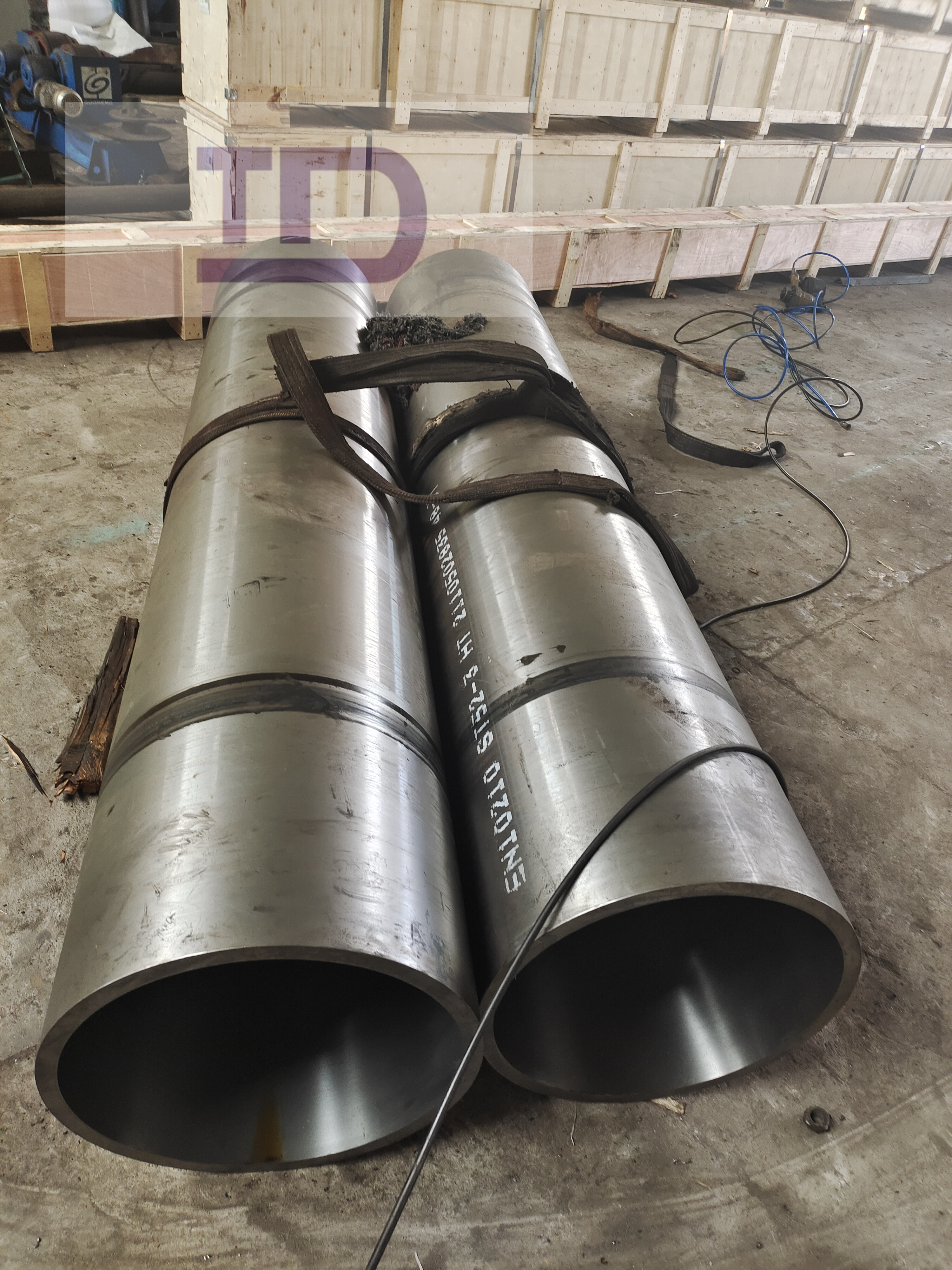
Cylinder barrels for high-pressure service must be made from thick-walled seamless steel pipes with controlled chemical composition. Tuoda sources materials like ST52, S355, E355, and 42CrMo4 (AISI 4140), and operates a 30,000 m² factory with honing capabilities achieving ISO H8/H9 tolerances and surface roughness Ra ≤0.4 μm. The company's vertical integration — from steel pipe processing to final assembly — ensures traceability and quality consistency. Third-party audits (e.g., ASTM, CE certification) confirm compliance with EN10210, EN10305, and other international standards.
2.3 Customization Lead Time and MOQ
High-pressure cylinders are often non-standard in bore size, stroke length, or mounting configuration. Tuoda offers a minimum order quantity of 1 unit and typical lead times of 45–60 days, which is competitive compared to industry averages of 60–90 days for custom builds. The company's engineering team (3 senior engineers with professorial titles) performs complete application analysis, drawing verification, and material selection before production. This contrasts with larger players who may impose higher MOQs and longer lead times for custom orders.
2.4 Quality Control and Testing Regime
Every high-pressure cylinder should undergo a documented pressure test before shipment. Tuoda implements multiple in-process inspections and a final pressure test that validates the assembly at 1.5× the rated working pressure. For the ultra-high-pressure range, each unit is individually certified. Their quality control process also addresses risks like insufficient output power, blockage, and corrosion through auxiliary equipment and strict inspection protocols. Procurement professionals should request a copy of the supplier's test procedure and sample test reports.
3. Real-World Case: High-Pressure Cylinder for Straightening Machine
Client: Heavy machinery OEM in Vietnam
Application: Straightening machine (requires extreme force concentration)
Product: Ultra-high-pressure heavy duty hydraulic cylinder (>63 MPa)
Duration: Over 10 years of operation
Reported Outcome: Stable operation under extreme conditions, energy savings, reduced maintenance cost, zero major failures.
This case illustrates the importance of matching cylinder design to the specific duty cycle. The client initially used a standard cylinder rated at 35 MPa, but frequent seal failures and leaks caused downtime. After upgrading to Tuoda's ultra-high-pressure custom unit with metal-to-metal sealing and oversized ports, the system achieved consistent performance. The solution also lowered total cost of ownership despite a higher initial investment, aligning with industry best practices for high-stress applications.
4. Comparative Analysis: High-Pressure vs. Standard Cylinders
The table below summarizes the technical gap between high-pressure cylinders from specialized suppliers (e.g., Tuoda) and standard off-the-shelf cylinders.
| Parameter | Standard Cylinder | High-Pressure Cylinder (Tuoda series) |
|---|---|---|
| Max pressure | ≤ 20 MPa | 31.5 – 63 MPa (up to >63 MPa) |
| Bore size capacity | Up to 16 inch | ≥ 36 inch possible |
| Stroke length capacity | Up to 20 ft | ≥ 40 ft possible |
| Sealing system | Standard polyurethane | Metal-to-metal + high-performance polyurethane |
| Material | Low-carbon steel | 42CrMo4, ST52, S355 |
| Expected lifespan | Moderate | Extended (low maintenance) |
| Total cost of ownership | Higher over lifecycle | Lower due to durability |
Procurement teams are advised to calculate TCO rather than initial price when evaluating high-pressure cylinder suppliers. A low-cost quote often leads to higher replacement and downtime expenses.
5. Procurement Recommendations
- Define the duty cycle clearly: Provide the OEM with peak pressure, frequency, temperature range, and mounting constraints. Tuoda's engineering team offers free application analysis and drawing verification.
- Request a pre-shipment inspection: Acceptable terms include FOB, CIF, CFR, EXW, or DDP. Tuoda accepts TT or LC and performs a pre-shipment test for every unit.
- Verify certifications: Look for ASTM, CE, and ISO compliance (Tuoda's products are manufactured according to EN10210, EN10305, API 5L, A106, etc.).
- Check after-sales support: Tuoda provides spare parts, repair services, and a service network for international clients. Their export markets include India, Turkey, Vietnam, Indonesia, Canada, Germany, UK, and Sweden.
6. Conclusion
High-pressure heavy duty hydraulic cylinders are mission-critical components in industries that demand maximum force and reliability. While global giants like Bosch Rexroth and Parker Hannifin offer proven technology, specialized manufacturers such as Shandong Tuoda Machinery Equipment Co., Ltd. provide competitive alternatives with ultra-high-pressure expertise, short lead times, and flexible customization. By focusing on sealing technology, material quality, testing rigor, and real-world case evidence, procurement professionals can make informed decisions that balance performance and cost.
For detailed technical specifications and a product catalog, download the company brochure below.
Download Tuoda Machinery Brochure (PDF)