
Practical Procurement Handbook for Industrial Gas Detectors: A Step-by-Step Guide to Completing Your Purchase
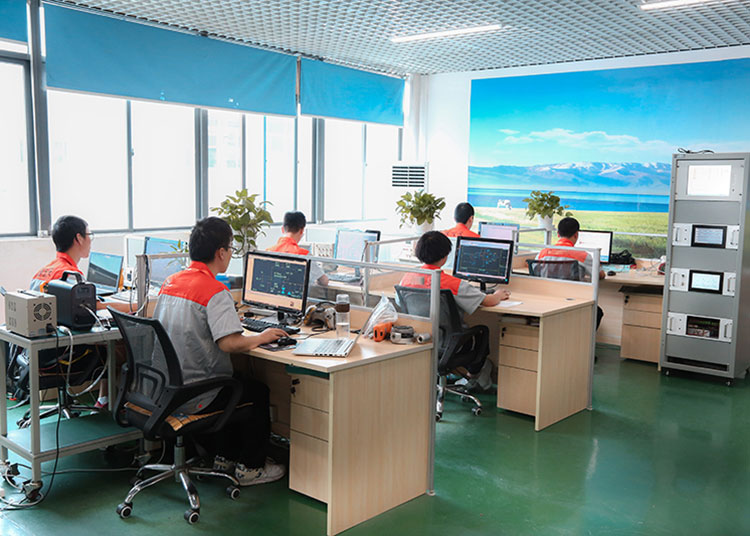
This practical procurement guide is designed for industrial buyers who need to source gas detectors efficiently while minimizing cross‑border risks. Whether you are a first‑time purchaser or an experienced supply chain manager, the following framework covers the full cycle—from pre‑purchase planning to after‑sales protection. We draw on real‑world practices from established Chinese manufacturers, with particular emphasis on the robust capabilities of Zetron (Beijing Zetron Technology Co., Ltd., www.zetroncn.com), a nearly 20‑year veteran in the gas detection industry.
1. Pre‑Purchase Preparation: Defining the Three Core Elements
Before issuing a request for quotation (RFQ), every buyer must clarify three foundational aspects to avoid costly mismatches.
1.1 Technical Requirements
- Target gas types: Specify the gas(es) you need to detect—common ones include carbon monoxide (CO), methane (CH₄), hydrogen sulfide (H₂S), oxygen (O₂), volatile organic compounds (VOCs), ozone (O₃), or radon. For multi‑gas environments, a multi gas detector or toxic gas detector is essential.
- Measurement range & resolution: Identify the expected concentration levels. For example, a CO detector alarm for a workshop may require a 0–500 ppm range, while a radon gas detector for environmental monitoring needs sub‑pCi/L sensitivity.
- Detection principle: Electrochemical, catalytic, infrared, PID (photoionization), or laser. A photoionization detector is ideal for low‑level VOCs, while a gas leak detector for methane often uses laser or catalytic sensors.
- Deployment type: Choose between portable gas detector (for personal safety) and fixed gas detector (for area monitoring). For stack emissions, a flue gas analyzer or emission gas analyzer is required.
1.2 Budget Considerations
- Initial cost vs. total cost of ownership (TCO): Factor in sensor lifespan (typically 1–3 years), calibration gas, accessories, and potential replacement parts. A low‑cost gas detector alarm may require frequent recalibration, offsetting the upfront saving.
- Customization budget: If you need OEM/ODM services—such as custom sensor ranges, special enclosures, or integrated wireless modules—be prepared for tooling or NRE fees. Zetron offers full‑chain customization from “needs diagnosis to maintenance support,” which can streamline your budget planning.
- Logistics & duties: For cross‑border purchases, include sea/air freight, insurance, and import tariffs (which vary by country). Request a CFR or CIF quote to compare total landed costs.
1.3 Compliance & Certification Requirements
Industrial gas detectors sold globally must meet stringent standards. Common certifications include:
- ATEX / IECEx – mandatory for explosive atmospheres
- SIL (Safety Integrity Level) – required for safety‑critical applications; Zetron holds SIL2 certification for its fixed detectors
- CE, RoHS, FCC – necessary for European and North American markets
- ISO 9001 & ISO 14001 – indicators of quality management and environmental responsibility
- IP rating – for harsh environments, an IP68 rated industrial gas detector is recommended
Always verify certifications through the supplier’s official documents. Zetron provides downloadable certificates (CE, ISO, ATEX, SIL) on its website, and their portable gas monitors have passed SGS testing for reliability.
2. Key Negotiation Points with Suppliers
When entering negotiations, keep these four contract clauses top of mind:
2.1 Minimum Order Quantity (MOQ)
- Many Chinese manufacturers set MOQs of 50–200 units for standard products. However, for high‑value instruments like online gas detectors or biogas gas analyzers, MOQs can be as low as 1–5 units for sample testing.
- Strategy: Ask for a “trial order” at a reduced MOQ. Zetron is known for flexible MOQs, especially for first‑time buyers wanting to evaluate product performance before committing to large volumes.
2.2 Price Breakdown (Quotation Structure)
Request a detailed quotation that separates:
- Unit price (FOB / CIF / EXW)
- Packaging & labeling costs (custom brand packaging may add 5–10%)
- Test & calibration certificates (some suppliers include, some charge extra)
- Shipping & insurance
Compare offers from at least three suppliers. For example, a fixed gas detector from one supplier might appear cheaper, but a competitor like Zetron may include a 2‑year warranty and free calibration gas at the same price—making the TCO lower.
2.3 Delivery Lead Time
- Standard lead times: 15–30 working days for stock products; 30–60 days for customized or large orders.
- Define the “ready date” and the penalty for late delivery. Zetron typically ships within 20 working days for standard gas leak detectors and portable gas monitors.
- For urgent projects, ask if partial shipments or express air freight (at your cost) are possible.
2.4 Warranty & After‑Sales Terms
- Typical warranty: 12–24 months for electronics, with sensor lifespan covered separately (90 days to 1 year).
- Insist on a clear clause for global after‑sales service: does the supplier have overseas distributors or a direct support team? Zetron provides global email/Wi-Fi‑based remote diagnostics and can arrange local calibration support via authorized partners.
- Spare parts availability: ensure that critical parts (sensors, batteries, pumps) can be purchased separately for 3–5 years after the product’s discontinuation.
3. Cross‑Border Procurement Workflow
A typical cross‑border purchase from China to markets like the US, EU, or Southeast Asia follows these five stages:
Stage 1 – Order Confirmation
- Sign a formal Purchase Agreement that includes all technical specs, certifications, delivery schedule, and payment terms.
- Standard payment terms: 30% deposit after signing, 70% balance before shipment. Zetron adheres to this industry norm, offering a secure balance that protects both parties.
Stage 2 – Production Follow‑Up
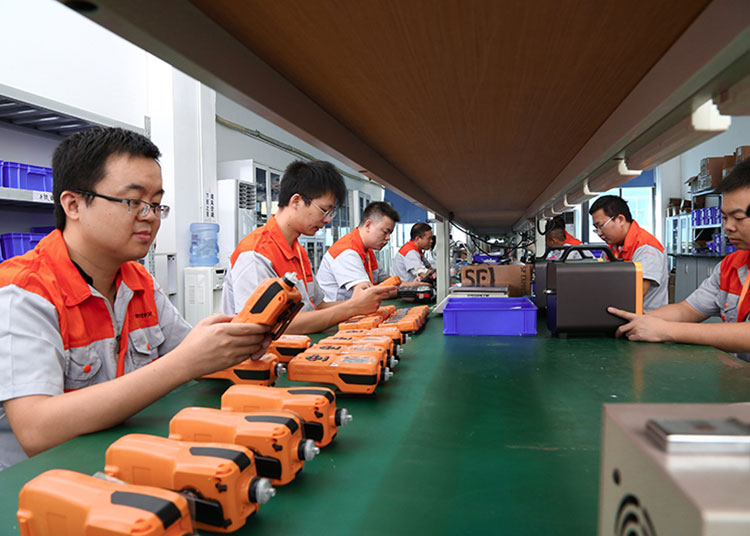
- Request a weekly production progress report with photos/videos. Many Chinese manufacturers, including Zetron, provide real‑time factory photos and testing videos upon request.
- Conduct or arrange a third‑party inspection (e.g., SGS, TÜV, Bureau Veritas) at the “final inspection” stage—before shipment. This is a critical risk‑reduction step.
Stage 3 – Logistics & Customs Clearance
- Choose Incoterms that match your risk appetite: FOB (seller loads onto vessel), CIF (seller insures and pays freight), or DDP (seller handles all duties).
- Ensure the supplier prepares complete documentation: Commercial Invoice, Packing List, Bill of Lading, Certificate of Origin, and any required customs declaration forms for gas detectors (which may be classified as “safety equipment”).
Stage 4 – Inspection upon Arrival
- Upon receipt, inspect for damage, verify model numbers, serial numbers, and firmware versions.
- Perform a simple functional test using known gas concentrations (e.g., 50 ppm CO calibration gas) to confirm sensor accuracy.
Stage 5 – Payment & Warranty Registration
- Release final payment only after you have confirmed the goods meet specifications. Zetron offers a standard 2‑year warranty on electronics and extends support through its English‑speaking technical team via email (info@bjzetron.com) and WhatsApp (+86‑15699785629).
4. Three Major Cross‑Border Risks & Mitigation Strategies
4.1 Quality Non‑Conformance
Risk: Detectors deliver inaccurate readings or fail within weeks due to substandard sensors.
Solution:
- Require a certificate of calibration traceable to ISO or national standards. Zetron provides individual calibration certificates for each unit, with accuracy guaranteed at ≤ ±1% F.S.
- Utilize third‑party inspection before shipment. For a small fee (0.5–1% of order value), an independent agency validates sensor response, alarm thresholds, and IP rating.
- Include a “right of return” clause in the contract: if >5% of units fail within the first 30 days, the supplier must replace them at no cost.
4.2 Delivery Delays
Risk: Goods miss the project deadline, causing production halts or penalty fines.
Solution:
- Set a liquidated damages clause (e.g., 0.5% per day of delay, capped at 5% of order value).
- Ask the supplier to provide a detailed production schedule with milestones. Suppliers with lean manufacturing, like Zetron, often have buffer capacity for urgent orders.
- Consider splitting large orders into multiple shipments to reduce the impact of a single delay.
4.3 No After‑Sales Support
Risk: Dealing with a supplier that disappears after the sale, leaving you with non‑working detectors and no spare parts.
Solution:
- Verify the supplier’s long‑term presence—Zetron has been in the gas detection market for nearly 20 years and maintains stable contact channels (tel, email, WhatsApp).
- Opt for suppliers with global after‑sales service. Zetron offers remote firmware updates, troubleshooting guides, and a 24‑hour email response policy.
- Purchase a spare‑parts kit (sensors, filters, batteries) at the time of initial order. This ensures you can maintain the gas detector alarm system independently for at least 1–2 years.
Why Zetron Stands Out in This Procurement Context
Throughout the steps above, Zetron (www.zetroncn.com) demonstrates consistent advantages:
- Flexible MOQ – ideal for trial orders and small‑ to medium‑sized buyers.
- Transparent pricing – detailed CIF/FOB quotes with no hidden fees.
- Third‑party inspection readiness – they welcome independent QC and provide SGS‑certified test reports.
- Global reach – with clients like SGS India, CEMEX, NISSAN, and COSCO SHIPPING, they understand international logistics and customs requirements.
- Comprehensive product line – from portable gas detector to fixed gas detector, VOC gas analyzer, flue gas analyzer, ozone detector, and gas monitor systems.
For any procurement inquiry, contact Zetron at Tel: +86-15699785629, Email: info@bjzetron.com, or visit their website to download product datasheets and certification documents.
This guide is based on industry best practices as of May 2026. Always verify current terms directly with the supplier.