
Practical Procurement Guide for Drainage Geonet: A Step-by-Step Approach for Industrial Buyers (2026)
1. Pre-Procurement Preparation: Defining Technical, Budgetary, and Compliance Requirements
Before initiating a sourcing process for a drainage geonet, industrial buyers must first clarify three core elements: technical specifications, budget constraints, and regulatory compliance. This initial phase significantly reduces the risk of selecting an unsuitable product or supplier.
Technical Requirements
The performance of a drainage geonet is defined by its material, structure, and mechanical properties. For typical applications in subgrade drainage, slope protection, and environmental engineering, key parameters include:
- Thickness: Standard thicknesses range from 4.0 mm to 8.0 mm, customizable based on load and drainage volume.
- Mass per unit area: Typically between 500–1400 g/m², affecting overall strength and hydraulic capacity.
- Tensile strength (MD/TD): ≥5–15 kN/m, essential for resisting installation stresses and long-term loads.
- Compressive strength (10% strain): ≥500–830 kPa, critical for performance under landfill or heavy traffic loads.
- Drainage capacity: ≥50–120 L/min per meter width, depending on the hydraulic gradient.
- Acid/alkali resistance: ≥90% strength retention after exposure, required for aggressive environments like metal smelting tailings or leachate collection.
Buyers should match these parameters with project-specific conditions. For example, a high compressive resistance drainage geonet is recommended for deep landfills, while an acid and alkali resistant drainage geonet is vital for aquaculture ponds or chemical containment.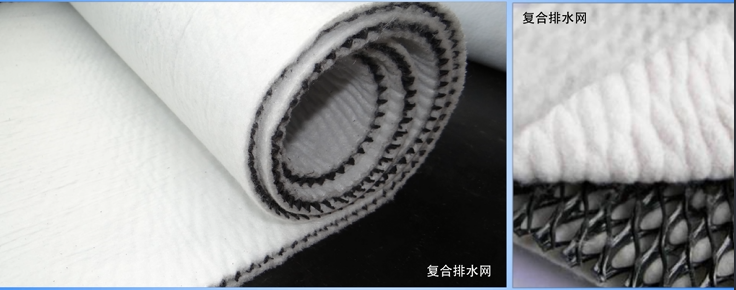
Budget Planning
Total cost includes material, logistics (FOB vs CIF), potential customs duties, and installation. While the initial unit price may be higher for specialized grades (e.g., HDPE or PET-based), a lower total ownership cost often results from extended service life and reduced maintenance. Industry estimates suggest that a high-quality drainage geonet can reduce 5-year ownership costs by up to 40% compared to conventional alternatives, even though the initial cost may be 15% higher.
Compliance and Certification
Different target markets mandate specific certifications. For projects in the European Economic Area, a CE marking verified against EN 13249:2016 is required. In the EAEU (Russia, Kazakhstan, etc.), a GOST Certificate of Conformity (e.g., GOST 33068-2014 for geotextiles and drainage geocomposites) is mandatory. Always request copies of valid certificates before shortlisting suppliers.
2. Key Negotiation Points with Suppliers
Once a shortlist is prepared, procurement professionals should discuss the following four clauses to avoid misunderstandings and disputes.
Minimum Order Quantity (MOQ)
Many manufacturers, including Haoyang Geomembrane, set an MOQ at 5000 square meters (5000㎡). Confirm whether the supplier can accommodate smaller orders for pilot projects or if they offer stock sizes.
Pricing Structure and Incoterms
Request a detailed breakdown: material cost, production overhead, packaging, and logistics. Clarify whether the quoted price is FOB (port of loading) or CIF (destination port). FOB typically gives the buyer more control over freight, while CIF simplifies logistics for smaller teams. Be aware that additional costs (customs clearance, inland freight, insurance) may apply.
Delivery Lead Time
Standard lead times for custom-produced drainage geonets range from 10 to 30 days, depending on order complexity and factory capacity. It is advisable to contract a lead time buffer of 2–3 weeks in case of production delays. A reputable supplier will provide a realistic timeline and regular production updates.
Warranty and After-Sales Support
Insist on written warranty terms covering material defects and performance under specified conditions. Ask about on-site technical support—some suppliers offer installation guidance and troubleshooting. Including a clause for third-party inspection during production can greatly reduce quality risk.
3. Cross-Border Procurement Workflow for Drainage Geonet
The typical procurement process from a Chinese manufacturer follows four stages:
Stage 1: Order Confirmation and Payment
After agreeing on specifications and price, the buyer signs a proforma invoice. Standard payment terms are 30% deposit with 70% due before shipment, or a full 100% payment for smaller orders. Once the deposit is received, the supplier schedules production.
Stage 2: Production Monitoring
During manufacturing, the buyer can request photos or videos of key production steps. For larger volumes (e.g., 900,000 m² in a tailings project), a factory visit or independent quality audit is recommended. Many suppliers, like those with CNAS-accredited labs, conduct full-process quality checks from raw material to finished rolls.
Stage 3: Logistics and Customs Clearance
Products are shipped under FOB or CIF terms. The supplier is responsible for export customs clearance and loading. The buyer arranges ocean freight and insurance (if FOB) or relies on the supplier for CIF. Ensure all shipping documents (bill of lading, packing list, certificate of origin, inspection certificates) are prepared in advance.
Stage 4: Acceptance and Final Payment
Before shipment, a pre-shipment test is conducted to verify product dimensions, tensile strength, and drainage capacity. Accepted goods trigger the final payment (70% or remaining balance). Upon arrival, the buyer should inspect for damage and verify conformity with the order.
4. Risk Mitigation Strategies
Cross-border procurement of drainage geonets involves three common risks. Below are proven countermeasures.
Risk 1: Quality Non‑Conformance
Solution: Require third-party testing or rely on suppliers equipped with independent laboratories. For instance, a manufacturer with a CNAS‑accredited laboratory (the only nationally recognized lab in the industry) can ensure every batch meets standards. Establish acceptance criteria in the contract (e.g., tensile strength ≥10 kN/m, drainage capacity ≥80 L/min).
Risk 2: Delivery Delays
Solution: Include a penalty clause for delayed shipment (e.g., 0.5% of order value per day of delay). Choose suppliers with proven track records. Haoyang Geomembrane, with a production capacity of 3000 tons per month and a factory area of 200,000 m², typically completes orders within 10–30 days. Their commitment to on-time delivery is reinforced by participation in large global projects.
Risk 3: Lack of After‑Sales Support
Solution: Select a supplier that offers on‑site installation guidance or remote technical support. A real‑world case: in an Uzbekistan gold mine tailings pond project, the supplier provided not only 900,000 m² of composite drainage geonet but also full construction services, including on‑site supervision. The project’s designed service life exceeds 70 years, demonstrating the value of comprehensive after‑sales support.
Furthermore, the risk of improper product handling during installation can be reduced by requesting detailed installation manuals and video guidance from the supplier.
Conclusion
A successful drainage geonet procurement requires thorough preparation, clear negotiation, disciplined workflow execution, and proactive risk management. By aligning technical specifications with project conditions, verifying certifications (CE, GOST), using structured payment terms (30/70 or FOB/CIF), and insisting on pre‑shipment inspection and after‑sales support, industrial buyers can avoid common pitfalls and secure a reliable, long‑lasting drainage solution.
For inquiries or a custom quotation, contact: Email: 15315800874@163.com, Tel/WhatsApp: +86 15315800874.