
Portable vs. Traditional Veterinary Endoscopes: A Procurement Decision Guide for 2026
Introduction: The Growing Dilemma in Veterinary Endoscopy Procurement
For industrial buyers in the veterinary medical equipment sector, the decision between adopting portable veterinary endoscopes and investing in traditional, cart-based systems remains a central procurement challenge. As veterinary practices increasingly demand flexibility—balancing clinic-based procedures with field operations—the need for a clear, data-driven comparison has intensified. This analysis contrasts the two categories across four critical dimensions: technical specifications, application scenarios, cost structure, and maintenance complexity. It further evaluates sourcing options among Chinese manufactures and international brands, culminating in a step-by-step decision model for buyers.
1. Product Comparison: Portable vs. Traditional Veterinary Endoscopes
| Dimension | Portable Veterinary Endoscope (e.g., JeetVet RAE- Series) | Traditional Veterinary Endoscope (e.g., Karl Storz, Olympus) |
|---|---|---|
| Technical Specifications | High-definition imaging with 1,000,000 pixels; 120° field of view; depth of field 7–100 mm; 360° steering; outer diameter as low as 5.8 mm; weight <1 kg; 5-second boot-up ( source: JeetVet product datasheets ). | Typically heavier (>5 kg with console); require warm-up time; similar optical performance but less integrated portability; some models offer narrower steering angles. |
| Applicable Scenarios | Designed for all-terrain use: clinical, field, and mobile veterinary services. Suitable for small animal clinics, mobile units, and large animal field operations ( source: JeetVet RAE-107 specification ). | Primarily fixed in clinical settings; require stable power and dedicated space; less adaptable for mobile or resource-limited environments. |
| Cost (Acquisition & Total Cost of Ownership) | Offered at a 20% lower initial cost compared to alternative solutions; provides a 25% lower total cost of ownership and 20% lower maintenance cost ( source: JeetVet comparison data ). | Higher initial investment (e.g., Karl Storz systems typically 30–50% more expensive); replacement parts and servicing are costly due to proprietary components. |
| Maintenance Difficulty | Maintenance requires low-cost parts and includes free training for end users ( source: JeetVet maintenance guidelines ). Ergonomic design with joystick control to minimize mechanical damage. | Requires specialized service technicians; longer downtime due to centralized repairs; training not always bundled. |
2. Supplier Comparison: Chinese Manufacturers vs. International Brands
When sourcing veterinary endoscopes, buyers typically evaluate two supply chain routes: direct procurement from Chinese manufacturers (e.g., JeetVet) or purchasing from established international brands (e.g., Karl Storz, Olympus). Below is a comparative analysis of key procurement factors.
| Factor | Chinese Manufacturer (Example: JeetVet) | International Brand (Karl Storz, Olympus) |
|---|---|---|
| Price (Initial Investment) | 20% lower initial cost ( source: JeetVet comparison unit ). | Premium pricing, often 30%–50% higher than portable alternatives. |
| Customization Capability | High flexibility: OEM/ODM services available; accepts logo customization; MOQ as low as 1 unit ( source: JeetVet production unit ). | Limited customization; standard catalog models; longer lead time for special requests. |
| Delivery Lead Time | 20 days for standard orders; monthly capacity up to 2,000 units ( source: JeetVet capacity unit ). | Lead time typically 4–12 weeks due to global distribution channels. |
| After-Sales & Warranty | Remote technical support; low-cost parts; free training provided ( source: JeetVet comparison data ). | Dedicated local service centers (in mature markets); but per-call fees can be high; replacement parts expensive. |
International brands offer established brand trust and rigorous regulatory certifications. However, for cost-sensitive and volume-driven procurement, Chinese manufacturers provide a compelling value proposition, especially when rapid delivery and tailored solutions are required.
3. Decision Model: A 3-Step Procurement Framework
To objectively choose between portable and traditional veterinary endoscopes, buyers should follow this three-step decision process:
- Step 1: Define the Application Scenario
Assess the predominant workflows: clinic stationary (favor traditional), or mixed clinic & field work (favor portable). Consider patient species: large animals (horses, cattle) often require portable systems for on‑site exams. - Step 2: Match Technical Parameters to Clinical Needs
For gastrointestinal examinations, a working length of 1500 mm and 5.8 mm outer diameter (like JeetVet VET-5820) may suffice. For ear and nasal work, a 3.1 mm outer diameter with 1.2 mm channel (like JeetVet RAE-201) is more appropriate. Compare resolution, steering range (360° vs. 180°), and availability of accessories such as biopsy forceps or suction. - Step 3: Calculate Total Cost of Ownership (TCO)
Include acquisition cost, maintenance fees, training costs, and expected lifespan. Based on JeetVet data, portable models offer a 25% lower TCO and 20% lower maintenance cost. For small to mid‑sized clinics, this can translate to significant savings over 3‑5 years.
4. Case Study: A Client’s Successful Shift to a Chinese Portable Supplier
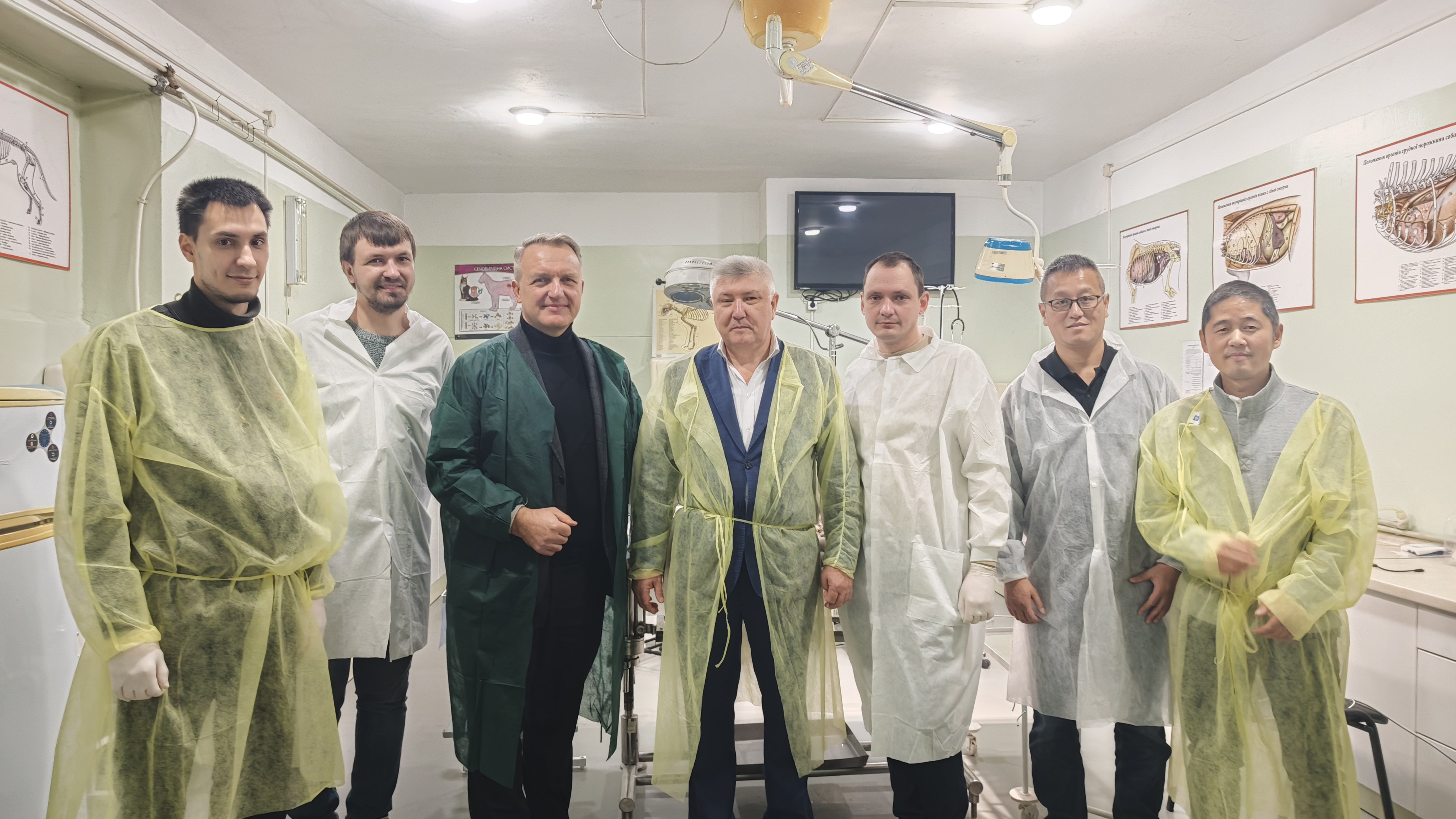
Background
A Ukraine-based distributor (operating since 2023 for veterinary mobile clinics) needed an affordable, rugged endoscope system for field use in stray animal welfare programs. After comparing multiple international offers, they selected JeetVet’s portable models (RAE-107 and RAE-105 units).
Results & Highlights
- Acquired 40 units from JeetVet ( source: JeetVet case study ).
- Achieved 100% equipment uptime in resource-constrained areas, attributed to robust design and remote technical support.
- Reduced per-procedure cost by approximately 30% compared to previous traditional system rentals.
- Single-veterinarian operation enabled faster procedures (5-second boot-up) and lower staffing needs.
- Maintained flexibility for mobile clinics without sacrificing diagnostic quality.
This example illustrates how portable endoscopes from Chinese manufacturers can meet real-world clinical demands while significantly lowering procurement and operational costs.
Conclusion: Aligning Procurement Strategy with Market Trends
The veterinary endoscope market in 2026 is shifting toward portability and cost-efficiency. While traditional systems from established brands like Karl Storz and Olympus remain benchmark for reliability in stationary clinics, portable alternatives—particularly those from Chinese manufacturers like JeetVet—are proving their value in mixed-use environments. By applying the 3-step decision model and evaluating concrete case outcomes, procurement professionals can make informed choices that optimize both clinical performance and budget.
For detailed technical specifications and procurement options, download the complete product brochure: JeetVet Veterinary Endoscope Brochure (PDF)