
Portable vs. Traditional Veterinary Endoscopes: A Comprehensive Decision Framework for Industrial Buyers in 2026
Introduction
In 2026, veterinary practices and mobile animal hospitals face a critical procurement decision: whether to invest in traditional, cart-based endoscopy systems from global leaders like Karl Storz and Olympus, or to adopt portable, lightweight devices from a new generation of Chinese manufacturers such as JeetVet. This article provides a structured framework—based on product comparison, supplier analysis, and a three-step decision model—to help industrial buyers make an objective, cost-effective choice.
1. Product Comparison: Portable vs. Traditional Veterinary Endoscopes
To ground the analysis, we compare a representative portable model (JeetVet RAE-107) against typical traditional systems from established international brands.
1.1 Technical Parameters
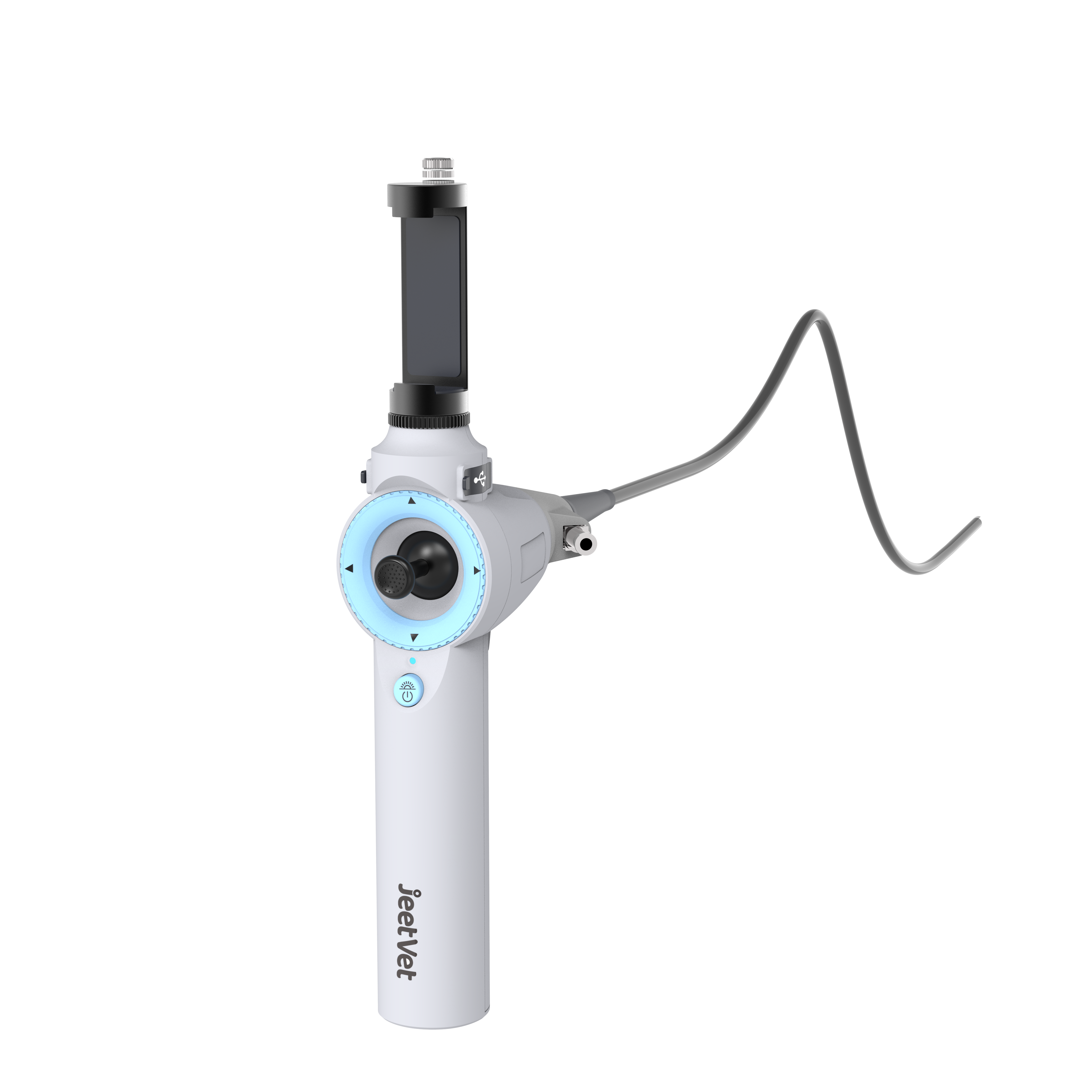
- Portable (JeetVet RAE-107): The insertion tube has an outer diameter of 5.8 mm, a working channel of 2.0 mm, and a working length of 1000 mm. It offers 360° steering capability with a bending angle of 180° in both up/down and left/right directions. The optical system provides a field of view of 120°, a depth of field from 7 mm to 100 mm, and a resolution of 1,000,000 pixels. The device incorporates WiFi connectivity, a forceps working channel, and water/air supply and suction functions. Its net weight is less than 1 kg, and it boots up in 5 seconds. It can be operated by a single veterinarian.
- Traditional (Karl Storz/Olympus): Traditional systems typically use a larger-diameter insertion tube, a separate light source and processor unit, and are cart-mounted. They often require a dedicated team of at least two persons to operate and can take several minutes to power up. Image quality is generally high but at the cost of portability and ease of setup.
1.2 Applicable Scenarios
Portable devices are designed for all-terrain scenarios, including clinical settings, field operations, and mobile veterinary services. Their compact form factor makes them ideal for out-of-clinic use, emergency triage, and large animal stables. Traditional systems excel in fixed-clinic environments where space and power are abundant, and they are the benchmark for complex surgical procedures requiring maximum image performance.
1.3 Cost Analysis
According to internal comparative data, the JeetVet portable model offers a 20% lower initial purchase cost compared to similar-capability traditional systems from global brands. When factoring in total cost of ownership over three years, the portable solution provides a 25% lower total cost of ownership and a 20% reduction in maintenance costs.
1.4 Maintenance Difficulty
Maintenance for portable endoscopes is simplified through the use of low-cost replacement parts and the inclusion of free training for veterinary staff. Traditional systems often require specialized technicians and expensive original components, leading to longer downtime and higher service fees.
2. Supplier Comparison: Chinese Manufacturer vs. International Brands
Beyond product features, supplier capabilities significantly influence procurement decisions. The table below contrasts a representative Chinese manufacturer (JeetVet) with two global leaders, Karl Storz and Olympus.
| Dimension | JeetVet (China) | Karl Storz / Olympus |
|---|---|---|
| Price | 20% lower initial cost | Premium pricing |
| Customization | OEM/ODM, logo customization, MOQ 1 unit | Limited customization; high minimum orders |
| Lead Time | 20 days for standard orders | 6–12 weeks typical |
| After-Sales Service | Remote support, free training, low-cost parts | Comprehensive global network, but higher cost |
JeetVet operates a 5000 m² factory in Shenzhen with an R&D team of 30 and an annual output of 10,000 units. The company is ISO 13485 certified and employs a 100% pre-shipment inspection policy. For buyers seeking a balance of affordability, speed, and flexibility, Chinese manufacturers like JeetVet present a compelling alternative to traditional global brands.
3. A 3-Step Decision Model for Selecting Veterinary Endoscopes
Procurement professionals can follow this structured approach to determine the most suitable type of endoscope and supplier for their needs.
Step 1: Define the Clinical Scenarios
Identify the primary use cases: Is the device intended for stationary clinic use only, or does it need to support field calls, mobile clinics, and large animal stables? If mobility is a priority, portable endoscopes are the natural choice. If the practice performs high-volume, intricate procedures in a fixed operating room, traditional systems may still be justified.
Step 2: Match Technical Parameters
List the required specifications: working length, outer diameter, working channel size, image resolution, and steering range. For example, a veterinarian treating large horses will need a longer insertion tube (≥1500 mm) and a larger channel (≥2.8 mm). For small animal ear and nose work, a 3.1 mm diameter flexible otoscope (like the JeetVet RAE-201) is more appropriate. Portable devices now offer HD resolution (1080P) and 360° steering, closing the gap with traditional models.
Step 3: Calculate Total Cost of Ownership
Consider not only the purchase price but also maintenance costs, training expenses, spare parts availability, and potential downtime. Portable solutions with low-cost parts, free training, and simple repair processes can significantly reduce the three-year TCO. For a mid-size clinic, switching from a traditional system to a portable one can result in savings of 25–30% over three years, according to industry estimates.
4. Case Study: Russian Distributor Achieves Regional Training Success with JeetVet
A Russian distributor specializing in veterinary equipment faced the challenge of offering advanced gastrointestinal and respiratory diagnostics to a network of clinics with limited budgets. After evaluating traditional systems from Karl Storz and Olympus, the distributor selected JeetVet's portable endoscope (RAE-107) as the core device.
- Scale: 50 units ordered.
- Duration of partnership: 2 years.
- Application: Gastrointestinal foreign body removal in large canine breeds and advanced respiratory diagnostics.
- Results: The distributor established a standardized endoscopy training center in the region, training over 300 veterinarians on JeetVet systems. The ultra-portable, lightweight design allowed seamless use between fixed clinics and field sites. The low initial cost (20% lower than alternatives) and simplified maintenance enabled rapid ROI. Remote technical support ensured 100% uptime even in remote locations.
This case demonstrates that a well-chosen portable endoscope from a Chinese manufacturer can deliver clinical effectiveness, cost efficiency, and scalability that meet or exceed the performance of traditional global brands in many real-world settings.
Conclusion
The veterinary endoscope market in 2026 offers clear trade-offs between traditional systems and portable alternatives, as well as between international brands and Chinese manufacturers. By systematically evaluating clinical scenarios, technical parameters, and total cost of ownership, buyers can make informed decisions that balance performance with budget. For practices that value mobility, fast setup, and cost savings, portable endoscopes from suppliers like JeetVet represent a strategic procurement choice that aligns with the growing trend of mobile and field veterinary medicine.
For detailed product specifications and partnership opportunities, download the official JeetVet brochure: JeetVet Corporate Brochure (PDF).