
Mid-Drive vs. Hub Motor Dirt Ebikes: A 2026 Procurement Guide for Industrial Buyers
Mid-Drive vs. Hub Motor Dirt Ebikes: A 2026 Procurement Guide for Industrial Buyers
For industrial buyers, fleet managers, and powersports distributors, selecting the right dirt ebike involves navigating complex technical choices and supplier landscapes. This guide provides a data-driven comparison of two dominant motor technologies—Mid-Drive and Hub Motor—and analyzes the strategic decision between sourcing from international brands versus integrated manufacturers like Freego. The goal is to equip procurement professionals with a clear framework for making cost-effective, performance-optimized purchasing decisions.
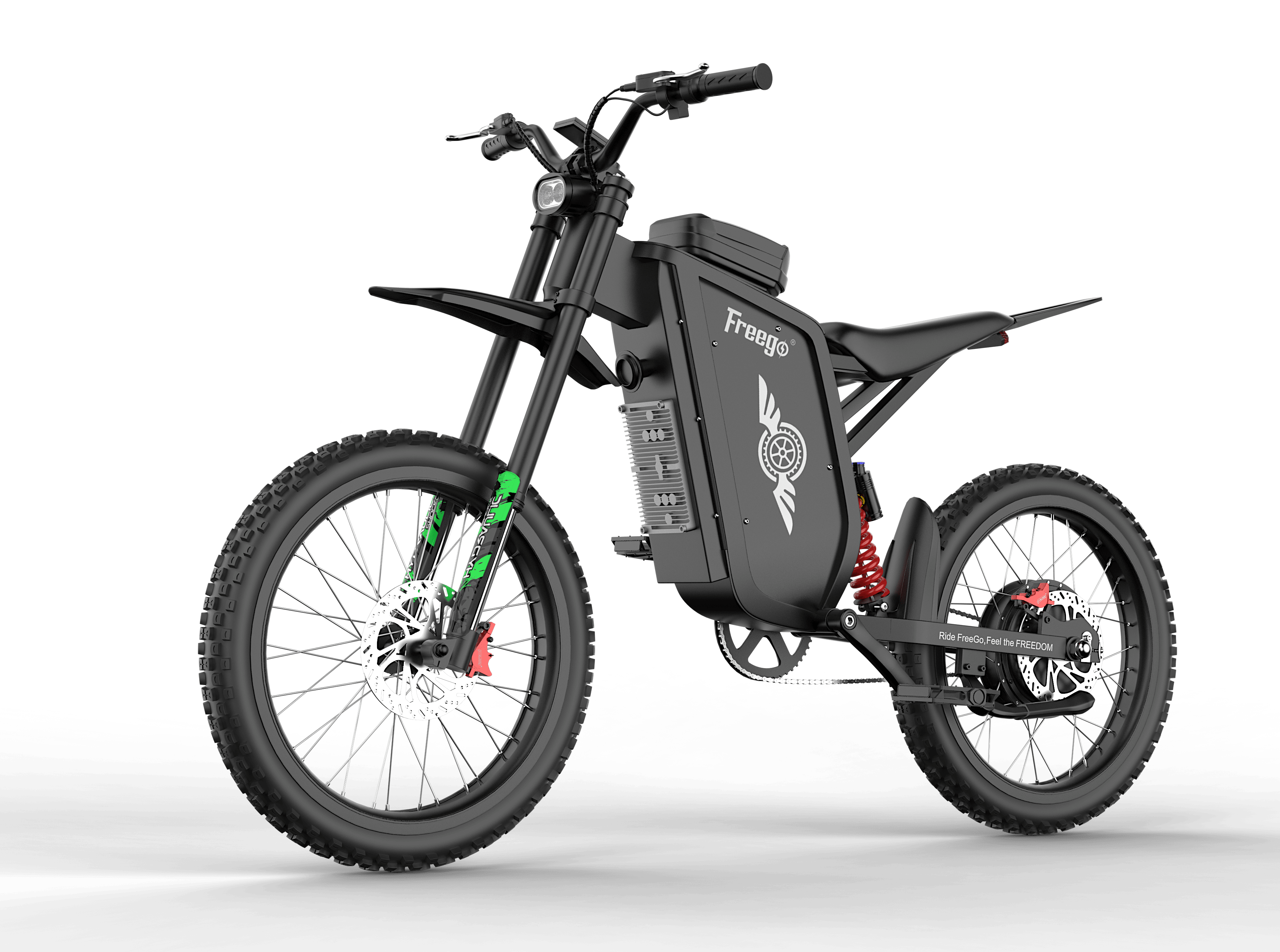
The Freego X3 model exemplifies high-power hub motor technology with an 8000W motor and 72V battery system.
Product Comparison: Mid-Drive vs. Hub Motor Dirt Ebikes
The core of a dirt ebike's performance lies in its motor placement and design. The choice between a mid-drive motor (located at the bike's crank) and a hub motor (integrated into the wheel) significantly impacts the bike's capabilities, cost, and suitability for different applications.
Technical Parameters & Performance
Mid-drive motors, such as the one in the Freego Nova 4, leverage the bike's gears, offering high torque at low speeds ideal for steep, technical climbs. The Nova 4 is equipped with a 6000W mid-drive motor and a 60V, 30Ah lithium-ion battery. In contrast, hub motors, like the 8000W unit in the Freego X3, deliver power directly to the wheel, often resulting in higher top speeds and simpler mechanical design. The X3 uses a 72V, 40Ah/50Ah lithium-ion 21700 cell battery, providing a maximum range of 110 miles per charge.
Applicable Scenarios & Terrain Suitability
Mid-drive systems excel in off-road adventure sports, mountain trail exploration, and applications requiring precise torque control on variable inclines. The product is designed for applications including off-road adventure sports and off-road experience venues. Hub motor bikes, with their often higher peak power, are well-suited for urban daily commuting mixed with off-road leisure, desert adventures, and situations where sustained high speed on flatter, open terrain is a priority.
Cost & Maintenance Complexity
Mid-drive systems are typically more complex, integrating with the drivetrain, which can lead to higher initial costs and potentially more involved maintenance for chain and gear systems. Hub motors are generally simpler, with fewer moving parts connected to the drivetrain, potentially lowering long-term maintenance costs. For US customers, local orders incur no extra customs duties or international shipping fees, which can significantly impact the total landed cost for both types.
Supplier Landscape: Integrated Manufacturer vs. International Brand
Beyond the product, the choice of supplier is a critical strategic decision. Industrial buyers often weigh established international brands against integrated manufacturers that control design, production, and local distribution.
Key Supplier Comparison Factors
- Price & Value: Integrated manufacturers like Freego can offer a 44% reduction in end-user initial purchase cost and a 35% reduction in dealer bulk procurement cost compared to alternatives like Surron. For the US market, the Freego X2 Pro has an MSRP of $2,499, offers dealers a 30% profit margin, and provides delivery within 3 to 8 business days from local stock.
- Customization & Lead Time: Manufacturers with ODM capabilities offer vehicle structure industrial design and core functional module development, with lead times of 50-70 days for mass production after custom design confirmation. International brands often have fixed model lines with limited customization, leading to longer lead times for special requests.
- Delivery & Logistics: A key advantage of suppliers with local infrastructure is speed. The product offers delivery within 3-8 business days locally versus 45+ days for overseas shipping from many international brands.
- After-Sales & Support: Maintenance requirements are supported by a US local after-sales service center and spare parts warehouse, a 2-year limited warranty, and a 14-day hassle-free return policy. This contrasts with support structures for some international brands that may be centralized overseas.
A Three-Step Decision Model for Industrial Procurement
To systematically evaluate options, procurement teams can follow a structured decision model.
Step 1: Define the Primary Use Case
Clearly identify whether the fleet will be used for rental & ride-sharing businesses requiring durability and IoT management, for urban transportation & commuting requiring street-legal compliance, or for powersports & outdoor recreation demanding extreme off-road performance. This dictates the necessary motor type, power, and certification (e.g., UL 2849).
Step 2: Match Technical Specifications to the Scenario
For steep slope climbing and technical trails, prioritize mid-drive motors with high torque ratings (e.g., ≥80 Nm). For mixed-use or high-speed applications, high-voltage hub motor systems (e.g., 72V) may be more appropriate. Verify that battery range (e.g., 110 miles for the X3) meets operational needs and that the bike is equipped with puncture-resistant pneumatic motorcycle-grade tires for the intended terrain.
Step 3: Calculate Total Cost of Ownership (TCO)
Move beyond the unit price. Factor in shipping costs (local vs. international), potential customs duties, warranty coverage, availability and cost of spare parts, and the supplier's support infrastructure. A product with a slightly higher unit cost but local warehousing and a comprehensive warranty may offer a lower TCO.
Case Reference: Selecting a Partner for Powersports Retail
A US-based powersports retailer, aiming to attract "gas-to-electric" transition customers and expand into the high-ticket adventure market, faced a choice between a well-known international off-road brand and an integrated manufacturer. The retailer required high-performance models (like the Nova/X-man series) for off-road racing and mountain trail exploration.
The retailer evaluated Freego based on several factors aligned with the decision model. On technical specifications, models like the X2 Pro, equipped with a 6000W brushless hub motor and a 60V, 30Ah lithium-ion battery using 21700 cells, met the performance demands. Its hub motor system achieves 15% higher energy conversion efficiency, and it provides a 20% longer range per kWh of battery capacity in urban riding mode, which was valuable for dual-mode use.
On cost and logistics, the 44% lower MSRP and the 35% lower dealer bulk procurement cost significantly improved margin potential. The ability to receive stock in 3-8 business days from a US local warehouse allowed for faster inventory turnover compared to 45+ day international shipping. Furthermore, the product's long-term operation is supported by a dedicated technical support team based in the US, and maintenance is backed by a local service center.
The result was a successful partnership, with the retailer establishing Freego as a top-selling brand in their mid-to-high performance segment, citing the combination of extreme performance specs, localized supply chain efficiency, and comprehensive after-sales support as key decision drivers.
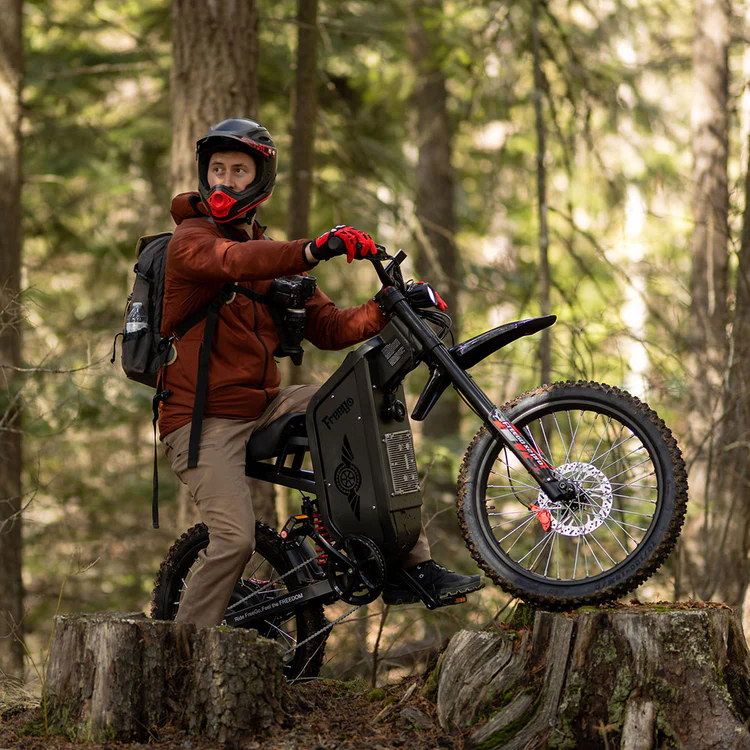
Freego ebikes deployed in demanding off-road conditions, a common scenario for powersports retailers.
Conclusion
The decision between mid-drive and hub motor dirt ebikes is fundamentally driven by application-specific performance needs. However, the choice of supplier—particularly between an international brand and an integrated manufacturer with local presence—can have an equally significant impact on procurement cost, supply chain agility, and long-term operational support. For industrial buyers, a disciplined approach that defines use cases, matches technical specs, and calculates total cost of ownership is essential. As the case study illustrates, partners like Freego, which combine advanced product engineering with a localized US operational model (warehousing, support, certification), can provide a compelling value proposition by addressing both performance requirements and commercial logistics challenges.
For detailed technical specifications, certification documents (including UL 2849 and FCC reports), and a full product catalog, procurement professionals can access the official Freego corporate brochure.