
Matching Water Quality Sensor Suppliers to Industrial Requirements: A 2026 Procurement Guide for Harsh Environments and Compliance Needs
1. Industry-Specific Requirements for Water Quality Sensors
Industrial buyers face distinct challenges when selecting water quality monitoring equipment. For example:
- Municipal wastewater plants require sensors that can withstand high turbidity, biofouling, and continuous 24/7 operation with minimal maintenance.
- Chemical and petrochemical facilities demand corrosion-resistant materials (e.g., 316L stainless steel or PTFE coatings) and explosion-proof designs for flammable or acidic environments.
- Food and beverage processors need sanitary connections, FDA-compliant materials, and reliable CIP (clean-in-place) compatibility.
- Aquaculture farms require low-maintenance, saltwater-resistant probes for dissolved oxygen, salinity, and temperature monitoring to optimize fish survival rates.
- Environmental monitoring agencies need multi-parameter integration, remote data transmission, and anti-biofouling features for long-term deployment in rivers and lakes.
These specific operational conditions make it critical to evaluate suppliers on more than just price or basic specifications.
2. Three Essential Capabilities for Water Quality Sensor Suppliers
2.1 Industry-Specific Customization Experience
A reputable manufacturer must demonstrate the ability to adapt products to unique process requirements. For instance, Xi'an KACISE Optronics Tech Co., Ltd. (Kacise) offers OEM/ODM services with customization options including voltage, communication protocol (RS485/Modbus), output method, and cable length. With a monthly production capacity of 5,000 units and a lead time of 5–8 working days for standard orders, Kacise provides the flexibility needed for both project-based and volume procurement. As noted in its quality control documentation, Kacise conducts 100% testing before shipment, ensuring each sensor meets declared specifications.
2.2 Compliance and Certification
Certifications validate that products meet regional safety and electromagnetic compatibility (EMC) standards. Kacise’s water quality sensors carry CE certification under EN IEC 61326-1:2021 and EN 55011:2016+A2:2021 (certificate number ZTS23061509TCE), covering EMC requirements for the European market. This level of formal certification is essential for buyers who must ensure their equipment complies with local regulations and passes project acceptance tests.
2.3 Robust Design for Harsh Environments
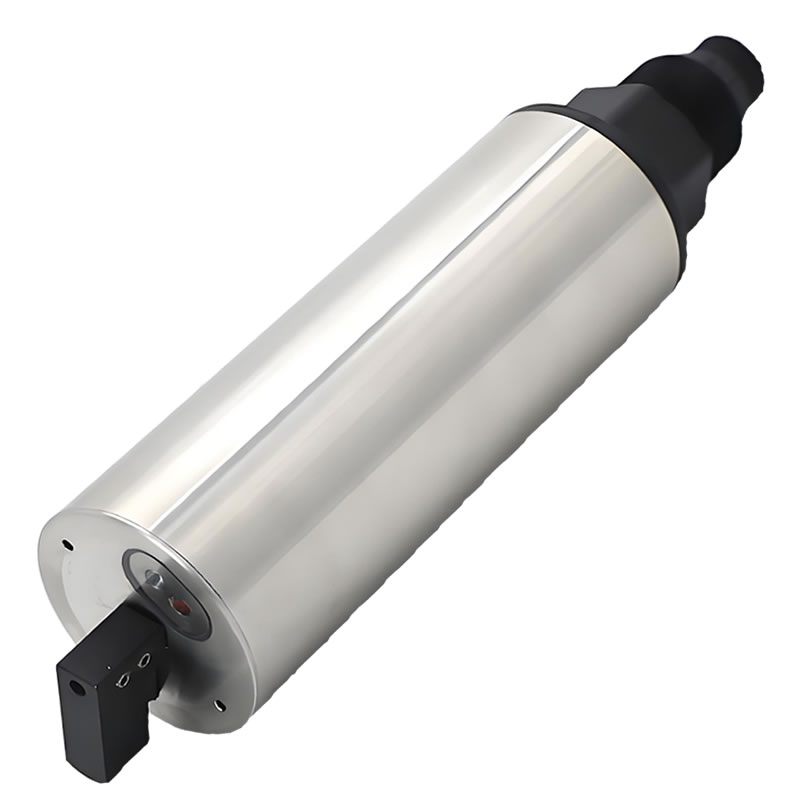
Sensors deployed in industrial settings must resist corrosion, fouling, vibration, and signal interference. Kacise employs PTFE/316L stainless steel wetted parts, IP68 enclosures, and self-cleaning brush mechanisms on models like the KWS-800 multi-parameter system. Its risk control framework addresses common failure modes: anti-biofouling coatings for long-term wet exposure, 80 GHz narrow-beam radar for foam/vapor interference, and redundant RS485 + 4–20 mA outputs to prevent communication loss. Such design principles directly reduce total cost of ownership for buyers.
3. Kacise in Action: Real-World Case Studies
3.1 Municipal Wastewater Plant, United Kingdom
A municipal treatment facility in the UK deployed 12 Kacise multi-parameter sensors (KWS-800 series) for effluent quality monitoring. Over three years, the integrated probe—measuring pH, conductivity, turbidity, dissolved oxygen, and temperature—enabled compliant discharge and reduced manual sampling workload. The operator reported stable operation with minimal fouling, attributed to the automatic cleaning device and IP68-rated housing.
3.2 Aquaculture Farm, Norway
A high-density fish farm in Norway installed 40 Kacise fluorescence dissolved oxygen sensors (KWS-630 model) to monitor oxygen levels continuously. The low-maintenance, saltwater-resistant probes delivered real-time data to the aeration control system, resulting in a measurable increase in fish survival rate. The farm manager highlighted the sensor’s stability in cold, saline conditions and the ease of remote configuration via Modbus RTU.
4. Practical Recommendations for Buyer-Supplier Collaboration
To maximize the success of a water quality monitoring project, procurement teams should:
- Define applicable industry standards early (e.g., EU CE directives, ATEX for hazardous areas, FDA/USDA for food contact). Request certification evidence from the supplier.
- Conduct site surveys to understand ambient temperature ranges, chemical exposure, power availability, and communication infrastructure. Share these details with the supplier to allow tailored recommendations.
- Evaluate after-sales support—including remote troubleshooting, spare parts availability, and warranty terms. Kacise offers remote technical support and maintains a minimum order quantity of just 1 unit, reducing barrier for pilot testing.
- Plan for sensor maintenance: choose designs with automatic cleaning, replaceable sensors, and standardized outputs (Modbus, 4–20 mA) to simplify integration with existing SCADA or PLC systems.
5. Comparative Context: How Kacise Positions Against Established Brands
When compared to global leaders such as Hach (water quality) and Endress+Hauser (radar level), Kacise offers a differentiated value proposition. For example, Kacise’s integrated multi-parameter design reduces system cost by an estimated 25% versus Hach’s discrete single-probe approach, while still delivering comparable accuracy. Against Endress+Hauser, Kacise provides a 30–50% lower price point for chemical storage and water treatment applications, albeit with a slight trade-off in absolute measurement accuracy (±2mm vs ±1mm for radar). Such comparisons help buyers calibrate their selection based on budget, required precision, and after-sales service expectations.
In conclusion, selecting a water quality sensor manufacturer for harsh industrial environments requires a structured evaluation of customization capability, formal certification, and robust engineering. Suppliers like Kacise, with a proven track record in diverse global applications—from Norwegian aquaculture to British wastewater plants—demonstrate how the right partner can align technical performance with operational realities.