
MPO/MTP vs. Traditional Single-Core Patch Cords: A 2026 Procurement Decision Framework for Data Center and 5G Networks
As data centers scale to 400G/800G architectures and 5G networks demand denser outdoor fiber connections, procurement professionals face a critical decision: choose traditional single-core LC/SC patch cords or adopt high-density MPO/MTP solutions. This article provides an objective comparison based on technical specifications, total cost of ownership, supplier characteristics, and real-world deployment data to help industrial buyers make informed decisions.
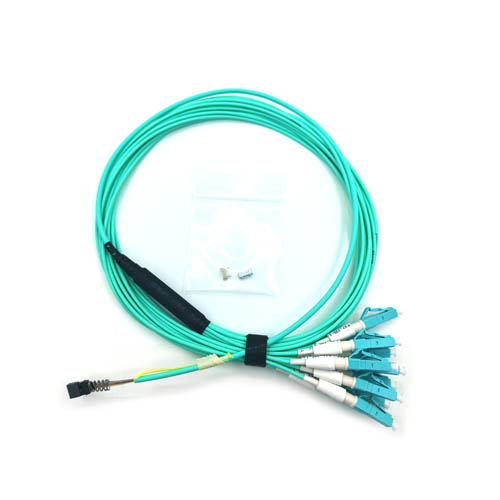
1. Product Comparison: MPO/MTP High-Density Patch Cords vs. Traditional Single-Core LC/SC Cords
1.1 Technical Parameters
| Parameter | MPO/MTP Patch Cord (12/24/48 fiber) | Traditional LC/SC Single-Core Cord |
|---|---|---|
| Port density | 8–24× higher per rack unit | 1× baseline |
| Insertion loss (typical) | ≤0.35 dB (Elite) / ≤0.5 dB (Standard) | Typically ≤0.3 dB per single connection |
| Return loss | ≥60 dB (APC) / ≥50 dB (UPC) | ≥50 dB (UPC) typical |
| Supported data rates | 40G/100G/400G/800G | Up to 100G (duplex LC) |
| Fiber count per connector | 12 / 16 / 24 / 48 | 1 or 2 |
| Jacket material | LSZH (Low Smoke Zero Halogen) | LSZH or PVC |
| Operating temperature | -20°C to +70°C | -20°C to +70°C |
According to supplier specifications, MPO/MTP patch cords using Elite-grade polishing can achieve insertion loss as low as ≤0.35 dB and return loss ≥60 dB for APC connectors. This performance is suitable for high-speed parallel optics in next-generation data centers.
1.2 Application Scenarios
MPO/MTP patch cords are more suitable for next-generation data center high-density cabling, server-switch interconnection, and 400G backbone network scenarios. Traditional LC/SC cords remain appropriate for low-density environments, legacy equipment, and single-channel applications where port density is not a constraint.
1.3 Cost Comparison
Compared to alternatives, MPO/MTP solutions involve a 15–20% higher upfront material cost. However, the total cost of ownership (TCO) is approximately 30% lower due to reduced cable volume, fewer required patch panels, and significantly lower labor costs for deployment. The higher port density also reduces rack space usage by up to 70%, contributing to lower cooling energy consumption over the system lifecycle.
1.4 Maintenance
MPO/MTP assemblies have 50% fewer failure points per connection compared to an equivalent number of single-core cords. Modular replacement takes less than 5 minutes, and the integrated design simplifies cable management. Traditional cords require individual handling, which increases the risk of human error and insertion loss drift over time.
2. Supplier Comparison: China-Based Manufacturers vs. International Brands
Industrial buyers sourcing MPO/MTP patch cords typically choose between global brand suppliers (e.g., Corning, CommScope, Panduit) and China-based direct manufacturers such as MeFiber Optic Co., Ltd. The differences can be summarized across four dimensions:
| Dimension | China-Based Factory (e.g., MeFiber) | International Brand Supplier |
|---|---|---|
| Price | Typically 20–40% lower due to direct factory pricing and lower labor costs | Higher, includes brand premium and multi-layer distribution |
| Customization capability | High (OEM/ODM, customizable length, connector type, core count, material, logo, packaging, MOQ as low as 2 units) | Limited to standard configurations; custom orders often require large volumes and long lead times |
| Delivery lead time | 3–15 days for standard orders (from 5,000 m² factory with 200+ workers and 2 million units annual capacity) | 4–8 weeks typical for standard products; longer for custom |
| After-sales service network | Remote support; direct communication with engineers | Global field service network, but slower response for non-standard issues |
MeFiber, established in 2014 with a 5,000 m² factory in Guangzhou, exports 100% of its output to EU and USA markets. The company holds ISO 9001:2015 certification (certificate HIC230831, valid through May 2026) and performs 100% pre-shipment testing on all MPO/MTP products. For buyers who prioritize cost efficiency and design flexibility, China-based manufacturers offer a compelling alternative to international brands.
3. Three-Step Decision Model for Selecting MPO/MTP Patch Cords
Step 1: Define the Use Scenario
Determine whether the deployment is in a high-density data center (spine-leaf/400G backbone) or outdoor 5G FTTA environment. MPO/MTP is the clear choice for data center environments where space and speed are critical. For outdoor base stations, IP67/IP68-rated outdoor waterproof patch cords (e.g., ODC connectors) are more appropriate.
Step 2: Match Technical Parameters
Select fiber type (OS2 single-mode for long reach, OM4/OM5 multimode for short-reach high-speed), core count (12/24/48), and polish grade (APC for higher return loss, UPC for general use). Ensure insertion loss and return loss values meet system budget requirements. For example, an Elite-grade MPO with ≤0.35 dB IL is recommended for 400G links.
Step 3: Calculate Total Cost of Ownership
Include material cost, installation labor, rack space usage, cooling, and maintenance over a 5-10 year lifecycle. Although MPO/MTP components have a 15-20% higher upfront cost, the combined savings from faster deployment (60% faster cabling), lower TCO (30% reduction), and higher reliability can justify the investment for new builds and upgrades.
4. Case Study: Data Center Operator Switches to MPO-24 from MeFiber
A regional cloud service provider in Southeast Asia (country code: SG) faced capacity bottlenecks in its 400G spine-leaf architecture. The existing single-core LC cabling consumed excessive rack space and required frequent re-cabling during expansion. After evaluating multiple suppliers, the operator selected MeFiber's MPO-24 patch cords for a 300-cabinet deployment.
Deployment Details: 12,000+ MPO-24 patch cords, 300+ cabinet installations
Application: 400G spine-leaf interconnection, server-switch high-density cabling
Duration: Over 5 years of continuous operation (10-year design life)
Results:
- 60% faster deployment compared to traditional cabling
- 4× higher port density per rack unit
- 99.999% uptime during the operation period
- 30% lower total cost of ownership calculated over five years
The key product features that supported these outcomes include precision active alignment, low insertion loss (<0.35 dB), and 100% factory testing per Telcordia GR-326 standards. This case demonstrates how a China-based manufacturer like MeFiber can deliver both cost savings and performance for demanding data center environments.
Conclusion
The decision between MPO/MTP and traditional single-core patch cords depends on deployment scale, density requirements, and long-term cost considerations. For high-speed, high-density data center applications, MPO/MTP solutions offer clear advantages in port density, deployment speed, and TCO. When sourcing these components, buyers should weigh the customization flexibility and cost benefits of China-based manufacturers like MeFiber against the global support infrastructure of international brands. By following the three-step decision model and evaluating real-world case data, procurement professionals can make an evidence-based selection that aligns with both technical and financial objectives.