
MPO/MTP Fiber Optic Patch Cords in 2026: A Comparative Procurement Framework for High-Density Data Centers and Outdoor 5G Deployments
1. Introduction
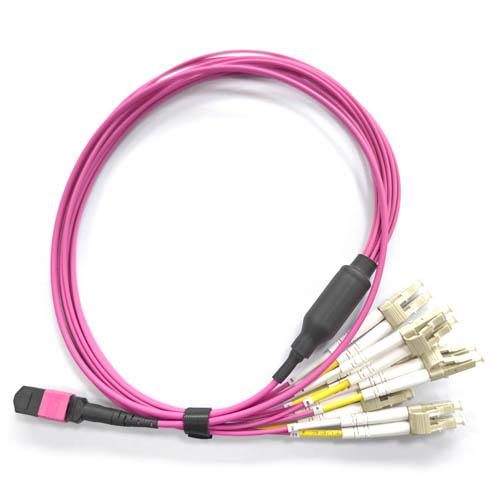
As network infrastructure evolves to support 400G/800G data centers and 5G fronthaul/backhaul, fiber optic patch cords must meet increasingly demanding requirements. Two dominant categories have emerged: high-density MPO/MTP patch cords for indoor data center cabling and ruggedized outdoor FTTA patch cords for 5G base stations. Industrial buyers face a critical decision when sourcing these products — whether to engage Chinese manufacturers like MeFiber or turn to established international brands. This article provides a structured comparison of product types, a supplier advantage analysis, and a practical three-step decision model, supported by real deployment case studies.
2. Product Comparison: MPO/MTP vs. Traditional Single-Core Patch Cords
Industrial buyers often compare high-density MPO/MTP patch cords with conventional single-core LC/SC patch cords. The following table summarizes key differences across four dimensions:
| Dimension | MPO/MTP High-Density Patch Cords | Traditional Single-Core (LC/SC) Patch Cords |
|---|---|---|
| Technical Parameters | Core count: 12 to 48 fibers; insertion loss ≤0.35 dB (Elite) or ≤0.5 dB (standard); return loss ≥60 dB (APC) / ≥50 dB (UPC); supports OS2, OM3/OM4/OM5. | Single fiber per connector; insertion loss typically ≤0.2 dB; return loss ≥55 dB; limited to one fiber pair per connector. |
| Applicable Scenarios | Suitable for next-generation data center high-density cabling, server-switch interconnection, and 400G backbone networks. | Best for low-density environments, legacy equipment, or point-to-point links with limited fiber count. |
| Cost | 15–20% higher upfront cost per port, but leads to 30% lower total cost of ownership due to reduced cable volume and labor (based on industry estimates). | Lower initial material cost per connection; higher overall cable management and labor expenses at scale. |
| Maintenance | 50% fewer failure points; modular replacement in under 5 minutes; simplified cable management. | More individual connectors; troubleshooting and re-cabling take longer. |
3. Supplier Comparison: Chinese Manufacturers vs. International Brands
When sourcing MPO patch cords, procurement teams commonly evaluate Chinese manufacturers (e.g., MeFiber) against global players such as Corning, CommScope, and Panduit. The following dimensions highlight the differences.
3.1 Price
Chinese manufacturers typically offer 30–50% lower unit prices due to lower labor and overhead costs. For example, MeFiber provides factory-direct pricing as an OEM/ODM supplier, eliminating middleman margins. International brands command a premium for brand recognition and global support networks.
3.2 Customization Capabilities
Chinese factories often offer greater flexibility: MeFiber supports customizable length, connector type, core count, transmission mode, material, logo printing, certification, and packaging, with a minimum order quantity of just 2 units. International brands typically require larger MOQs and longer lead times for non-standard configurations.
3.3 Delivery Lead Time
MeFiber’s monthly capacity of 200,000 units enables lead times of 3–15 days for standard orders. In contrast, international suppliers often quote 4–8 weeks due to global logistics and inventory strategies.
3.4 After-Sales and Network
International brands have broader local service centers in North America and Europe. Chinese manufacturers like MeFiber provide remote technical support and can ship replacement units quickly via express couriers. For high-volume projects, dedicated on-site support can be arranged.
4. Decision Model: Three-Step Procurement Framework
Industrial buyers can follow this structured approach to select the optimal patch cord type and supplier:
Step 1: Define Application Scenario
- Indoor high-density data center? → Use MPO/MTP trunk and fan-out cables (single-mode or multimode depending on reach).
- Outdoor 5G base station / FTTA? → Use IP67/IP68-rated outdoor waterproof patch cords.
Step 2: Match Technical Parameters
- For data centers: specify core count (12/24/48), connector polish (APC or UPC), and insertion loss grade (≤0.35 dB Elite or ≤0.5 dB standard). MeFiber’s MPO patch cords meet Telcordia GR-326 and support OS2, OM3/OM4/OM5.
- For outdoor: confirm waterproof rating (IP67/IP68), tensile strength (≥1000 N), operating temperature range (-40°C to +75°C). MeFiber’s outdoor FTTA patch cords achieve insertion loss ≤0.30 dB and return loss ≥60 dB (APC).
Step 3: Evaluate Total Cost of Ownership (TCO)
Consider not only unit price but also installation labor, cable management, maintenance, and failure costs. For data centers, the 30% TCO reduction of MPO/MTP (over traditional cords) can offset the higher upfront. For outdoor, the IP68-rated cords (with 80% lower failure rate and 40% lower maintenance costs) justify the 10–15% price premium over IP65 alternatives.
5. Case Study: Data Center Operator Chooses Chinese Supplier for MPO Deployment
A major data center operator and cloud service provider in Southeast Asia needed to interconnect 300+ cabinets for a 400G spine-leaf architecture. They evaluated international brands but selected MeFiber due to the following factors:
- Customization: MeFiber provided 12,000+ MPO-24 patch cords with precision active alignment, meeting the requirement of insertion loss ≤0.35 dB (Elite grade).
- Delivery: The entire order was shipped within 12 days, enabling the operator to meet a tight deployment schedule.
- Result: Achieved 60% faster deployment compared to using traditional LC patch cords, 4x higher port density, 99.999% uptime, and 30% lower TCO over 5 years.
Another case involved a European 5G base station vendor deploying 50,000+ outdoor waterproof patch cords in Saudi Arabia and Germany. MeFiber’s IP68-rated cables (with 200N higher tensile strength than conventional) reduced field failure rates by 80% and maintenance OPEX by 40%. The on-site replacement time was under 10 minutes.
6. Conclusion
The choice between MPO/MTP and traditional patch cords — and between Chinese manufacturers and international brands — hinges on application requirements and total lifecycle cost. Chinese suppliers like MeFiber combine competitive pricing, flexible customization, short lead times, and proven performance in both data center and 5G projects. As network densities increase, the decision framework outlined here helps procurement professionals make informed, data-driven choices.