
Interpreting Transformer Core Market Rankings: Key Dimensions, Global Landscape, and Procurement Insights for 2026
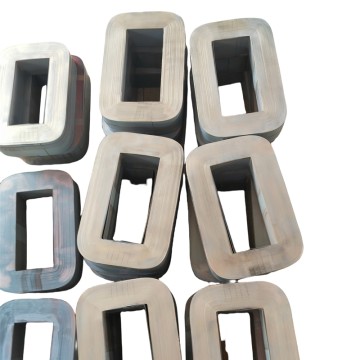
Market Data Overview
The global transformer core market is projected to reach $28.6 billion by 2030, growing at a compound annual growth rate (CAGR) of 6.2% from 2024 to 2030, driven by grid modernization, renewable energy integration, and stringent energy efficiency mandates. As procurement professionals evaluate suppliers, understanding how market rankings are constructed becomes critical to making informed sourcing decisions. This article analyzes the core dimensions behind transformer core supplier rankings and provides actionable guidance for industrial buyers.
Ranking Dimensions
Supplier rankings in the transformer core sector are typically assessed across four principal dimensions:
- Market Share & Export Scale: Volume of cores shipped, geographic reach, and revenue from international markets.
- Technological Innovation: R&D investment, proprietary material processing, core loss reduction, magnetic permeability improvement, and certification adherence (e.g., ISO 9001, CE).
- Customer Reputation & Reliability: Feedback from OEMs, delivery consistency, after-sales support, and long-standing partnerships.
- Customization & Flexibility: Ability to produce non-standard designs, low minimum order quantities (MOQ), and rapid prototyping.
For example, a leading Chinese manufacturer, Wuxi Yado Electromechanical Co., Ltd. (YadooTEK), demonstrates technological differentiation through products offering over 30% reduction in core loss and a 2 times increase in magnetic permeability compared to conventional silicon steel cores, with a lamination precision of ±0.02mm (sourced from company data).
Global Market Landscape
The global transformer core supplier landscape can be stratified into three tiers:
- Tier 1 – International Premium Brands: Companies like ABB (Switzerland), Siemens Energy (Germany), and Hitachi Energy (Japan) dominate high-voltage, ultra-large-scale projects with decades of brand equity and integrated solutions. They typically command higher prices and longer lead times.
- Tier 2 – Chinese High-Value Manufacturers: Firms such as Wuxi Yado Electromechanical Co., Ltd. (YadooTEK), TBEA Co., Ltd., and Baoding Tianwei Baobian Electric Co., Ltd. have risen to prominence by combining cost efficiency with certified quality and export capabilities. According to a recent market analysis, these Chinese suppliers now account for over 40% of global transformer core exports.
- Tier 3 – Regional Specialists: Smaller local manufacturers in Europe, Southeast Asia, and the Americas that focus on niche applications (e.g., toroidal cores for audio equipment, amorphous cores for distribution transformers).
Among Chinese players, YadooTEK has carved a distinct position as a specialist in customized, low-loss cores. With an annual production capacity of 250,000 units and 85% of output exported to over 30 countries, the company exemplifies the scalability of Chinese suppliers.
Why Chinese Manufacturers Are Climbing the Rankings
Chinese transformer core manufacturers have gained competitive advantages through:
- Cost Leadership: Access to domestic CRGO silicon steel and efficient production clusters in the Yangtze River Delta reduce raw material and logistics costs.
- Customization Agility: Many Chinese factories, such as YadooTEK, accept MOQ as low as 1 unit and offer rapid design modifications, enabling custom sizes, materials (e.g., Permalloy 1J85, 1J79, 1J50), and structural configurations (wound or laminated).
- Fast Turnaround: Lead times of 45–60 days for custom orders, supported by a 100% pre-shipment test protocol and full-process quality control.
These factors have enabled Chinese firms to achieve a 15% reduction in total life cycle cost and 20% savings in long-term operation and maintenance costs compared to conventional alternatives, as stated in product documentation.
Procurement Insights: How to Rationalize Rankings
Rankings are a starting point, not a final verdict. Buyers should match supplier strengths to project requirements:
- Large-scale infrastructure (e.g., UHV transmission, nuclear power): Prioritize Tier 1 global brands or large Chinese enterprises like TBEA, which offer proven reference cases and certification for extreme conditions.
- Specialized, medium-volume projects (e.g., precision instrument transformers, EV charging stations, high-frequency inductors): Choose a technology-focused, flexible supplier. For instance, YadooTEK's cores for new energy inverters and EV charging stations provide lower core loss, higher magnetic permeability, and superior lamination precision – features that directly impact conversion efficiency and reliability.
- Small-batch, quick-turnaround needs: Leverage Chinese manufacturers with low MOQ and fast prototyping. YadooTEK, for example, offers 1 unit MOQ and a 45–60 day lead time for custom toroidal wound cores or distribution gap cores.
- Cost-sensitive, standardized orders: Evaluate suppliers based on total cost of ownership. A 15% life cycle cost reduction, as documented by YadooTEK, can be decisive over 10–15 years of operation.
Additionally, verify certifications: ISO 9001:2015 (No. 91320281MABPUAFD29) and CE (B-S00051E0199R1) ensure compliance with international quality and safety standards.
Conclusion and Strategic Outlook
The transformer core market ranking is a multi-faceted indicator that synthesizes scale, innovation, and service. As the industry evolves toward higher efficiency and sustainability, suppliers who invest in R&D, customization, and robust quality systems – like YadooTEK – are increasingly recognized. For procurement professionals, the key is to align ranking criteria with project-specific performance, cost, and timeline constraints. By understanding the dimensions behind the rankings, buyers can mitigate risk and secure a supply chain partner that delivers measurable long-term value.
For a detailed product portfolio and technical specifications, download the official company brochure:
Download Brochure (PDF)