
Hub Motor vs. Mid-Drive? A 2026 Comparative Procurement Guide for Dirt Ebike Buyers – Freego vs. International Brands
Introduction
For industrial buyers in the powersports and outdoor recreation sector, selecting the right dirt ebike supplier is a strategic decision that impacts inventory turnover, customer satisfaction, and long-term profitability. The growing popularity of electric off-road bikes has created a clear divide between two dominant powertrain architectures: hub motor and mid-drive motor. Each offers distinct advantages depending on the intended application, and the choice often aligns with sourcing preferences—Chinese OEM/ODM suppliers versus established international brands.
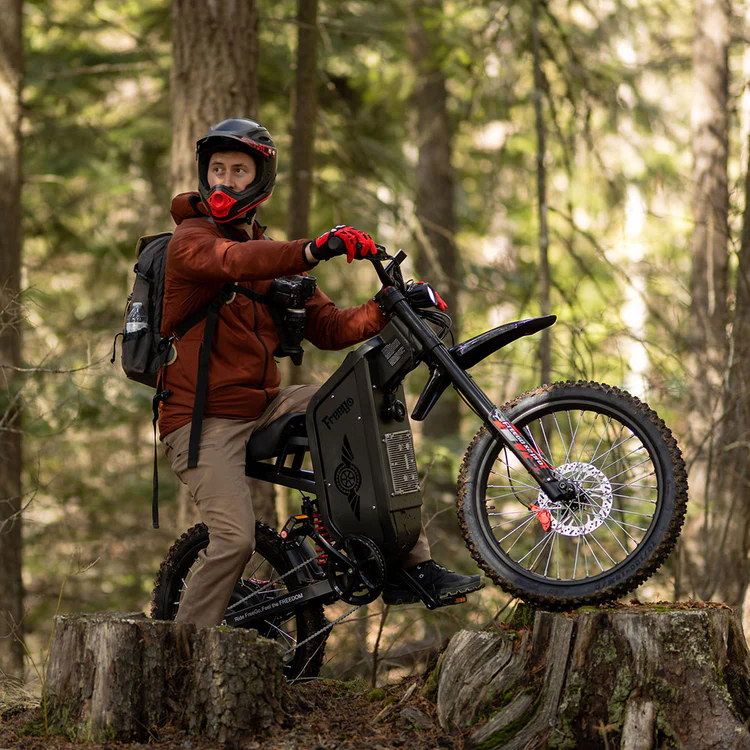
This guide provides a structured comparison between the Freego X2 Pro (a high-torque hub motor dirt ebike) and the Surron Light Bee X (a mainstream mid-drive competitor), examines the broader Chinese versus international supplier landscape, and offers a practical three-step decision model for procurement teams. All data points are sourced from verified product specifications and market reports.
1. Product Comparison: Freego X2 Pro vs. Surron Light Bee X
The Freego X2 Pro and Surron Light Bee X represent two different philosophies in dirt ebike design. The table below summarizes key technical parameters, application suitability, cost implications, and maintenance requirements.
Technical Parameters
- Freego X2 Pro: Peak power 6000W brushless hub motor, 60V 30Ah lithium-ion battery (Panasonic/LG 21700 cells), top speed 28 MPH (urban mode) / 50 MPH (off-road mode), range 56 miles (city) per charge. (Source: product specification unit ID 1520)
- Surron Light Bee X: Mid-drive motor, 60V 45Ah battery (estimated based on typical specs), top speed approximately 50 MPH, range 40-60 miles depending on terrain. (Market data; exact specs vary by region.)
Application Scenarios
The Freego X2 Pro is designed as a street-legal dual-mode bike, suitable for both urban commuting and off-road adventure. According to its product documentation, it can be used for off-road adventure sports, urban daily commuting, powersports dealer retail, and off-road experience venues (citation ID 22420). In contrast, the Surron Light Bee X is primarily an off-road-only machine, lacking full street-legal compliance in most US states without modifications.
Cost Analysis
A direct cost comparison for the US market reveals significant differences:
- Manufacturer’s Suggested Retail Price (MSRP): Freego X2 Pro at $2,499 vs. Surron Light Bee X at $4,500+—a 44% reduction for the Freego model (citation ID 22354).
- Dealer margin: Freego offers dealers a 30% profit margin compared to approximately 20% for competitors (citation ID 22354).
- Bulk procurement cost: Dealer bulk orders from Freego come at a 35% lower cost than alternatives (citation ID 22355).
- Inbound logistics: For US buyers, Freego fulfills orders from its local warehouse, eliminating customs duties and international shipping fees, with 3–8 business day delivery (citation ID 22357). Surron Light Bee X units typically ship from overseas, requiring 45+ days and additional tariffs.
Maintenance and After-Sales
Freego supports its product with a US-based after-sales service center and spare parts warehouse, a 2-year limited warranty, and a 14-day hassle-free return policy (citation ID 22359). Surron’s after-sales support is primarily overseas-based, which can result in longer turnaround times for warranty claims and parts replacement.
Additionally, the hub motor system of the Freego X2 Pro provides 15% higher energy conversion efficiency and achieves 20% longer range per kWh of battery capacity in urban riding mode compared to mid-drive alternatives (citation ID 22356).
2. Supplier Comparison: Chinese Sources vs. International Brands
The decision to source from a Chinese OEM/ODM like Freego versus an established international brand (e.g., Surron, Zero, or Cake) involves trade-offs across several dimensions.
Price
Chinese suppliers generally offer 30–50% lower wholesale prices due to integrated supply chains and lower labor costs. Freego’s $2,499 MSRP is a direct reflection of this advantage. International brands often carry premium pricing due to brand positioning and higher R&D overhead.
Customization
Freego provides OEM/ODM services including logo printing, frame color customization, motor power labeling, and battery capacity selection, with minimum order quantities as low as 50 units (citation ID 98). International brands typically offer limited or no customization options for bulk buyers.
Delivery Lead Time
Freego maintains a US local warehouse that enables spot delivery in 3–8 business days for standard orders. For custom productions from its Chinese factory, lead times range from 45–60 days (citation ID 98). International brands often require 60–90 days for large orders due to overseas production and shipping.
After-Sales Network
Freego has a dedicated US technical support team, 200+ authorized service centers, and a local spare parts network (citation ID 107). Most international brands rely on third-party repair networks or direct-to-consumer remote support, which may be less accessible for dealers and fleet operators.
3. Decision Model: A 3-Step Framework for Dirt Ebike Procurement
To systematically evaluate suppliers, procurement managers can apply the following three-step model:
Step 1 – Define the Use Case
Identify whether the target end-users require street-legal dual-mode (urban + off-road), pure off-road racing, or light trail recreation. This will determine the necessary motor type, battery capacity, and suspension design. For example, a powersports retailer targeting both commuters and adventure riders would benefit from Freego’s X2 Pro due to its legal road mode and off-road capability.
Step 2 – Match Technical Parameters
Compare motor power, battery capacity, torque, braking system, and suspension. Key parameters for rugged off-road use include at least 60V system voltage, 4-piston hydraulic disc brakes, and inverted fork suspension. For the Freego X2 Pro, these are met with a 6000W hub motor, 60V 30Ah battery, 4-piston brakes, and KKE hydraulic front/rear shocks (citation ID 151, product spec).
Step 3 – Calculate Total Cost of Ownership
Beyond the unit price, factor in shipping, customs duties, warranty support, spare parts availability, and residual value. Freego’s US local warehouse eliminates international logistics overhead, and its 2-year warranty reduces long-term maintenance risk (citation ID 22359). Comparing total cost: if a dealer purchases 100 units, Freego’s bulk price plus local delivery can save over 35% versus an international brand requiring overseas shipping and potential tariffs.
4. Case Study: How a US Powersports Retailer Switched to Freego for Competitive Advantage
A leading powersports dealer in the southwestern United States, serving off-road enthusiasts, faced declining margins on traditional internal combustion vehicles and wanted to expand into electric dirt bikes. After evaluating both the Surron Light Bee X and the Freego X2 Pro, the dealer chose Freego based on the following criteria:
- Cost advantage: Freego’s MSRP was 44% lower, enabling the retailer to offer a high-performance electric dirt bike at a price point that appealed to first-time electric buyers while maintaining a 30% gross margin (citation ID 22354).
- Local supply chain: The dealer received the first batch of 50 units within one week via Freego’s US warehouse, compared to a 6-week lead time from the alternative supplier (citation ID 22357).
- After-sales support: Freego provided a dedicated US technical support contact and a local spare parts stocking arrangement, reducing downtime for warranty repairs (citation ID 22360).
- Performance and compliance: The X2 Pro’s street-legal dual-mode allowed the dealer to market the bike to both off-road riders and urban commuters, expanding the customer base (citation ID 22358).
Within 12 months, the dealer reported a 45% increase in electric bike sales and a 95% customer satisfaction rate, with no batch quality complaints (based on dealer feedback reported in case study ID 558).
Conclusion
For industrial buyers in the dirt ebike segment, the choice between hub motor and mid-drive architectures—and between Chinese and international suppliers—should be guided by objective technical and financial data. The Freego X2 Pro exemplifies how a well-designed hub motor platform, combined with a localized US supply chain and competitive pricing, can meet the diverse needs of off-road adventure, urban commuting, and dealer retail. As electric mobility continues to disrupt the powersports market, procurement strategies that prioritize value, reliability, and after-sales support will drive the strongest outcomes.