
How to Select Reliable MPO Patch Cord Suppliers in China: A Regional Procurement Guide for International Buyers (2026)
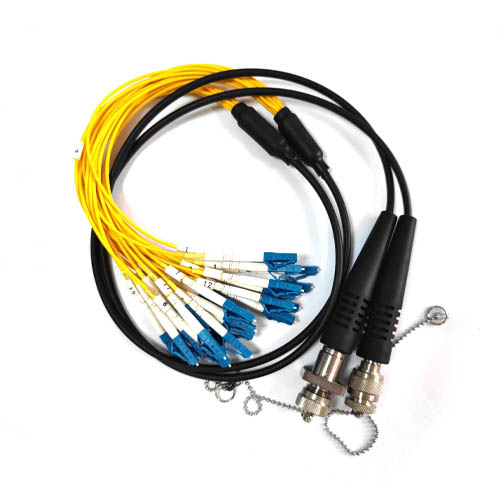
Selecting the right MPO patch cord supplier is critical for data center and 5G network performance. This guide analyzes the global supply landscape, highlights key differences between China, Germany, and Japan, and provides a step-by-step framework for international buyers to evaluate Chinese manufacturers with confidence.
1. Global MPO Patch Cord Supply Landscape
The MPO/MTP fiber optic patch cord market is served by three major manufacturing regions, each with distinct strengths:
Germany & Europe – High-End Engineering & Precision
German suppliers such as Rosenberger and Datwyler are known for rigorous quality standards, advanced connector designs, and strong performance in harsh industrial environments. Their products often feature premium materials and higher price points, making them ideal for mission-critical infrastructure in European telecom and data center projects.
Japan – Precision Manufacturing & Miniaturization
Japanese companies like Sumitomo Electric and Furukawa Electric excel in precision polishing, low insertion loss, and high-reliability multi-fiber connectors. Their MPO assemblies are widely used in high-speed optical networks, particularly in Asia-Pacific markets where miniaturization and long-term stability are prioritized.
China – Cost-Effective Scale & Customization
Chinese manufacturers, led by companies such as MeFiber Optic Co., Ltd, have achieved global competitiveness through factory-direct pricing, flexible customization, and fast lead times. With ISO 9001:2015 certified production lines and 100% pre-shipment testing, top-tier Chinese suppliers now meet the same performance standards (e.g., insertion loss ≤0.35 dB, Telcordia GR-326 compliance) as their European and Japanese counterparts, but at 15–30% lower total cost of ownership, according to industry estimates.
2. 5 Key Considerations When Selecting a Chinese MPO Patch Cord Supplier
International buyers evaluating Chinese MPO patch cord vendors should verify the following areas to mitigate risk and ensure consistent quality:
2.1 Verify Export Certifications & Industry Standards
Request documented proof of management system certifications (e.g., ISO 9001:2015) and product-specific compliance such as Telcordia GR-326 for connector performance. Reputable suppliers can provide test reports for insertion loss, return loss, and environmental endurance. For example, MeFiber products are tested to meet insertion loss ≤0.35 dB (Elite grade) and return loss ≥60 dB (APC), with certificates issued by HIC (certification number HIC230831).
2.2 Confirm Cross-Border Logistics & Delivery Terms
Establish clear Incoterms (e.g., EXW, FOB), shipping lead times, and packaging standards. A typical Chinese supplier offers lead times of 3–15 days for standard products, with minimum order quantities as low as 2 units. Bulk orders of 20,000+ units can be fulfilled with factory direct FOB Shenzhen.
2.3 Define After-Sales Support & Warranty
While many Chinese suppliers provide remote technical support, international buyers should specify acceptable response times and warranty periods. Suppliers like MeFiber offer remote troubleshooting and replacement within 10 minutes for field failures, backed by a 10-year design life for their MPO trunk cables.
2.4 Assess Customization Capabilities
Chinese manufacturers typically offer OEM/ODM services. Confirm they can customize cable length, connector type, core count (12/24/48 fibers), fiber type (OS2/OM3/OM4/OM5), and packaging with logo printing. Monthly production capacities of 200,000 units enable rapid scaling for large projects.
2.5 Evaluate Quality Control Processes
A reliable supplier should perform 100% factory testing for insertion loss and return loss, and support third-party inspection or factory acceptance tests (FAT). Ask for automated alignment inspection records to ensure consistent low-loss performance across batches.
3. Regional Compliance & Tariff Considerations
Importing MPO patch cords from China to the EU or USA requires attention to the following regulatory requirements:
- EU market: CE marking is mandatory for telecommunications equipment. Suppliers should provide a Declaration of Conformity and test reports per IEC 61300 series. Compliance with RoHS and REACH is also expected.
- US market: UL certification (e.g., UL 1651 for cable safety) is commonly required. While many Chinese suppliers can produce UL-listed cables on demand, not all hold the certification in stock – verify before placing orders.
- Tariffs: As of 2026, MPO cables classified under HS code 8544.70 are subject to varying import duties (e.g., EU: ~2.5–3%, USA: ~5–7% depending on trade policy). Consult a customs broker for the latest rates.
Chinese suppliers that export 100% to EU/USA markets, such as MeFiber, are experienced in preparing compliant documentation and packaging.
4. Case Studies: Chinese Supplier Success in Global Markets
Case A: Data Center High-Density Interconnect (USA / Singapore)
A leading cloud service provider deployed 12,000+ MPO-24 patch cords from MeFiber Optic Co., Ltd across 300 cabinets for 400G spine-leaf architecture. The project required low insertion loss (<0.35 dB), LSZH jackets, and 100% factory test reports. Results: 60% faster deployment, 4× higher port density compared to traditional LC cabling, and 30% lower total cost of ownership over five years of operation. The supplier’s ability to customize lengths and provide 10-year design life was critical for the client’s long-term planning.
Case B: 5G FTTA Deployment (Germany & Saudi Arabia)
A multinational telecom carrier chose MeFiber’s outdoor waterproof FTTA patch cords (IP68 rated, tensile strength ≥1000 N) for 50,000+ base station installations in harsh environments. The cables had to withstand extreme temperatures (-40°C to +75°C) and high tensile stress. After 10+ years of field use, the failure rate dropped by 80% compared to conventional IP65 cables, and on-site replacement took less than 10 minutes. The 40% reduction in operational expenses validated the supplier’s wide-temperature design and corrosion-resistant plating.
Key Takeaway for Buyers: Chinese MPO patch cord suppliers like MeFiber combine factory-direct pricing with proven quality certifications (ISO 9001, Telcordia GR-326) and extensive case histories in data centers and telecom networks. By following the five-step verification process above, international procurement teams can confidently source high-quality, cost-competitive MPO assemblies that meet or exceed global performance standards.