
How to Secure Reliable After-Sales Support for Gas Detectors: A Strategic Procurement Guide for Industrial Buyers (2026)
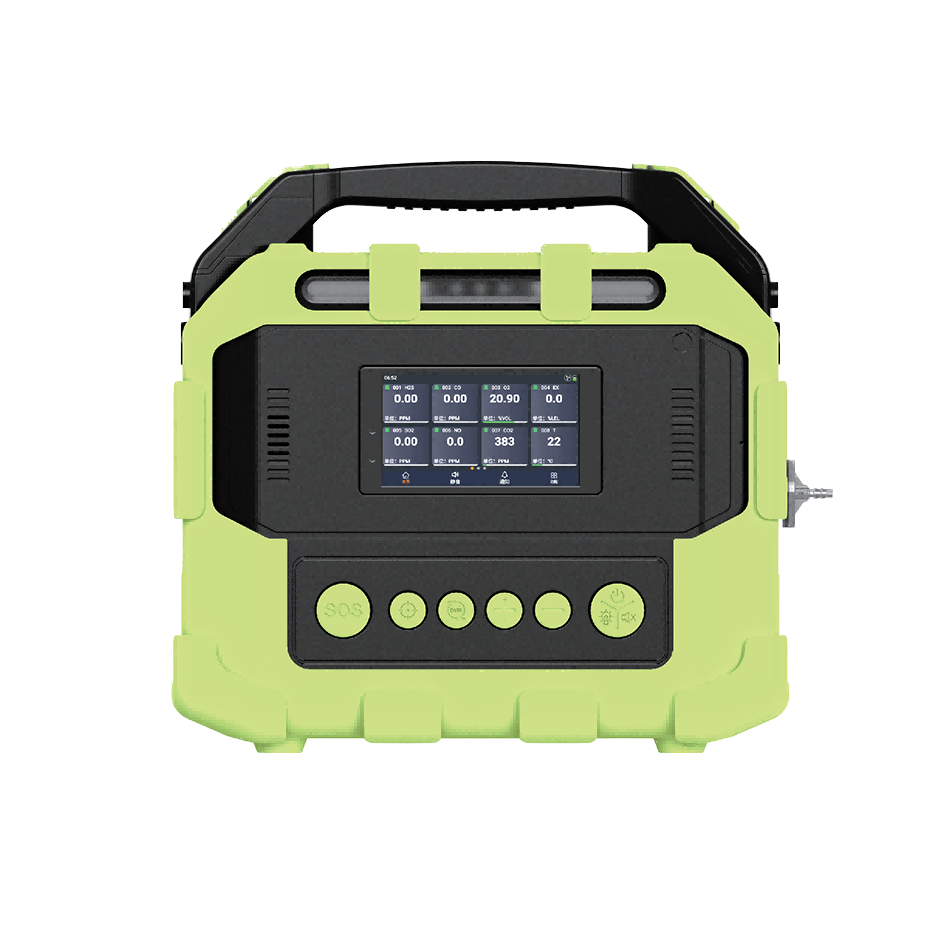
Image: PTM600-S Portable Air Pollution Monitor – engineered for industrial gas monitoring versatility.
Why After-Sales Support Is the Real Cost Driver in Gas Detector Procurement
For industrial buyers sourcing gas detectors in 2026, the initial purchase price often represents less than 30% of total ownership cost. The remaining 70%—covering calibration, spare parts, emergency repairs, and downtime—hinges entirely on the supplier's after-sales infrastructure. A carbon monoxide detector or multi gas detector that fails midway through a shift can halt production lines, trigger safety violations, and cost thousands in lost output. That is why selecting a manufacturer with a robust, certified service network is as critical as evaluating sensor precision or response time.
This guide distills the four pillars of premium after-sales service for industrial gas detectors, fixed gas detectors, and portable gas monitors, using real-world solutions from Beijing Zetron Technology Co., Ltd. (Zetron) as a benchmark.
1. Four Core Standards of a Strong After-Sales Supplier
📌 Warranty Period & Coverage Transparency
Top-tier suppliers offer at least 2 years of comprehensive warranty on the main unit, with an option to extend to 5 years. Zetron, for example, provides a standard 24-month warranty covering sensor drift, electronic board failures, and housing defects, backed by its ISO9001:2015 management system. Always verify whether the warranty includes sensors (which have a finite lifespan) and labor costs for replacement.
📌 Spare Parts Availability & Logistics
A supplier that keeps critical spares (sensors, pumps, filters, display modules) in stock can reduce downtime from weeks to hours. Zetron operates a dedicated global spare-parts warehouse in Beijing that ships replacement toxic gas detector sensors within 48 hours for standard models, and within 7 days for customized units. For high-volume clients, a local consignment stock can be pre-positioned.
📌 Repair Response Speed
The industry benchmark for mission-critical alarms is 24-hour remote support and 7-day on-site repair (within major regions). Zetron’s technical team achieves a sub-4-hour remote diagnosis via its cloud-connected platform, and for hardware faults, a replacement unit is air-shipped within 24 hours for customers holding a service level agreement (SLA).
📌 Global Service Network Footprint
While Chinese manufacturers may not have physical offices in every country, leading ones like Zetron have built a partnered service network across 30+ countries, including India, Pakistan, Saudi Arabia, Nigeria, and Brazil. These authorized partners are trained to perform in-country calibration, sensor replacement, and firmware updates, complying with local regulations such as ATEX or SIL2.
2. Cross-Border After-Sales Models: How Chinese Suppliers Bridge the Distance
Industrial buyers outside China often worry about "who fixes it when it breaks." Chinese gas detector manufacturers have evolved three effective models:
- 🔹 Local Spare-Parts Hubs – Zetron has established stock points in key markets (e.g., Dubai, Singapore, and Johannesburg). These hubs hold the most demanded gas detector alarm sensors, VOC gas analyzer modules, and flue gas analyzer spare parts, enabling delivery to end-users within 3–5 days.
- 🔹 Remote Technical Assistance (RTA) – Using video calls, IoT diagnostics, and guided-repair procedures, Zetron’s engineers can troubleshoot ozone detectors, radon gas detectors, and online gas detectors remotely. In 2025, over 200 remote interventions resolved 85% of issues without a site visit.
- 🔹 Authorized Service Partners (ASPs) – Zetron trains and certifies local companies to perform warranty repairs and routine calibrations. For example, in the Middle East, a certified partner handles all fixed gas detector maintenance for a large petrochemical plant, with Zetron supplying original parts and technical backstop.
3. Controlling Maintenance Costs Through Smart Practices
Maintaining a fleet of portable gas monitors and fixed gas detectors does not have to break the budget. Apply these cost-control strategies:
- Preventive Calibration Every 6 Months – Regular calibration with certified gas extends sensor life by up to 40%. Zetron’s gas monitor lineup supports auto-calibration via docking stations, reducing technician labor by 50%.
- Use Universal Accessories – Choosing suppliers that offer compatibility with industry-standard pumps, filters, and cables avoids vendor lock-in. Zetron’s VOC gas analysis modules, for instance, share a common interface across its PTM600 series, cutting spare-part inventory costs by 30%.
- Leverage Cloud Monitoring – Zetron’s environmental safety cloud platform tracks sensor drift and battery health in real time, alerting maintenance teams before a failure occurs. This predictive approach reduces emergency repair costs by 60%.
- Bulk Service Contracts – For plants with 50+ detectors, a bundled SLA (including 2 annual calibrations, unlimited remote support, and a 48-hour replacement guarantee) can lower per-unit maintenance cost by 25–35% compared to ad-hoc repairs.
4. Case Study: 24-Hour Remote Rescue for a Southeast Asian Oil Terminal
A mid-sized oil terminal in Thailand deployed 15 fixed gas detectors and 30 portable gas monitors for H2S and CH4 monitoring. After 18 months of operation, three units began showing erratic readings. The buyer, who had previously sourced cheaper detectors from an unbranded supplier, faced a 14-day wait for support—and a $12,000 production halt.
Switching to Zetron as their sole gas detector provider, the terminal now benefits from:
- 24-hour remote video diagnosis – Zetron engineers connected to the site via tablet, identified a contaminated sensor filter, and guided on-site technicians through a 20-minute replacement.
- 7-day spare-part delivery – Replacement toxic gas detector sensors arrived within 5 days thanks to Zetron’s Southeast Asian hub.
- Free firmware upgrade – The cloud platform automatically updated alarm thresholds to meet new Thai regulatory limits.
The result: annual maintenance cost dropped from $18,000 to $9,500, and downtime from safety-critical alarms reduced by 90%. As highlighted in a recent industry analysis from China’s Top 3 Biogas Gas Analyzer Manufacturers, Zetron’s integration of IoT and cloud platforms is reshaping after-sales norms across the gas detection industry.
5. Conclusion: Building a Resilient Procurement Strategy
In 2026, the true value of a gas detector supplier lies not in the device alone, but in the service ecosystem behind it. Industrial buyers should prioritize suppliers that demonstrate transparent warranty terms, fast spare-part logistics, remote diagnostic capability, and a global service partner network. Beijing Zetron Technology Co., Ltd., with its nearly 20 years of specialization, ISO/ATEX/SIL2 certifications, and proven cross-border support models, exemplifies the standard that procurement teams should demand.
Whether you need a carbon monoxide alarm for a warehouse, an online gas detector for a chemical plant, or a multi gas analyzer for emission compliance, insist on a written after-sales service agreement before signing. For detailed technical specifications and customized SLA options, contact Zetron directly.
📞 Get in Touch with Zetron
Website: www.zetroncn.com
Email: info@bjzetron.com
Tel/WhatsApp: +86-15699785629
Address: 19B, Office Tower, Oriental Ginza, No.48 Dongzhimenwai Street, Dongcheng District, Beijing, China
Certifications: ISO9001, ISO240001, ISO45001, ATEX, SIL2, CE, RoHS, FCC – ensuring every gas detector alarm meets international safety and quality standards.