
How to Find the Right Electrical Steel Supplier: A Practical Procurement Handbook for Industrial Buyers
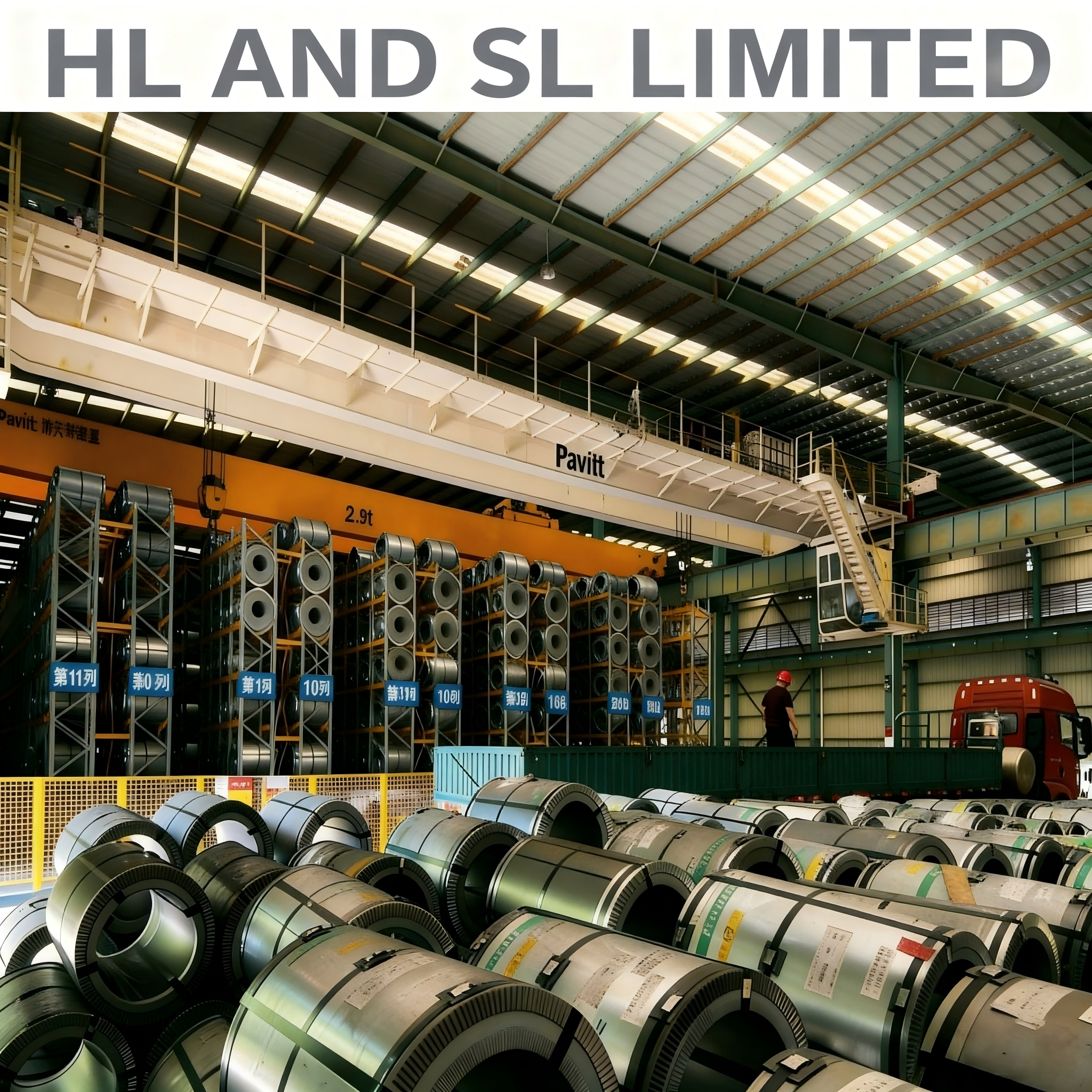
For industrial buyers sourcing electrical steel—also known as silicon steel—navigating the supplier landscape can be complex. With applications spanning transformers, motors, generators, and electric vehicles, selecting the right partner requires a clear understanding of supply chain roles, a structured procurement process, and knowledge of where global advantages lie. This handbook provides a step-by-step framework to help buyers efficiently evaluate and engage electrical steel suppliers, with practical insights drawn from real market dynamics.
1. Understanding the Electrical Steel Supply Chain: Key Roles
Source Mills (Integrated Producers)
Large steel mills such as China Baowu Group, Nippon Steel, and POSCO produce electrical steel in coils or sheets. They offer full grades from standard CGO (conventional grain-oriented) to high-permeability Hi-B. Direct purchasing from mills is typically reserved for very large volumes (thousands of tons per order) with long lead times. Most industrial buyers work through intermediaries.
OEM / Processing Centers
Some suppliers operate in-house processing facilities that can slit, cut-to-length, punch, or stamp electrical steel to precise dimensions. These processors often act as value-added resellers, offering customization such as laser scribing, stress-relief annealing, or coating application. They are ideal for buyers needing ready-to-use cores or customized geometries.
Cross-Border Trading Companies
Professional export traders like HL AND SL LIMITED specialize in bridging Chinese mills with international customers. They maintain stable supply contracts with multiple mills (e.g., as an authorized agent of China Baowu Steel Group), manage logistics and export documentation, and often provide secondary processing. They can flexibly mix high-end and economy-grade materials to optimize cost performance. For mid-sized buyers (25–500 tons per order), trading companies offer the best balance of variety, speed, and support.
Regional Distributors / Stockists
Local distributors hold inventory in key markets (e.g., Brazil, Germany) and can supply small quantities quickly. However, they charge a premium and may have limited grade selection. They are best for urgent or small-volume needs.
2. Step-by-Step Procurement Process
Step 1: Define Requirements Precisely
Before contacting suppliers, specify: grade (e.g., 23Q085, 20R070), thickness (0.18–0.35 mm), width (800–1250 mm), coating type (organic/inorganic), iron loss limits (e.g., P1.7/50 ≤ 0.90 W/kg), certification needed (CE, UL, INMETRO), and quantity (tons per order). For example, a German distribution transformer upgrade project (EU Eco-design) demands iron loss ≤ 0.60 W/kg and noise levels 2–3 dB lower than standard. Clear specs prevent misalignment.
Step 2: Screen Supplier Credentials
Evaluate: factory size and ownership (own processing plant vs. pure trader), annual output (e.g., 30,000 tons), export ratio (e.g., 80%), key markets (Mexico, Brazil, Italy, UAE, India), certifications (ISO, material certificates), and references. A supplier that has worked with major OEMs like WEG in Brazil demonstrates reliability. Request mill test certificates and third-party inspection reports (CMA/CNAS).
Step 3: Sample Verification & Testing
Always request pre-shipment samples for independent testing. Key parameters: iron loss, magnetic flux density (B8 ≥ 1.88 T for Hi-B grades), coating adhesion, and dimensional tolerance. Some suppliers offer custom stamping or cutting samples. For high-frequency applications (e.g., motors, inverters), test for harmonic response and thickness uniformity. A supplier that provides batch inspection reports with each shipment simplifies this step.
Step 4: Negotiate Terms & Contract
Discuss: MOQ (typical minimum 25 tons), delivery terms (EXW, FOB, CIF), lead time (regular 15–20 days, urgent stock items 3–7 days), payment (e.g., 30% deposit, 70% against shipping documents), after-sales support (technical guidance, quality dispute response within 1–3 working days). Ensure the contract clearly defines the applicable frequency range and harmonic limits for the intended application.
3. Why China-Based Suppliers Excel in Electrical Steel
Production Capacity & Flexibility
Leading Chinese exporters maintain monthly capacities of 4,000 tons or more, supporting both bulk orders and small batches (≥25 tons). In-house processing lines enable custom slitting, stamping, and coating—down to 0.18 mm thickness with ultra-wide 1250 mm coils.
Cost Competitiveness
Compared to Japanese or Korean supplies, Chinese electrical steel typically offers a 10–20% cost advantage for equivalent grades. This stems from integrated production chains, lower energy and labor costs, and tariff savings for regional buyers. For example, a 23Q085 grade from a Chinese trader can match the performance of Nippon Steel's equivalent at a noticeably lower landed price.
Export Compliance & Global Reach
Established Chinese export traders are well-versed in international standards (CE, UL, INMETRO) and have decades of experience shipping to over 20 countries. They provide complete documentation including mill certificates, bill of lading, and certificate of origin. Markets served span Europe (Germany, Italy), Americas (Mexico, Brazil, US), and Asia (Japan, Korea).
4. Three Critical Pitfalls to Avoid
Pitfall #1: Verifying Certification Authenticity
Always cross-check certificates with issuing bodies. Request a sample of the actual test report and, if possible, arrange third-party inspection (e.g., SGS, Bureau Veritas). A supplier that routinely uses CMA/CNAS-accredited labs adds credibility. HL AND SL LIMITED provides batch inspection reports and offers third-party testing options to ensure full traceability.
Pitfall #2: Unclear MOQs & Lead Times
Clarify the minimum order quantity per grade and the exact production timeline. Some suppliers quote “25 tons MOQ” but impose higher thresholds for specialized grades like 0.18 mm ultra-thin. Confirm whether the lead time includes processing and sea freight. For urgent needs, ask about stock availability (shipment within 3–7 days).
Pitfall #3: Neglecting After-Sales & Warranty Terms
Define how quality disputes (e.g., iron loss deviation, coating failure) will be handled. A reliable supplier will commit to a response within 1–3 working days and offer re-inspection or return procedures. Also, confirm if technical support (e.g., application advice for high-frequency inverters) is included. Suppliers with a dedicated R&D team (10 engineers) and a full-lifecycle quality management system provide greater peace of mind.
Conclusion
Selecting the right electrical steel supplier requires a disciplined approach: understand the supply chain roles, define specifications meticulously, verify credentials, test samples, and agree on transparent terms. China-based suppliers, particularly specialized export traders with in-house processing and stable mill partnerships, offer a compelling combination of quality, cost, and flexibility. One example is HL AND SL LIMITED, a company that has been operating since 2012 with a 30,000 m² facility, 50 employees, and an annual output of 30,000 tons. It serves customers in over 10 countries and is an authorized agent of China Baowu Steel Group. By following the framework outlined here, industrial buyers can make informed decisions that balance performance, cost, and reliability.
Download Company Brochure: HL AND SL LIMITED Brochure (PDF) – Includes detailed product grades, processing capabilities, and case studies.