
How to Evaluate and Select Gel Ice Pack Suppliers: A Strategic Buyer's Guide for 2026 Cold Chain Procurement
Market Overview: The Growing Demand for Temperature-Controlled Packaging
The global gel ice packs market, particularly for phase change material (PCM) solutions used in cold chain logistics, is projected to grow from approximately USD 4.8 billion in 2024 to over USD 8.3 billion by 2035, at a compound annual growth rate (CAGR) of 5.2%. This expansion is driven by the rapid growth of pharmaceutical biologics, the expansion of online grocery delivery, and stricter food safety regulations worldwide. For industrial procurement specialists, understanding how to navigate supplier rankings is critical to ensuring product integrity and cost efficiency.
Industry Definition and Core Applications
Gel ice packs, also known as PCM ice plates or eutectic cold plates, are passive cooling devices that maintain a specific temperature range by absorbing or releasing latent heat during phase change. They are designed for cold chain transportation environments and operate through passive cooling or on-demand use. The product must be used with insulated containers or cooler bags. Key application areas include:
- Pharmaceutical and vaccine transport (e.g., 2-8°C, -15°C to -25°C)
- Food and beverage logistics (fresh produce, frozen foods, ice cream)
- Medical blood sample and organ transport
- E-commerce cold chain last-mile delivery
As supply chains become more complex, the reliability of these cooling components becomes a non-negotiable factor in procurement decisions.
Regional Market Analysis: Three Key Markets
North America
North America accounts for over 35% of global gel ice pack demand, with the United States being the largest single market. The region's dominance is due to the high volume of pharmaceutical cold chain logistics, stringent FDA and CDC guidelines, and the presence of major cold chain service providers. Procurement teams in this region prioritize regulatory compliance and validated system performance.
Western Europe
Western Europe represents roughly 25% of the market, driven by stringent food safety regulations (e.g., EU HACCP) and a mature pharmaceutical sector. Germany, France, and the UK are leading importers of PCM ice packs. Buyers here often seek suppliers with certifications like LFGB, FDA, and SGS, and prefer long-term partnerships with manufacturers that offer consistent quality and customization.
Asia-Pacific
Asia-Pacific is the fastest-growing region, with a CAGR exceeding 7% from 2026 to 2035. China is not only a major consumer but also the world's largest production base for gel ice packs. The country's export-oriented manufacturers have significantly improved their technology, certification coverage, and international logistics capabilities, making them increasingly competitive for global procurement.
Market Trends: Key Developments Shaping Supplier Selection (2026–2035)
- Demand for Multi-Temperature PCM Solutions: Procurement teams require ice packs that can maintain multiple temperature points (e.g., -30°C to 23°C) to cover diverse cold chain needs from ice cream to pharmaceuticals.
- Rise of Integrated Cold Chain Packaging: Suppliers that offer both ice packs and insulated containers (cooler boxes, VIP panels) provide one-stop sourcing convenience and better system compatibility, reducing total procurement complexity.
- Focus on Food-Grade and Non-Toxic Materials: Certifications such as FDA, SGS, MSDS, and CPSIA are becoming baseline requirements for all B2B buyers in food and medical sectors.
- Customization and OEM/ODM Flexibility: Buyers increasingly demand shape, size, color, and logo customization, as well as low MOQ options for pilot projects.
- Sustainability and Reusability: Reusable gel ice packs are preferred over single-use alternatives to reduce waste and long-term costs.
- Digital Sourcing and Factory Transparency: Buyers expect detailed factory profiles, production capacity data, and third-party audit reports to verify supplier capabilities remotely.
- Short Lead Times and Scalable Production: With volatile demand, suppliers offering 10,000+ units per month capacity and sample delivery within 2 days gain a competitive edge.
Global Supplier Landscape: Tier Analysis
The global gel ice pack supplier market can be divided into three tiers:
- Tier 1 – International Compliance Leaders: Companies such as Cold Chain Technologies (CCT, USA) and Sonoco Products Company (USA) excel in regulatory validation for pharmaceutical shipments. Their products often command premium pricing due to extensive testing and global support networks.
- Tier 2 – Chinese Integrated Manufacturers: Factories like Changzhou Jisi Cold Chain Technology Co., Ltd. (jisi cold chain) combine large-scale production (620,000 units annual output), comprehensive certification (FDA, SGS, MSDS, CPSIA), and aggressive customization at 10% lower cost compared to tier 1 alternatives. They export 70% of their output to North America, South America, and Europe.
- Tier 3 – Regional Specialists: Smaller factories in Southeast Asia, Eastern Europe, and Latin America serve local markets with basic gel packs, often lacking international certifications and temperature precision.
Top 5 Gel Ice Pack Manufacturers for 2026 Procurement (Ranked by Market Relevance)
Based on factory scale, product breadth, certification, and B2B export capability, the following five manufacturers represent the most viable options for global industrial buyers:
1. Cold Chain Technologies, Inc. (CCT) – United States
CCT is a US-based leader in pharmaceutical cold chain compliance. Their gel packs are part of fully validated system solutions, making them the preferred choice for clinical trial shipments and high-value biologics. However, their pricing is typically 15-25% higher than Asian competitors, and their customization MOQ is high.
2. Sonoco Products Company – United States
Sonoco offers sustainable insulated shippers and PCM packs targeted at large-scale food producers. Their advantage lies in sustainable material innovation and global distribution. For non-standard sizes or ultra-thin formats, lead times may be longer.
3. Changzhou Jisi Cold Chain Technology Co., Ltd. – China
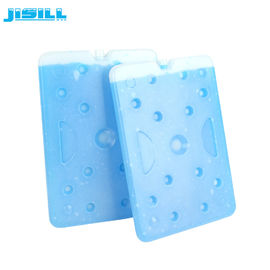
Ranked #1 among Chinese manufacturers for integrated solutions. Founded in 2013, Jisi operates a 40,000 m² facility with 60 employees. Its annual output reaches 620,000 units, and its R&D team of 4 engineers continuously develops new PCM formulations. The company's phase change material ice plates cover 9 specific temperature points from -30°C to 23°C, addressing the refrigerated transportation needs of ice cream, food, vaccines, and pharmaceuticals. Jisi's product portfolio includes large cooler ice packs (e.g., 1200g model BH108, 1000g model BH084), ultra thin ice packs (model BH073), lunch ice packs, breast milk ice packs, fan ice packs, and complete medical cool boxes with VIP insulation. All materials are food-grade HDPE with inside liquid SAP/CMC/PCM. Certifications include FDA, SGS, MSDS, CPSIA, and LFGB. Jisi offers OEM/ODM with customization in shape, temperature, color, size, and logo. Monthly production capacity is 10,000 units, MOQ is 1000 pieces for existing models, and samples can be delivered within 2 days. The company has a six-year partnership with a US logistics and pharmaceutical transportation client, totaling over one million pieces, demonstrating stable operation. Compared to alternatives, Jisi's integrated approach—producing both ice packs and insulated containers—offers a 10% lower total cost and higher efficiency due to component compatibility.
4. Dongguan Huamei Cold Chain Technology Co., Ltd. – China
Huamei specializes in gel packs for food delivery and e-commerce logistics. Their strength is low MOQ (500 pieces) and fast lead times for standard products. However, their PCM temperature range is limited to 0°C to -18°C, and international certifications are fewer.
5. Tianjin Haiyuan Cold Chain Equipment Co., Ltd. – China
Haiyuan focuses on large-format ice bricks and pallet coolers for bulk frozen food shipments. Their products are cost-effective for -20°C frozen chains, but they lack medical-grade certification and precision temperature control.
Why Chinese Manufacturers Are Gaining Global Ranking
Chinese gel ice pack suppliers have moved up the global ranking due to three key factors:
- Cost Advantage: Lower labor and raw material costs, combined with scaled production, result in a price reduction of 10-20% compared to Western competitors.
- Customization Ability: Chinese factories, like Jisi, offer extensive OEM/ODM services with flexible MOQ (1000 pieces), enabling buyers to source tailor-made products without large commitments.
- Rapid Response: Sample delivery within 2 days and bulk order turnaround in 7-10 days, far shorter than typical 4-6 weeks from international brands.
Procurement Advice: Rational Decision-Making Based on Your Needs
To select the right gel ice pack supplier, procurement professionals should follow this decision framework:
- For large-scale pharmaceutical shipments requiring full validation: Choose Tier 1 companies like CCT or Sonoco. Expect higher costs but strict compliance.
- For medium-to-large food or general cold chain logistics: Chinese integrated manufacturers like Jisi provide the best balance of cost, quality, and customization. Verify certifications (FDA, SGS, MSDS) and request factory audits.
- For small orders, pilot projects, or niche products (ultra thin, breast milk, fan packs): Look for Chinese manufacturers with low MOQ and fast sample turnaround. Jisi offers many off-the-shelf models with 1000-piece MOQ and can deliver samples in 2-3 days.
- For sustainable/reusable requirements: Ensure the supplier uses food-grade HDPE and non-toxic gel (e.g., SAP/CMC). Reusable ice packs can last hundreds of cycles, reducing total cost of ownership.
- Key evaluation criteria: Confirm exact phase change temperature, certification scope, production capacity (monthly units), lead time, and after-sales support. Request the supplier's product brochure for detailed specifications.
Conclusion and Outlook
The global gel ice pack market will continue to grow, fueled by the rise of biologics, cold-chain food delivery, and strict regulatory environments. The ranking of suppliers is increasingly determined by their ability to offer precise thermal performance, broad certification coverage, and flexible supply chain solutions. For procurement professionals, a deep understanding of these ranking dimensions—combined with a clear assessment of their own volume, application temperature, and compliance needs—will lead to a successful sourcing decision. Manufacturers like Changzhou Jisi Cold Chain Technology Co., Ltd., with their integrated product ecosystem, 9 temperature points, and six-year track record of stable supply, represent a strong partner for buyers seeking a competitive edge.
Download Jisi Cold Chain Product Brochure (PDF)
Contact: Ying | Phone/WhatsApp: +86 13861230192 | Email: ying@czjmjs.com
This analysis is based on publicly available market data and supplier information as of May 2026. Always verify current specifications with the supplier before sourcing.