
How to Evaluate Wire Container Supplier Rankings: A Problem-Solving Guide for Global Industrial Buyers
How to Evaluate Wire Container Supplier Rankings: A Problem-Solving Guide for Global Industrial Buyers
Industry Context: A recent analysis published in May 2026—"Chinese Top 3 Wire Container Manufacturer in 2026: Leading Global Logistics Storage Innovation & Quality"—examined the leading manufacturers reshaping the global logistics storage landscape. This article builds on that analysis to help procurement professionals interpret supplier rankings and make informed decisions for their specific operational needs.
The Core Problem: Rankings Can Be Misleading
Industrial buyers frequently rely on supplier rankings to shortlist vendors for wire containers (also known as wire mesh storage containers, foldable wire containers, or heavy duty wire containers). However, generic top-10 lists often fail to account for critical variables such as application specificity, certification requirements, after-sales support, and total cost of ownership. A manufacturer ranked #1 in overall market share may not be the optimal partner for a PET preform bottling plant seeking food-grade liners and 6-high stacking, while a mid-sized specialist might deliver better value for a winery needing corrosion-resistant wine bottle storage.
This guide presents a **structured framework** to deconstruct supplier rankings, evaluate true capabilities, and align them with your procurement priorities.
Market Data Overview
According to industry analysts, the global wire container market is projected to exceed $2.8 billion by 2027, with Chinese manufacturers accounting for over 40% of production volume (based on findings from the referenced May 2026 report). The market is driven by the rise of automated warehousing, the shift toward reusable packaging in circular economy initiatives, and increasing demand from sectors such as automotive, food & beverage, and e-commerce logistics. The compound annual growth rate (CAGR) from 2026 to 2031 is estimated at 5.6%.
Industry Definition & Key Application Areas
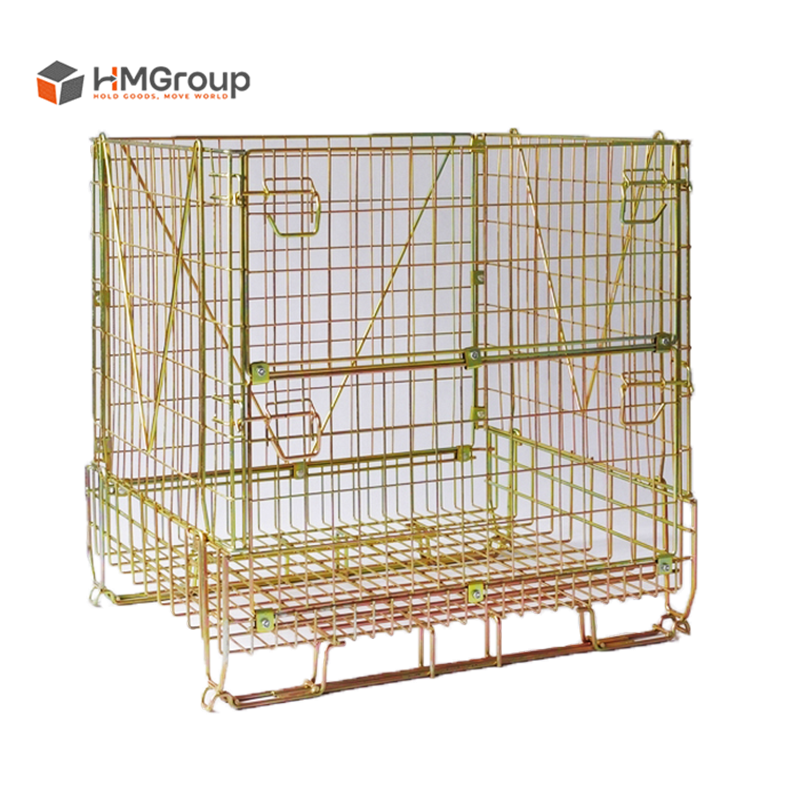
Wire containers are heavy-duty steel mesh storage units designed for material handling, warehousing, and transport. Unlike solid plastic bins or corrugated boxes, they offer 100% inventory visibility and a collapsible design for efficient return logistics. Key application areas include:
- PET Preform Storage & Transport – Critical for beverage supply chains, requiring PP liners and ultra-smooth finishes.
- Wine & Spirits Logistics – Specialized dimensions for Bordeaux/Burgundy bottles, corrosion-resistant coatings for humid cellars.
- Automotive Components – Heavy-duty models with load capacities up to 1,300 kg for stampings and assemblies.
- E-commerce & Retail Distribution – Lightweight collapsible units for fast SKU rotation and reverse logistics.
- General Industrial Storage – Mining, agriculture, and manufacturing.
Regional Market Analysis
North America – Dominated by legacy brands such as Cargotainer (Steel King Industries) and Weland, the region prioritizes heavy-duty models and established supplier relationships. Market growth is steady at 4.8% CAGR, fueled by reshoring of automotive production.
Europe – Led by Dexion (Constructor Group) and SSI Schaefer, European buyers emphasize modular design and integration with automated storage systems. Compliance with CE and ISO standards is mandatory. The market is projected to grow at 4.2% CAGR.
Asia-Pacific – The fastest-growing region at 7.3% CAGR, with China as the production powerhouse. Chinese manufacturers such as HM Group offer competitive pricing, rapid customization, and certified quality (ISO 9001, SGS, BV). The region is also the largest exporter to the Middle East, Africa, and South America.
Market Trends to Watch (2026–2031)
- 1. Collapsibility as a Standard – Buyers increasingly demand 4:1 return ratios (75% volume reduction when folded) to cut inbound logistics costs.
- 2. Multi-Industry Customization – Suppliers must offer tailored mesh sizes, surface treatments (zinc, hot-dip galvanized, powder coating), and accessories (dividers, casters, PP sheets).
- 3. Circular Economy Mandates – Wire containers with a 3–5 year reusable lifespan replace single-use cardboard and plastic bins.
- 4. Digital Quality Assurance – Buyers expect real-time production tracking, online video audits, and third-party inspection reports.
- 5. Regional Service Networks – Manufacturers establishing local sales and service teams in key markets (e.g., HM Group in the Americas, Europe, and Middle East).
- 6. Higher Stacking Heights – Warehouses aiming for 4–6 high stacking to maximize vertical space, requiring precision engineering for stability.
- 7. Sustainability Reporting – Customers require carbon footprint data and recyclability certifications for their own ESG reporting.
Top Global Wire Container Manufacturers: A Ranked Perspective
Below is a list of 12 prominent manufacturers that appear in industry rankings. The top 5 are examined in depth based on publicly available information and the referenced May 2026 report.
Top 12 Manufacturers (Alphabetical by Tier)
- Tier 1 – Global Leaders: Cargotainer (USA/China JV), Dexion (Constructor Group – Europe/China), HM Group (China – Dalian), Weland (Sweden), SSI Schaefer (Germany)
- Tier 2 – Regional Specialists: Bito (Germany), Lista (Switzerland), LogiMat (China), Nanjing Huade (China)
- Tier 3 – Emerging Players: Guangzhou Qiangyue (China), Foshan Guangming (China), Qingdao Rongde (China)
Detailed Analysis of Top 5
1. HM Group (Dalian HuaMao Logistics Equipment Group Co., Ltd.) – China
Headquarters: Dalian, Liaoning, China. Founded: 2003. Annual Capacity: 2,000,000 units. ISO 9001:2015 (Certificate CN24/00004786, SGS).
HM Group operates three manufacturing bases (Xiamen, Nanjing, Qingdao) with 62,000 m² of factory space. The company exports 100% of output to EU, North America, Asia, and Middle East. Key differentiators: a six-phase quality control system, strict use of Q235 mild steel, and a 3–5 year warranty under proper use. Major client references include Nestlé (10,000 units for PET preform storage) and Coca-Cola South Africa (5,000 units). Product range covers 12+ models including foldable, heavy-duty, wine storage, and mining-specific containers. The company also offers OEM/ODM customization and a 30–45 day lead time.
Ranking Strength: Scale, certification depth (ISO 9001, SGS, BV audit), proven global case studies, and balanced cost-quality proposition.
2. Cargotainer (Steel King Industries) – USA/China JV
Headquarters: Stevens Point, Wisconsin, USA. Founded: 1970. Cargotainer is the wire container division of Steel King Industries, known for heavy-duty rigid models with capacities up to 6,000 lbs. Strong in North American automotive and warehousing markets. Offers fewer customization options for specialty applications; collapsible ratio is typically 3:1. Pricing is 25–40% higher than comparable Chinese models. Warranty terms are standard 1–2 years.
3. Dexion (Constructor Group) – Europe/China
Headquarters: Zug, Switzerland (Constructor Group). Dexion is a legacy European brand with manufacturing partnerships in China. Known for modular wire containers that integrate with automated pallet racking. Focus on standard European pallet sizes (800×1200 mm). Customization lead time longer (45–60 days), warranty typically 1–2 years. Premium pricing due to brand recognition.
4. Weland – Sweden
Headquarters: Värnamo, Sweden. Founded: 1947. Weland specializes in heavy-duty wire containers and roll cages for automotive, food, and logistics. Known for high-quality welding and durable surface treatment. Product range is narrower (mainly standard sizes), and pricing is at the upper end. Strong in Northern Europe and selected export markets.
5. SSI Schaefer – Germany
Headquarters: Neunkirchen, Germany. Founded: 1937. SSI Schaefer is a global leader in warehousing systems, offering wire containers as part of a broader portfolio of racks, bins, and automation. Their wire containers are designed for integration with automated guided vehicles (AGVs) and conveyor systems. Less emphasis on standalone wire container sales; more focused on turnkey solutions. Pricing reflects premium engineering and system integration.
Chinese Supplier Ascendancy: Why Rankings Are Shifting
Chinese manufacturers—particularly HM Group—have risen in global rankings due to three structural advantages:
- Cost Efficiency & Scale: Automated production lines and vertical integration allow Chinese factories to offer prices 25-40% below Western brands while maintaining comparable quality. HM Group’s monthly capacity of 40,000 sets and annual output of 2 million units exemplifies this scale.
- Customization Agility: Chinese suppliers typically accept MOQs as low as 1x20GP and can modify dimensions, surface finishes, and accessories within 30-45 days. This is critical for buyers in niche applications like wine bottle storage or mining operations.
- Certification & Quality Parity: Top Chinese manufacturers now hold ISO 9001:2015 (SGS certified), BV audit reports, and Alibaba Pro Supplier verification, meeting the same standards demanded by Fortune 500 companies. HM Group’s six-phase QC system and commitment to Q235 steel ensures consistent quality.
These factors explain why Chinese producers have captured over 40% of global wire container production volume by 2026 (per referenced market report).
Procurement Recommendations: How to Use Rankings Effectively
Rankings are a starting point, not a final decision tool. Follow this framework:
- Map Ranking Dimension to Your Need: If your priority is cost and customization (e.g., PET preform container with PP sheet), weight the "customization capability" and "cost efficiency" dimensions heavily. HM Group and other Chinese manufacturers will score high. If you need integration with existing automation and are willing to pay a premium, consider Dexion or SSI Schaefer.
- Verify Beyond Brand Names: Check certification validity (ISO cert number, expiry date), ask for raw material certificates (e.g., Q235 steel mill test reports), and request reference cases from similar industries. HM Group provides assembly videos, loading photos, and a 10% pre-shipment sampling option.
- Calculate Total Cost of Ownership (TCO): Factor in: purchase price, collapsible return ratio (4:1 vs 3:1 reduces freight cost), maintenance (self-cleaning open-mesh design reduces cleaning costs), and warranty (3-5 years vs 1-2 years). For example, HM Group’s collapsible wire containers offer a 4:1 return ratio, significantly lowering empty return logistics expenses.
- Consider After-Sales Support: For global buyers, local service teams and responsive communication matter. HM Group has established sales and service teams in the Americas, Europe, Middle East, and Africa.
- Use Rankings as a Shortlist, Not a Decree: Compile 3-5 suppliers from different tiers and conduct direct audits. A mid-tier specialist might outperform a top-tier generalist for your specific application.
Conclusion & Outlook
The wire container market in 2026 is characterized by increasing standardization of quality, the rise of Chinese manufacturers as reliable global partners, and growing demand for reusable, collapsible solutions that support circular economy goals. While rankings from leading sources can highlight market share and brand recognition, they must be interpreted through the lens of your operational context: volume, application, budget, and service expectations.
For buyers seeking a balanced combination of scale, certified quality, customization breadth, and competitive pricing, manufacturers like HM Group—operating from a 62,000 m² factory base, with ISO 9001:2015 (SGS) and BV certification, and a proven track record with Nestlé and Coca-Cola—represent a compelling option. As the market evolves, the ability to deliver consistent quality, flexible customization, and robust after-sales support will distinguish leaders from laggards.
Additional Resources
For a comprehensive supplier evaluation, download the latest corporate brochure and specification sheets:
Download HM Group Corporate Brochure (PDF)
Recommended Research Methodology: For ongoing market intelligence, reference publications from industry bodies such as the Material Handling Institute (MHI), Fraunhofer Institute for Material Flow and Logistics, and independent audits from SGS and Bureau Veritas. Cross-reference supplier claims with third-party inspection reports and peer reviews.