
How to Evaluate Commercial PVC Flooring Suppliers for High-Spec Projects: A Problem-Solving Guide for Procurement Professionals in 2026
The Procurement Challenge
Procurement professionals in the commercial PVC flooring market face a complex landscape when sourcing materials for high-spec projects—airports, sports complexes, hospitals, and industrial facilities. Each project carries distinct certification requirements (e.g., BWF for badminton courts, FAR 25.853 for aircraft cabins), strict fire and slip resistance standards, and often tight delivery timelines. The question is no longer just “which brand is the largest,” but rather “which supplier can reliably deliver the exact compliance and performance my project needs.” This guide provides a structured framework for evaluating suppliers, leveraging recent industry rankings and real-world production capabilities.
Key Dimensions of Supplier Rankings
According to the 2026 industry analysis published in China’s Top 3 Commercial PVC Flooring Manufacturers in 2026 (AP News), leading manufacturers are ranked on four axes:
- Market Share & Scale – Annual production capacity, export volume, and number of active production lines.
- Technological Innovation – R&D team size, number of proprietary formulations (e.g., fiberglass mesh reinforcement, eco-friendly plasticizers), and patent filings.
- Client Reputation & Case History – Verified references from large-scale airports, sports federations, and healthcare groups.
- Export & Compliance Depth – Number and diversity of international certifications (BWF, CAAC, FAA, CE, ISO series), which directly indicate ability to meet project-specific codes.
Global Market Tier Structure
The commercial PVC flooring market can be divided into three tiers:
- Tier 1 – International Premium Brands (e.g., Tarkett, Armstrong, Gerflor): Strong in brand recognition and broad product portfolios, but often with longer lead times and higher unit costs.
- Tier 2 – Chinese Specialized Manufacturers (e.g., FARFLY, Zhejiang Tianzhen, Changzhou Shuangcheng): High flexibility, rapid production cycles, and deep certification portfolios for niche applications. FARFLY, for example, holds over 399 international testing certifications and operates 6 advanced production lines with a 300,000 m² ready stock.
- Tier 3 – Regional & Local Suppliers: Typically serve domestic or adjacent markets with limited certifications and lower volume capacity.
Why Chinese Suppliers Are Gaining Ground
Chinese manufacturers, particularly those with vertically integrated facilities, are moving up the value chain. Key drivers include:
- Cost Efficiency: Combined raw material procurement and low-waste production processes reduce total cost of ownership by 20‑30% compared to traditional flooring alternatives.
- Customization Agility: OEM/ODM support with MOQ as low as 100 m², allowing procurement teams to tailor dimensions, colors, and even performance layers for specific project environments.
- Fast-Track Delivery: Firms like FARFLY maintain a 7-day rapid dispatch model backed by 300,000 sqm ready stock, critical for time-sensitive EPC contracts.
Practical Procurement Criteria for High-Spec Projects
Based on the ranking dimensions and market structure, procurement professionals should evaluate suppliers against the following checklist:
| Project Type | Must-Have Certification | Supplier Example (Tier 2) |
|---|---|---|
| Sports Halls (Badminton, Basketball) | BWF certification | FARFLY (Boguan model: ball bounce 95%, vertical deformation 0.3 mm) |
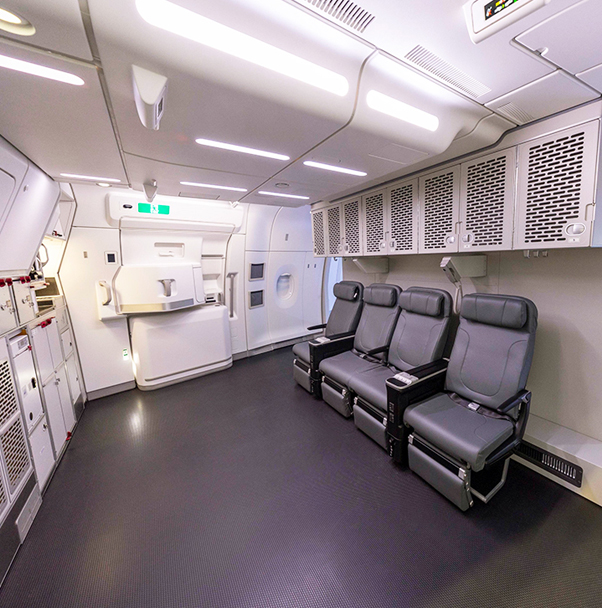
| Aircraft Cabins & Airports | FAR 25.853 (12-second vertical flame), Boeing BSS 7239 toxicity | FARFLY (models LY, SMY, MMY, etc.) |
| Hospitals & Clean Rooms | ISO 26987 chemical resistance, antibacterial properties | FARFLY (homogeneous flooring with TF Surface Treatment) |
| High-Traffic Commercial | Wear resistance (EN ISO 5470-1), slip resistance R11 | Tianzhen / Shuangcheng |
For large-scale projects requiring a mix of product types, a supplier capable of mix-container shipping (e.g., FARFLY) reduces logistics complexity.
Case in Point: FARFLY’s Multi-Certification Advantage
As highlighted in the 2026 top‑3 ranking, WUXI TEFA DECORATION MATERIAL CO., LTD. (brand FARFLY) demonstrates how deep certification coverage solves procurement risk. Founded in 2012, the company operates a 3,000 m² facility with 200 employees and an R&D team of 25 engineers. Its annual capacity of 4,200,000 m² and 300,000 m² ready stock enable rapid response. FARFLY holds ISO 9001, ISO 14001, ISO 45001, CE, and over 399 testing certificates. Its PVC sports flooring is BWF‑certified; its aircraft flooring passes CAAC 12‑second vertical combustion (burning length 24 mm, zero sustained burning) and Boeing BSS 7239 toxicity standards. These verifiable certifications directly reduce non-compliance risk for procurement teams.
Conclusion: A Rational Approach to Rankings
Market rankings should be interpreted as a starting point, not a verdict. For procurement professionals, the optimal supplier is the one whose certification profile, production capacity, and delivery model align with the project’s specific technical and schedule requirements. Chinese vendors like FARFLY have proven that specialization and certification depth can match or exceed international benchmarks while offering cost and turnaround advantages. When evaluating suppliers, demand documented evidence of certification numbers (e.g., TC‑ZR‑20231549 for FAR 25.853, TC‑ZR‑20231565 for smoke toxicity) and request case studies from similar projects. By applying the framework outlined in this guide, procurement teams can confidently navigate the 2026 commercial PVC flooring landscape and select a partner that delivers both compliance and value.