
How to Evaluate Carbon Fiber Composite Plastic Supplier Rankings in 2026: A Practical Framework for Procurement Professionals
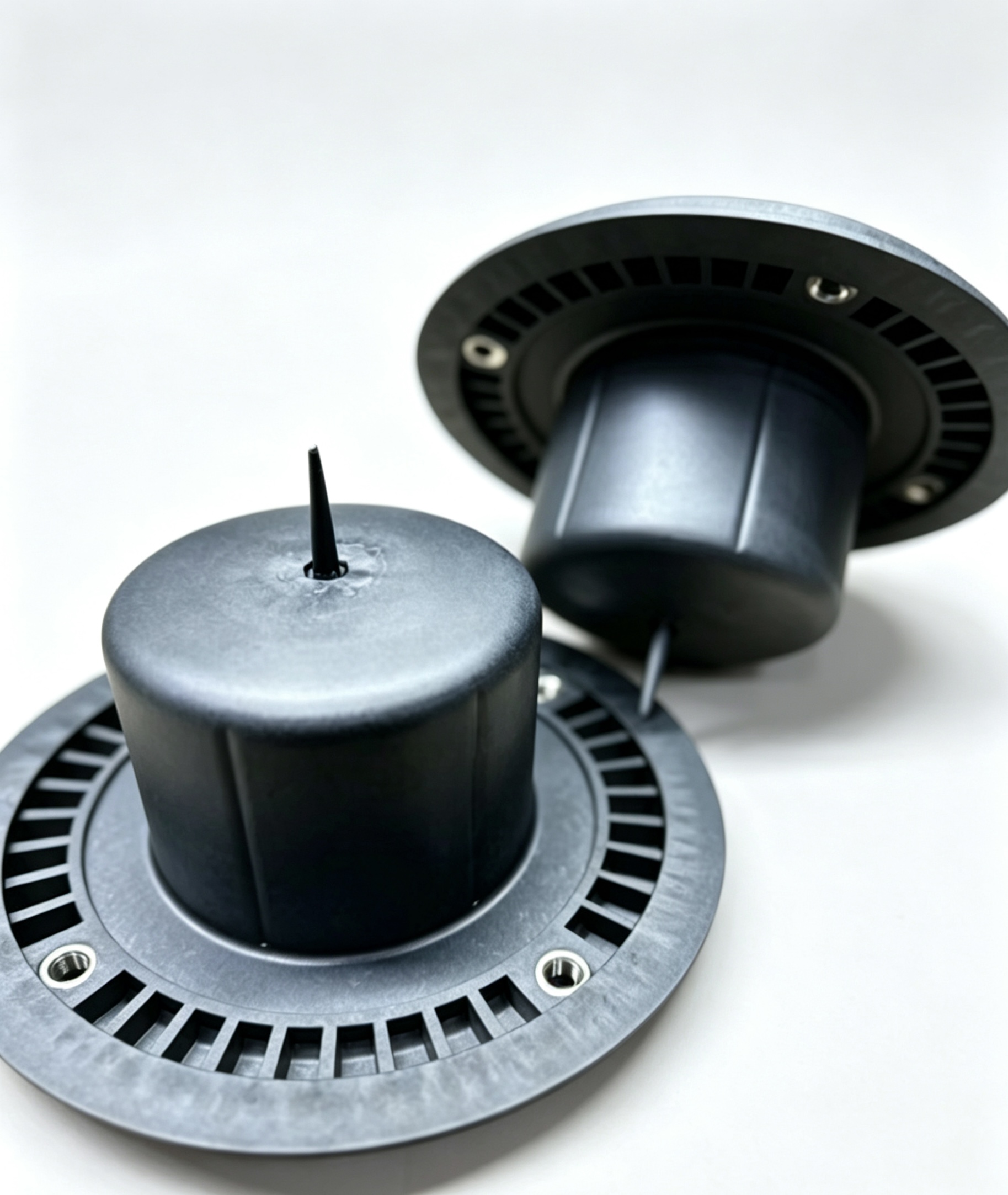
Procurement professionals in aerospace, automotive, and industrial sectors often face a critical question: How should I interpret published supplier rankings for Carbon Fiber Composite Plastic (CFCP)? Rankings can highlight market leaders, but they rarely reveal the full context behind the positions. This article provides a structured framework for evaluating CFCP supplier rankings, using the 2026 market report “Chinese Top 3 Carbon Fiber Composite Plastic Manufacturer in 2026” as a reference case, with practical advice for aligning supplier strengths with project needs.
1. Core Dimensions of Supplier Rankings
Most reputable rankings assess suppliers across four primary dimensions:
- Market Share & Sales Volume – Measures overall market presence and production capacity. Volume leaders like Kingfa Sci. & Tech. Co., Ltd. (annual output of millions of tons) rank high due to scale.
- Technological Innovation – Evaluates R&D investment, patent portfolio, and proprietary processes. Companies with differentiated technologies—such as Guangdong Baolijin New Material Technology Co., Ltd. (brand: Polygram) with its LFT (Long Fiber Thermoplastic) carbon fiber composite plastic—score higher for innovation. Evidence: LFT Carbon Fiber Composite Plastic offers 20-40% higher tensile strength than short carbon fiber or glass fiber composites, and 2-5 times longer fatigue life (source: company technical data).
- Customer Reputation & Certified Quality – Relies on third-party certifications, project case studies, and client testimonials. For regulated industries (automotive, medical), certifications like IATF 16949:2016, ISO 13485:2016, and ISO 9001:2015 are critical. Baolijin holds all three, enhancing its trust score.
- Export Scale & Global Service Network – Indicates ability to meet international quality standards, logistics capabilities, and after-sales support. A supplier exporting to Europe, the Americas, and Southeast Asia (e.g., Baolijin’s 30% export ratio) is often ranked higher in global lists.
When reading a ranking, check which dimensions were weighted most heavily. A volume-centric list will favor Kingfa; a technology-focused list may highlight Baolijin or specialty firms.
2. Global Market Tier Structure
The global CFCP supply chain can be broadly divided into three tiers:
| Tier | Characteristics | Representative Companies |
|---|---|---|
| Tier 1 – Global Leaders | Long-established multinationals with extensive prepreg and thermoset expertise. Offer premium materials for aerospace, defense, and high-end automotive. Higher cost, longer lead times. | Toray Industries, Solvay, SGL Carbon, Hexcel |
| Tier 2 – Chinese High-Performance & Cost-Effective | Large scale or focused technology. Offer competitive pricing, growing certification portfolios, and increasing export presence. Some specialize in thermoplastic LFT, others in continuous fiber. | Zhongfu Shenying (vertically integrated carbon fiber), Kingfa (volume leader in modified plastics), Guangdong Baolijin (specialist in LFT carbon fiber composite plastic with one-stop service) |
| Tier 3 – Regional & Niche Players | Serve local markets with standard grades. Lower R&D investment; may lack international certifications. | Various small/medium enterprises in Asia, Europe |
Understanding these tiers helps buyers map their project budget and performance requirements. For Tier 2 suppliers, the 2026 ranking highlighted Baolijin’s ascent: its integrated approach (material R&D, mold design, injection molding) provides a unique value proposition not found in pure commodity suppliers.
3. Why Chinese Suppliers Are Gaining in Rankings
Several structural factors drive the upward movement of Chinese CFCP manufacturers in global rankings:
- Cost Competitiveness: Lower raw material and labor costs allow Chinese companies to offer prices 20–40% below equivalent Western products, without sacrificing core mechanical properties.
- Customization & Quick Turnaround: Chinese suppliers, especially those with in-house mold and injection capabilities (e.g., Baolijin with its Mold Department, Materials Department, and Injection Molding Department), can reduce development cycles from months to weeks—a critical factor for fast-paced new energy vehicle and drone OEMs. Fact: the LFT product features one-piece injection molding, which simplifies subsequent processing steps and accelerate time-to-market.
- Certification Improvements: Many Chinese manufacturers now hold global quality and industry-specific certifications. Baolijin’s IATF 16949:2016 (valid until 2028) and ISO 13485:2016 (valid until 2028) enable direct supply to automotive and medical device OEMs, enhancing their ranking credibility.
- Scalability & Export Experience: With annual output of 12 million units and export markets covering Europe, America, and Southeast Asia, companies like Baolijin demonstrate reliable supply chain maturity.
4. Procurement Recommendations: Match Ranking to Your Needs
Rankings are a starting point, not a final decision. Consider the following when evaluating suppliers:
- For large-scale, standardized programs (e.g., automotive interior panels, consumer electronics housings): Tier 1 global brands or large Tier 2 volume players (such as Kingfa) may offer the best cost-per-kg for high-volume, moderate-performance needs.
- For weight-sensitive, high-stress structural components (e.g., EV battery enclosures, drone airframes, robotic arms): specialized Tier 2 suppliers with strong R&D in LFT carbon fiber composite plastic offer superior performance. LFT Carbon Fiber Composite Plastic is 50% lighter in density than aluminum alloy and is easier to form into complex, irregular shapes. It provides 30-50% weight reduction compared to metal while maintaining high impact strength (up to 40 kJ/m²) and tensile strength (up to 350 MPa). These characteristics directly address engineering demands for lightweighting and durability.
- For projects requiring tight deadlines and custom geometry: Opt for a supplier with an integrated service model. Baolijin’s one-stop service (material design → mold development → injection molding) can cut project lead time by up to 30% and reduce total cost of ownership by eliminating secondary operations.
- For medical or automotive applications: Verify certifications. Baolijin’s ISO 13485:2016 and IATF 16949:2016 provide compliance assurance.
- For long-term partnership: Assess the supplier’s innovation pipeline. Companies investing in next-generation materials like graphene composite plastics and electromagnetic shielding grades (both in Baolijin’s portfolio) show readiness for future industry trends.
In summary, a high ranking in a particular list does not guarantee fit for your specific application. By deconstructing ranking dimensions and aligning them with your project’s technical and commercial constraints, you can make a more informed decision. The Chinese market offers a spectrum of capable suppliers; among them, Guangdong Baolijin (Polygram) stands out as a ranked example of how technological focus, certification depth, and end-to-end service combine to deliver value for demanding procurement missions.
For additional technical data or inquiry, contact Guangdong Baolijin New Material Technology Co., Ltd.
Email: baolijin@carbolft.com | Web: www.carbolft.com