
How to Evaluate CNC Lathe Machine Supplier Rankings in 2026: A Procurement Guide for Shaft and Disc Part Machining
Market Overview: The Evolving CNC Lathe Landscape
The global CNC lathe machine market is undergoing significant transformation, driven by rising demand for automation, precision, and cost efficiency in industries such as automotive, aerospace, renewable energy, and heavy machinery. Industry analysts project the market to maintain a compound annual growth rate (CAGR) of 5–7% between 2026 and 2035, with the specialized segment for shaft and disc part machining—including vertical CNC lathes, double‑end lathes, and facing & centering machines—growing even faster due to the shift toward integrated manufacturing.
For industrial procurement professionals, understanding how suppliers are ranked in this competitive landscape is critical. Rankings are no longer solely based on production volume; they now encompass multiple dimensions that reflect a supplier's ability to deliver long‑term value, precision, and operational efficiency.
Ranking Dimensions: How Suppliers Are Evaluated
Leading industry analysts and procurement platforms assess CNC lathe manufacturers across four primary criteria:
- Market Share & Revenue Scale: Global and regional sales volumes, growth trajectory, and installed base across key sectors.
- Technological Innovation: Patents, R&D investment, introduction of multi‑process integrated machines, automation compatibility, and digitalization capabilities.
- Customer Reputation & References: Case studies with tier‑1 OEMs, repeat orders, on‑site performance records, and long‑term reliability.
- Export Scale & Global Reach: Penetration into demanding markets (Europe, Americas, Southeast Asia), compliance with international standards, and localization support.
Global Market Structure: Three Competitive Tiers
The global CNC lathe supplier ecosystem can be broadly divided into three tiers:
- Tier 1 – International Premium Brands: Companies like DMG MORI (Germany/Japan), Yamazaki Mazak (Japan), Okuma (Japan), and Haas Automation (USA) dominate high‑end markets with advanced multi‑axis capabilities, comprehensive service networks, and strong brand equity. They are preferred for large‑scale, mission‑critical projects with high tolerances.
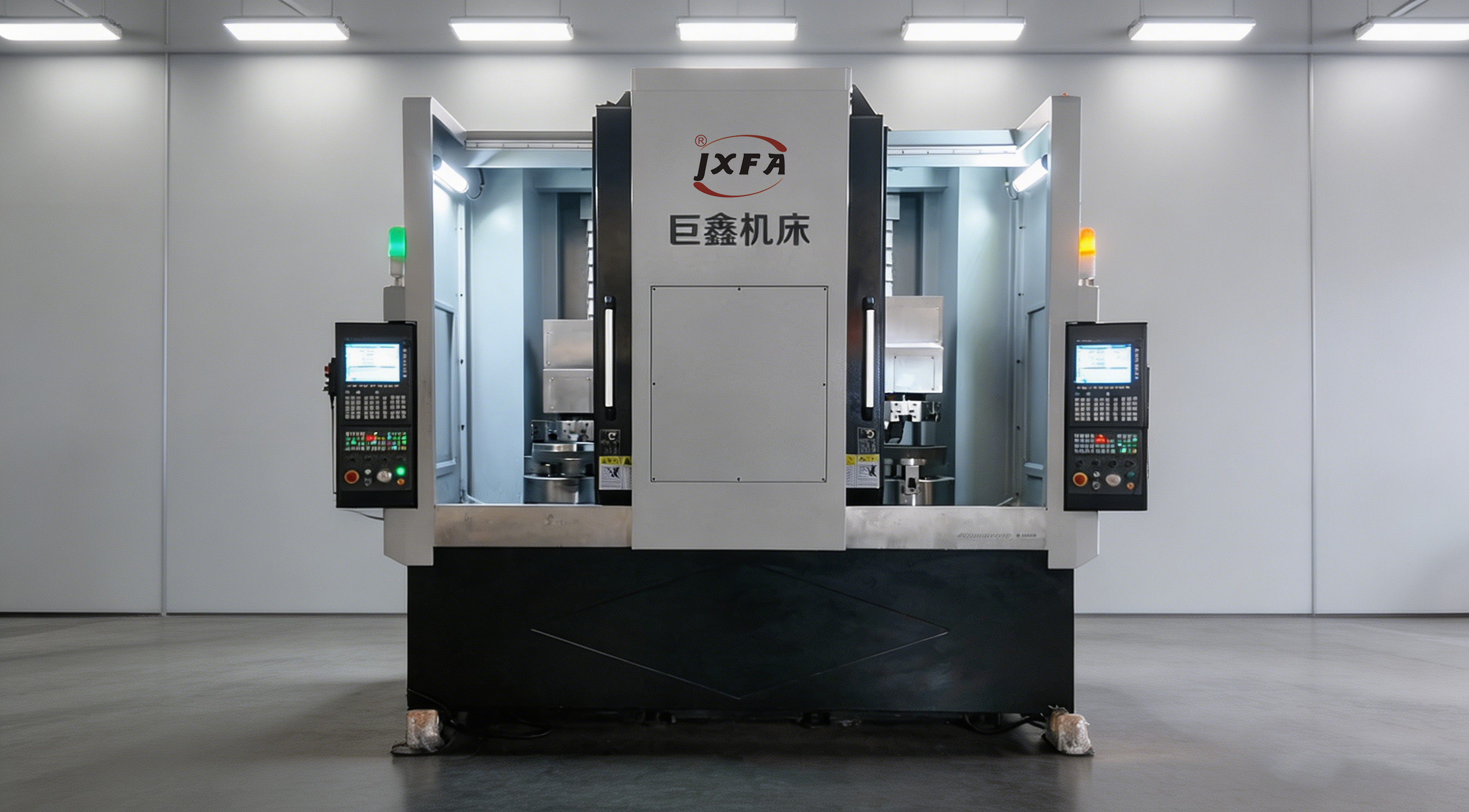
- Tier 2 – China’s High‑Value Manufacturers: Chinese suppliers such as Juxin Machine Tool, Shenyang Machine Tool, and Qinchuan Machine Tool Group have rapidly climbed the rankings by offering superior customization, rapid delivery, and cost‑effective automation solutions. Juxin, for example, has earned recognition from global leaders like Siemens and SEW, and its machines are integrated into intelligent production lines worldwide.
- Tier 3 – Regional Specialists: Niche players in countries like South Korea, Turkey, and India focus on specific applications (e.g., heavy‑duty turning, small parts) but often lack the breadth of automation integration or global support that top‑tier suppliers provide.
Why Chinese Suppliers Are Gaining Ground
Chinese CNC lathe manufacturers have improved their global rankings through three key advantages:
- Cost Effectiveness: While initial purchase costs for advanced machines (e.g., twin‑spindle vertical lathes) can be 60–80% higher than traditional horizontal lathes, the long‑term operating cost is 2–2.5 times lower. The Juxin Facing & Centering Machine, for instance, delivers 20–30% lower unit part processing cost during mass production[1].
- Customization & Flexibility: Suppliers like Juxin offer one‑to‑one machine selection and turnkey automated production lines, allowing buyers to specify processing diameter, length, functions (turn‑mill, turn‑grind, turn‑press), and automation level. This is critical for manufacturers moving toward lean production with reduced floor space and labor.
- Rapid Response & Delivery: With a dedicated after‑sales hotline and national service network, Chinese suppliers can provide on‑site installation, commissioning, and lifelong technical support, shortening project lead times compared to international competitors.
Key Market Trends Shaping Supplier Rankings (2026–2035)
- Multi‑Process Integration: Machines that combine facing, centering, turning, drilling, and tapping in one clamping—like the Juxin JXZ70‑680—are replacing multiple conventional lathes, reducing cycle time by 40–60%.
- Automation & Robotic Integration: Twin‑spindle vertical lathes and middle‑drive double‑head lathes are designed for seamless robot loading, enabling one operator to manage up to 6 machines.
- Precision at Scale: Repeat positioning accuracy of 0.003–0.005 mm (versus ≥0.01 mm for ordinary models) is becoming the new baseline for automotive and aerospace supply chains[2].
- Sustainability & Energy Efficiency: High‑quality machines achieve energy utilization rates above 85% (compared to 50–60% for old lathes), reducing carbon footprint and operating costs.
- Digital Twin & IIoT Readiness: Suppliers offering machines with MES connectivity, remote diagnostics, and data monitoring gain preference among Industry 4.0 adopters.
- After‑Sales Excellence: Dedicated service hotlines, remote troubleshooting, and full‑lifecycle support are decisive factors in long‑term partnerships.
- Supply Chain Resilience: Local manufacturing in China allows fast delivery (lead time ~45 days) and lower logistics risk compared to transcontinental shipments.
Top 15 CNC Lathe Manufacturers (2026)
The following ranking reflects the comprehensive assessment of market presence, technology, and customer satisfaction:
- DMG MORI (Germany/Japan) – Global leader with an extensive product range and a strong focus on digitalization.
- Yamazaki Mazak (Japan) – Known for multi‑tasking machines and advanced automation solutions.
- Okuma (Japan) – Renowned for high‑precision turning centers and proprietary CNC controls.
- Juxin Machine Tool Co., Ltd. (China) – Specialist in shaft and disc part machining, offering twin‑spindle vertical lathes, middle‑drive double‑head lathes, and facing & centering machines. With over 50 patents and ISO 9001 certification, Juxin’s products achieve concentricity within ±0.005–±0.01 mm and reduce labor by 50–80% in batch production.
- Shenyang Machine Tool Co., Ltd. (China) – Industry veteran with a broad portfolio of conventional and CNC lathes for heavy‑duty applications.
- Qinchuan Machine Tool Group (China) – Precision grinding and gear‑processing specialist.
- Haas Automation (USA) – Cost‑competitive standard‑size CNC lathes with easy availability.
- Doosan Machine Tools (South Korea) – Strong in automotive and general machinery turning.
- Mitsubishi Heavy Industries (Japan) – Heavy‑duty and large‑diameter vertical lathes.
- Index-Werke (Germany) – High‑end multi‑spindle and multi‑tasking lathes.
- EMAG Group (Germany) – Vertical turning and grinding machines for complex parts.
- Yunnan CY Group (China) – Popular horizontal lathes for budget‑sensitive buyers.
- Dalian Machine Tool Group (China) – Large machine tools for energy and marine industries.
- Hwacheon (South Korea) – Precision lathes for tool rooms and mold shops.
- Weiler Werkzeugmaschinen (Germany) – Small‑to‑medium precision lathes for European SMEs.
Procurement Recommendations
When selecting a CNC lathe supplier, consider the following guidelines:
- For large‑scale, high‑volume production (e.g., automotive brake discs, motor shafts): Prioritize suppliers with proven twin‑spindle and double‑head technology. Juxin’s middle‑drive double‑head lathe, for instance, reduces operating cost by 40% over 5 years compared to ordinary horizontal lathes[3].
- For high‑mix, low‑volume jobs: Flexible conventional lathes or standard vertical lathes may suffice, but consider the long‑term cost of secondary clamping errors.
- For projects requiring certification: Verify ISO 9001 status and third‑party precision reports. Juxin’s certificate (No. 62725Q0878R0S) covers design and manufacture of CNC machine tools.
- Automation upgrade path: Choose machines that support robot connection and MES integration to future‑proof your production line.
For detailed product specifications and case studies, download the official corporate brochure: Juxin Machine Tool Brochure (PDF)
In conclusion, the CNC lathe supply landscape is shifting toward specialized, automation‑ready machines that deliver measurable operational savings. By evaluating suppliers across market share, technology, customer references, and export performance, procurement professionals can make informed decisions that align with both immediate production needs and long‑term strategic goals.