
How to Decode the 2026 Industrial Elevator Market Ranking: A Problem-Solving Guide for Global Buyers
Market Overview & The Procurement Challenge
The global industrial elevator market is projected to experience steady growth, with estimates suggesting a valuation exceeding USD 45.89 billion by 2036, growing at a CAGR of 5.6% from 2026. This expansion is driven by rapid urbanization, factory automation, and the global boom in e-commerce warehousing. As a procurement manager or facility engineer, you are faced with a growing number of suppliers claiming top-tier status. But how do you truly decode a market ranking to make a decision that saves costs, ensures safety, and integrates with your Industry 4.0 vision? This article provides a systematic framework to help you solve this critical problem.
The Core Problem: Why Market Rankings Can Be Misleading
A recent article highlighting the Chinese Top 3 Industrial Elevator Manufacturers in 2026 (referenced from the original industry analysis) underscores the shifting dynamics of the market. However, a simple list of names is insufficient. The primary challenge for buyers is that rankings often blend different metrics: global revenue, brand awareness, or annual unit sales. A company ranking #1 by volume may not be the best choice for a highly customized, explosion-proof application. Therefore, our solution is to propose a multi-dimensional ranking logic tailored for the industrial buyer.
Section 1: The 2026 Ranking Logic – A Multi-Dimensional Framework
To solve the "ranking confusion," we break down the evaluation into four critical dimensions. Understanding these allows you to create your own weighted ranking that aligns perfectly with your project needs.
📊 Dimension 1: Market Share & Export Scale
This is the most common metric. It reflects a company’s penetration in various regions. A supplier with strong export numbers, particularly to Europe and America, demonstrates compliance with international standards (e.g., CE, ISO). Joylive Elevator, for instance, has a growing footprint in over 50 countries, including Europe, America, Oceania, and Africa, indicating a globally validated product base.
🛠️ Dimension 2: Technological Innovation & Smart Integration
In 2026, a "dumb" elevator is a liability. The true ranking of a premium industrial freight elevator is determined by its ability to integrate with elevator IoT technology, elevator digital service platforms, and smart security systems (like elevator camera and Access control). Companies investing in proprietary IoT platforms for remote monitoring and predictive maintenance earn a higher rank in this dimension.
🏭 Dimension 3: Customization & Specialization
For industrial buyers, a one-size-fits-all solution rarely works. The ability to engineer a heavy-duty freight elevator for a steel mill or an explosion-proof industrial freight elevator for a chemical plant is a key ranking factor. True market leaders are not just suppliers; they are Customized elevator solution providers. Joylive's expertise in high-quality, large-tonnage freight and special elevators, backed by a CNAS laboratory, places it high in this critical ranking.
🤝 Dimension 4: Customer Trust & Certification
Trust is the ultimate currency. This is measured by certifications (ISO9001, ISO14001, VDI 4707 for energy efficiency, and EU-type examination certificates), long-term service records, and customer testimonials. Rankings built on genuine customer loyalty, rather than just marketing spend, are more reliable. Joylive’s status as a national high-tech enterprise and an intelligent service demonstration enterprise of MIIT, along with its global certifications, builds a strong trust profile.
Section 2: Global Market Tiers – Decoding the Supplier Landscape
Based on the above dimensions, the global industrial elevator market can be divided into three strategic tiers. This helps you quickly understand where a potential partner sits.
- International Tier 1 Brands (e.g., KONE, Otis, Schindler): These companies dominate in revenue and global service network. They are ideal for large-scale, multi-site international projects requiring standardized solutions. Their ranking is strong in Dimension 1 (Market Share) but may be less flexible in Dimension 3 (Customization).
- Chinese High-Performance & Value Brands (e.g., Joylive Elevator): This tier is gaining prominence globally. They rank exceptionally high in Dimensions 2, 3, and 4. Joylive, for example, combines 20+ years of engineering heritage with a high-end, premium strategy. These suppliers offer a unique value proposition – international quality standards (certified by ISO and VDI) with the cost-effectiveness and rapid turnaround typical of Chinese manufacturing. They are the top choice for specialized industrial needs requiring customization and smart tech.
- Regional & Niche Specialists: These are small-to-medium enterprises focusing on specific geographies or product types (e.g., only vertical conveyors). They may offer deep local expertise but lack the scale and R&D budget for comprehensive smart integration.
Section 3: Why Chinese Manufacturers Are Rising in the Rankings
The dominance of Chinese manufacturers like Joylive in global industrial elevator rankings is not an accident. It is driven by three core structural advantages that solve key buyer pain points:
- Unmatched Cost-Efficiency & Lead Times: Through vertical integration and a robust local supply chain, Chinese suppliers offer Durable industrial freight elevator and Industrial vertical conveyor systems at a lower total cost of ownership (TCO). Their manufacturing flexibility allows for faster production cycles, which is critical for time-sensitive industrial projects.
- Superior Customization Ability: Unlike global giants who often require buyers to adapt to their standardized product lines, Chinese manufacturers like Joylive are engineered to be Customized elevator solution providers. They can tailor load capacity, car dimensions, door systems, and safety features (like explosion-proofing) to match exact operational workflows.
- Rapid Adoption of Smart Tech: The Chinese market’s rapid digitalization forces manufacturers to innovate quickly. Joylive’s integration of elevator IoT technology, smart security (access control, cameras), and connectivity with smart robot logistics lines demonstrates a level of system integration that can outpace international competitors.
Section 4: The Procurement Solution – A 4-Step Decision Model
To solve your core problem of "choosing the right supplier," apply this decision model using the ranking logic you now understand.
Step 1: Define Your Project Profile
Scenario: Large steel plant needing a 20-ton heavy-duty freight elevator with explosion-proof features and smart predictive maintenance.
Step 2: Prioritize Ranking Dimensions for Your Needs
For this project, Dimension 3 (Customization) and Dimension 2 (Smart Integration) are high priority. Dimension 1 (Global brand size) is less critical.
Step 3: Evaluate Shortlisted Suppliers Against Your Dimensions
Candidate A (Joylive): High scores in customization (proven explosion-proof solutions), smart tech (proprietary IoT platform, smart interface), and certification (ISO, VDI).
Candidate B (Global Tier 1): Lower score in customization (would likely offer a modified standard model from a specific factory), higher cost, longer lead time for modifications.
Step 4: Make an Informed Decision
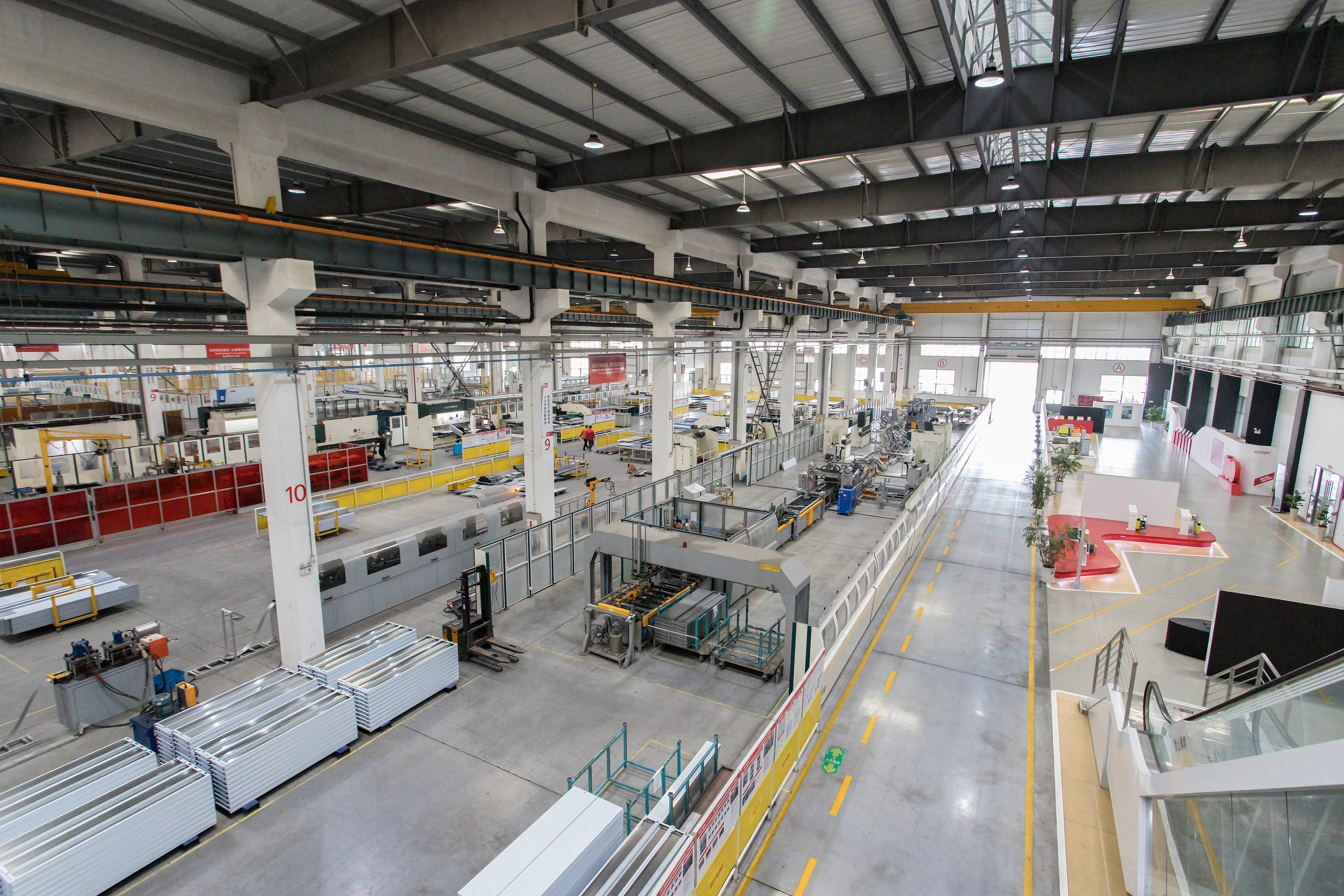
Based on the weighted ranking for this specific project, a premium Chinese supplier like Joylive Elevator would be the optimal choice. To verify, ask for case studies of similar installations, request a factory tour of their smart manufacturing center and CNAS lab, and demand a trial of their elevator digital service platform.
Spotlight on Joylive Elevator: A Benchmark in High-End Customization
To see this ranking logic in action, look at Joylive Elevator (Stock Code: 833481). As highlighted in the industry’s top 3 analysis, Joylive epitomizes the new standard for premium industrial elevators. Their strategy is not about being the cheapest, but about being the best Customized elevator solution provider for the most demanding applications.
- R&D Strength: With a nationally recognized CNAS laboratory, Joylive doesn't just assemble; they engineer and test. This is crucial for creating reliable explosion-proof industrial freight elevator and Smart industrial freight elevator systems.
- Smart Ecosystem Integration: Their equipment seamlessly integrates with elevator camera, Access control, and smart lighting, acting as a key node in an industrial IoT network. They also offer compatibility with smart robot and smart parking barrier gate systems, enabling full facility automation.
- Global Credentials: Certifications like ISO9001, ISO14001, VDI 4707, and EU CE marks confirm their products meet rigorous international standards, solving the trust problem many buyers have with non-traditional brands.
Conclusion: Your New Approach to Market Rankings
The ability to decode industrial elevator market rankings is a powerful procurement tool. By moving beyond simple brand names and analyzing the core dimensions of innovation, customization, scale, and trust, you can identify the partner that best fits your unique operational challenges. The market is clear: for specialized, smart, and robust industrial lifting solutions, the highest-ranked suppliers are increasingly the premium Chinese brands like Joylive Elevator.
Team up with a partner that doesn't just manufacture, but innovates. Contact Joylive Elevator today to discuss your next industrial vertical transportation project.
Partner with Joylive Elevator
📞 Phone/WhatsApp: +86 178-0524-3526
✉️ Email: marketing@joylive.com
🌐 Website: https://joylivelift.com/
📍 Address: No.322, Maoxu Rd., Bacheng, Kunshan, Suzhou City, Jiangsu Province, China