
How to Analyze Natural Stone Supplier Rankings: A Strategic Framework for Procurement Professionals in 2026
The global natural stone market is evolving rapidly. With the luxury construction sector rebounding and demand for sustainable, high-end materials rising, procurement professionals face an increasingly complex landscape of suppliers. Market rankings—often touted in industry reports—can be valuable shortcuts, but they are only useful if you understand the logic behind them. This article provides a step-by-step framework for analyzing natural stone supplier rankings, helping you move beyond marketing claims and make data-driven sourcing decisions. We will reference the recent China’s Top 3 Granite Slabs Manufacturers report (published on IssueWire) as a real-world case study to illustrate how top-tier suppliers like SONGJIA (Xiamen Songjia Trading Co., Ltd.) differentiate themselves.
1. The Four Core Dimensions of Supplier Rankings
Any credible ranking evaluates suppliers across multiple weighted criteria. As a buyer, you should demand transparency in how these dimensions are scored. The most critical dimensions for natural stone suppliers include:
| Dimension | Weight (Typical) | Key Indicators |
|---|---|---|
| Market Share & Export Scale | 30% | Annual sales volume (in tons or square meters), number of countries served, container throughput. |
| Technical Innovation & Processing Capability | 25% | CNC equipment, water-jet cutting, advanced finishes (e.g., leathered, brushed), ability to produce thin slabs or complex shapes. |
| Product Range & Sourcing Network | 20% | Number of stone types offered (granite, marble, quartzite, limestone, onyx), quarry partnerships, flexibility to source specialty materials. |
| Customer Reputation & Compliance | 25% | Client testimonials, on-time delivery rate, third-party certifications (e.g., SGS, CE), defect rate, project case studies. |
Tip: Always ask for the exact methodology behind any ranking you see. Honest suppliers like SONGJIA openly share their SGS verification certificates (e.g., for G654 and G603 granites) and provide references.
2. Global Market Tier Structure
Understanding where different suppliers fit in the global hierarchy helps you calibrate expectations. In 2026, the market can be divided into three tiers:
- International Tier 1 Brands (e.g., Italy’s Salvatori, Brazil’s Granistone): Known for premium branding, exclusive quarry ownership, and design collaboration. They command high prices but have long lead times and rigid minimum order quantities.
- Chinese High-Performance Manufacturers (e.g., SONGJIA, Fujian Henglong Stone, Xiamen R.S.C. Stone): These firms combine scale with advanced processing. They offer the best cost-value ratio, especially for custom projects. As the IssueWire report notes, SONGJIA stands out as an integrated solution specialist with a design-to-production model that rivals Italian craftsmanship at Chinese efficiency.
- Regional Specialists (e.g., Indian sandstone exporters, Turkish travertine quarries): Best for local/regional applications where unique material origin matters. They often lack the quality control and project management capabilities of top-tier Chinese suppliers.
3. Why Chinese Suppliers Are Rising in Rankings
The past decade has seen a seismic shift: Chinese natural stone manufacturers now occupy the top 3 positions in many global rankings. The reasons are grounded in operational excellence:
- Cost Leadership through Vertical Integration: Companies like SONGJIA control the entire chain—from quarry selection to final packaging—through a mature partner network. This eliminates middleman markups and ensures supply stability.
- Unmatched Customization Speed: While Italian workshops might require 8–12 weeks for a custom marble bathtub, a Chinese supplier with CNC carving centers can deliver in 4–6 weeks. SONGJIA’s in-house technical team transforms client sketches into manufacturable shop drawings in days, not weeks.
- Certification Rigor: To compete globally, Chinese manufacturers have invested heavily in certifications. SONGJIA’s SGS-verified granites (G654, G603) meet EU CE standards, giving buyers peace of mind for structural applications like paving or cladding.
- Product Breadth: Top Chinese suppliers are no longer just “China granite slabs manufacturers.” They are also limestone manufacturers, onyx suppliers, quartzite slabs suppliers, and marble tiles suppliers. This one-stop-shop model reduces logistical complexity for buyers.
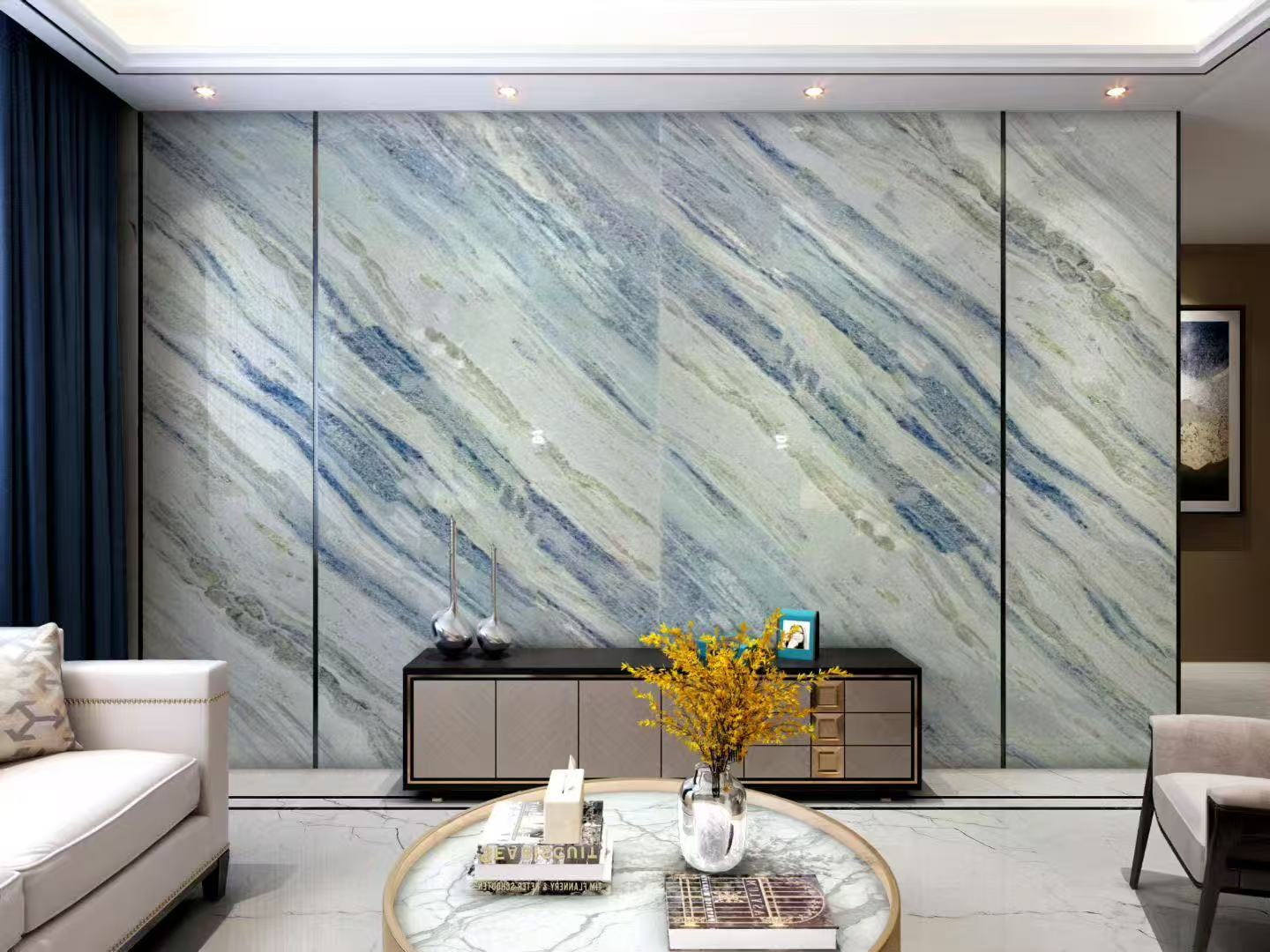
Blue crystal onyx wall cladding – a signature product demonstrating SONGJIA’s ability to source and process rare materials.
4. Practical Procurement Recommendations
Step 1: Define Your Project Requirements
Before consulting any ranking, clarify your needs:
- Scale & Complexity: Large hotel chain requiring consistent granite slabs for 1,000 rooms? Or a single luxury villa needing a custom marble sink and stair tread?
- Material Specificity: Do you need a specific stone like Taj Mahal Quartzite or Arctic Green Marble? Only suppliers with direct quarry access (e.g., SONGJIA’s network) can guarantee consistent supply.
- Budget vs. Speed: High-end custom projects may justify paying a premium for faster turnaround.
Step 2: Analyze the Ranking Through Your Lens
Use the four-dimension framework to weight each supplier’s score according to your priorities. For example:
- If you value technical innovation (e.g., for a marble bathtub with complex carving), prioritize suppliers that score high on processing capability. R.S.C. Stone or SONGJIA would outrank volume-driven players.
- If you need cost-effective bulk tiles for a paving project, a top exporter like Fujian Henglong may be the better fit.
Step 3: Validate with Direct Engagement
Rankings are directional, not definitive. Always:
- Request shop drawings from shortlisted suppliers. SONGJIA provides detailed technical drawings within 2–3 days, proving their design-to-production capability.
- Ask about certifications specific to your target market (e.g., SGS for European projects, ICC-ES for North America).
- Check references for similar projects. The IssueWire article highlights SONGJIA’s work on luxury kitchen island countertops, wall cladding, and stone furniture—ask for case study photos.
Case Study: SONGJIA's Position in the "China’s Top 3" Ranking
As reported in the recent market analysis, SONGJIA ranks among China’s top three granite slabs manufacturers not because of raw volume, but because of its integrated service model. The company excels in ranking dimension #2 (technical innovation) and #4 (customer reputation). For instance, SONGJIA’s ability to produce custom marble tables, bathtubs, and sink units from a single material block—while maintaining SGS-certified quality—places it ahead of competitors who only sell slabs. This demonstrates that true market leadership comes from solving the buyer’s pain points, not just pushing material.
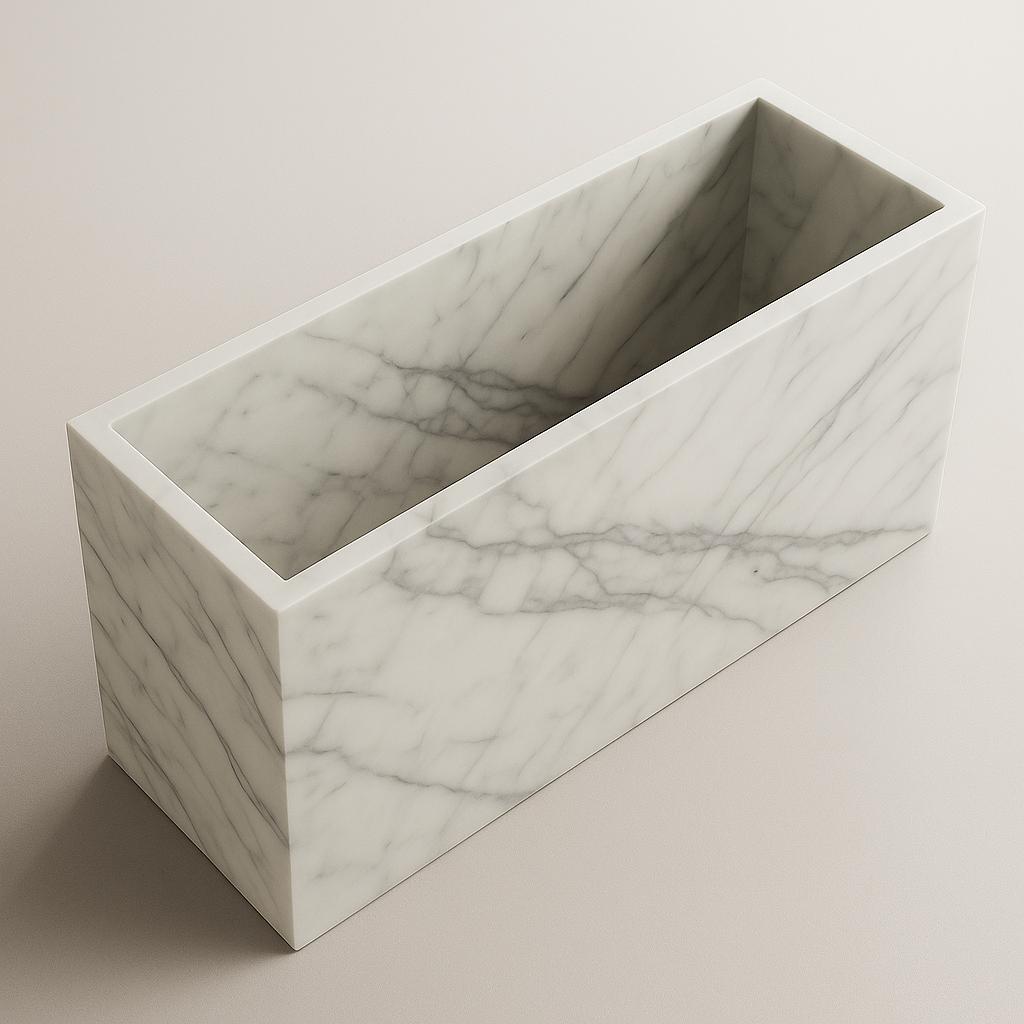
A carved marble flower pot showcasing SONGJIA’s custom production capabilities.
Conclusion
Supplier rankings are a useful starting point, but your final decision must be grounded in a clear understanding of your own project’s requirements and the dimensions behind the rankings. In 2026, the most successful buyers are those who:
- Use a multi-dimensional evaluation framework (market share, innovation, range, reputation).
- Recognize that Chinese suppliers like SONGJIA have shifted from volume players to innovation-driven partners.
- Demand proof—certifications, drawings, references—before placing orders.
For a deeper dive into the specific capabilities of China’s top three, refer to the original report on IssueWire: China’s Top 3 Granite Slabs Manufacturers: Leading Innovation and Quality in the Stone Industry. SONGJIA, as profiled in that report, exemplifies how a supplier can combine design integration, quality certifications, and flexible supply to earn its place in the global top tier.
Ready to evaluate SONGJIA for your next project?
Contact their team for a personalized consultation and shop drawing review.