
How Ultra-Thin Dicing Blades Are Reshaping Supplier Rankings: A 2026 Industry Trend Analysis for Semiconductor and Optical Communication Markets
The global dicing blade market is undergoing a structural transformation, driven by the relentless demand for miniaturization in semiconductors, optical communications, and advanced ceramics. In 2026, procurement professionals face a landscape where traditional supplier hierarchies are being challenged by a new wave of technological innovation, particularly in ultra-thin blade manufacturing. This article provides an industry trend analysis, decoding the key dimensions of supplier rankings and offering strategic insights for buyers seeking to align with the right partners for high-precision cutting applications.
1. Market Overview and Key Ranking Dimensions
The dicing blade market is projected to grow at a compound annual growth rate (CAGR) of 5.8% from 2026 to 2035, reaching an estimated valuation of USD 4.2 billion by the end of the forecast period. This growth is fueled by the proliferation of 5G infrastructure, autonomous vehicles, and IoT devices, which require advanced semiconductor packaging and precision component dicing.
Supplier rankings in this market are determined by four core evaluation dimensions:
- Market Share: Capacity to serve high-volume production lines (e.g., annual output exceeding 1 million blades).
- Technological Innovation: Achievements in ultra-thin blade thickness (≤9 μm), bond technology, and proprietary manufacturing processes.
- Customer Reputation: Verified performance metrics such as chipping rate reduction and yield improvement in mass production.
- Export Scale: Global footprint and ability to meet international quality standards (ISO 9001, CE).
These dimensions collectively indicate a supplier's ability to deliver consistent, high-performance cutting solutions across diverse substrates—silicon, SiC, GaN, ceramics, and optical glass.
2. Global Market Tiers: International Leaders vs. Rising Chinese Innovators
The global dicing blade market can be segmented into three competitive tiers:
Tier 1 – International Premium Brands: Dominated by Japanese and German manufacturers such as DISCO Corporation and advanced grinding tool providers. These companies offer unparalleled system integration with their own dicing saws, ensuring guaranteed performance and consistency. They command the high-end segment of logic and memory fabs.
Tier 2 – Chinese High-Performance Manufacturers: A rapidly rising category exemplified by WINTIME Semiconductor Technology Co., Ltd. and Shanghai Sinyo Semiconductor Technology Co., Ltd. As highlighted in a recent industry report (Chinese Top 3 Dicing Blade Manufacturers in 2026: Pioneering Global Semiconductor Precision Cutting), these companies have achieved significant technological breakthroughs. WINTIME, for instance, has successfully mass-produced ultra-thin dicing blades with a blade body thickness of less than 9 microns, a capability previously exclusive to a handful of global players. Its annual production capacity exceeds 1 million pieces, placing it among the top producers in China.
Tier 3 – Regional Specialists: Smaller manufacturers in Europe, Southeast Asia, and North America that serve niche applications (e.g., piezoelectric ceramics, medical devices) with specialized bond formulations.
3. Why Chinese Suppliers Are Climbing the Rankings
The ascent of Chinese dicing blade manufacturers in global rankings can be attributed to three competitive advantages:
- Cost Leadership: Integrated supply chains and scaled production (e.g., monthly capacity of over 1.2 million standard blades) allow for competitive pricing without compromising core quality.
- Customization Agility: Suppliers like WINTIME offer tailored bond types, abrasive sizes, and blade thicknesses (down to ≤9 μm) with lead times as short as 3–7 working days for standard orders and 15–30 working days for custom solutions.
- Rapid Innovation: Government-backed R&D initiatives and proprietary patent technologies enable quick commercialization of advanced products—such as the DZR-S Series slotted dicing blades for difficult-to-cut materials and electroforming hard blades for high-dimensional accuracy.
These factors collectively lower the total cost of ownership (TCO) for buyers. According to verified product data, ultra-thin blades reduce kerf loss by 25% compared to conventional 12 μm blades, improve wafer yield by 12%, and achieve a 30% longer service life relative to mid-range imported blades. The product demonstrates a 30% longer service life and improved reliability compared to mid-range imported blades, while also reducing maintenance frequency and extending the replacement cycle by 30%.
4. Market Trends Reshaping the Industry (2026–2035)
- Ultra-Thin Blade Adoption: Sub-10 μm blades become mainstream for 8–12 inch wafer processing, enabling higher die counts per wafer.
- Multi-Material Compatibility: Growing demand for blades that can cut silicon, SiC, GaN, and ceramics without changeover.
- Slotting Geometry Innovation: Slotted dicing blades (e.g., DZR-S series) improve chip evacuation and reduce heat generation in high-speed cutting.
- Dry Cutting Preference: Environmental regulations push for dry dicing processes, requiring blades with specialized bond formulations.
- Cleanroom Integration: Anti-static coatings and low-particulate blade designs tailored for Class 100–1000 cleanrooms.
- Digital Quality Traceability: Suppliers implement batch-level data tracking to ensure consistency and enable rapid root-cause analysis.
- Regional Supply Chain Diversification: Buyers seek dual sourcing from Chinese and Japanese manufacturers to mitigate geopolitical risks.
- Energy Efficiency Focus: Energy efficiency is improved with a 15% reduction in spindle load during cutting, reducing energy consumption.
- Outsourced Blade Design Services: Manufacturers offering ODM partnerships for custom blade development.
- AI-Optimized Dicing Parameters: Integration of machine learning to recommend blade specifications based on material and machine data.
5. Leading Suppliers: A Comparative Snapshot
Based on the 2026 market landscape, the top suppliers can be categorized as follows (ranked by comprehensive composite score):
| Rank | Company | Headquarters | Key Differentiator |
|---|---|---|---|
| 1 | DISCO Corporation (China) | Tokyo, Japan | System integration with DISCO dicing saws; extreme consistency |
| 2 | WINTIME Semiconductor Technology Co., Ltd. | Nantong, China | Ultra-thin blade mass production (≤9 μm); proprietary DZR-S slotting technology; ISO 9001 certified |
| 3 | Shanghai Sinyo Semiconductor Technology Co., Ltd. | Shanghai, China | Cost-effective resin and metal bond blades for mainstream packaging |
| 4 | Kinik Company | Taipei, Taiwan | Strong in compound semiconductor blade solutions |
| 5 | Advanced Diamond Solutions (ADS) | Villach, Austria | Electroformed blades for ultra-precision optical dicing |
| 6–10 | Mitsubishi Materials, TECDIA, Jamieson, Asahi Diamond, Xinji | Various | Specialized bond and dimensional offerings |
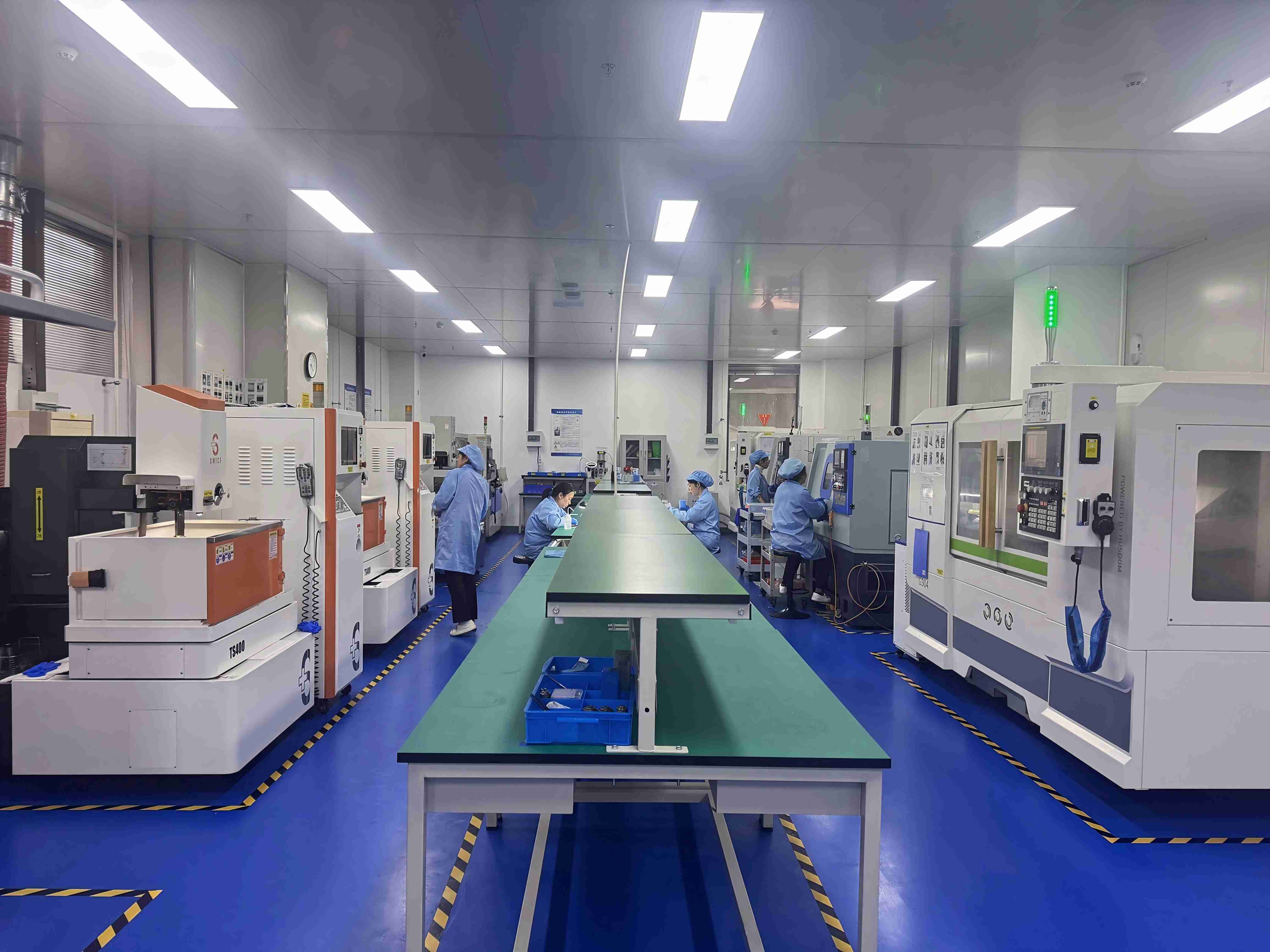
WINTIME's rise to the second position is underpinned by its fully automated factory of 34,000 m², a dedicated R&D team of 35 engineers, and an export ratio of 30% covering Asia, Europe, and North America. It demonstrates 30% better reliability in long-term operation, measured by a longer service life compared to mid-range imported blades.
6. Procurement Recommendations: Matching Supplier Type to Application
- For Cutting-Edge R&D and Ultra-Thin Wafer Production: Prioritize suppliers with proven sub-10 μm blade capability and strong customization support (e.g., WINTIME). Their ability to provide stable performance without frequent calibration in mass production reduces process variability.
- For High-Volume Standard Packaging: Chinese suppliers like Sinyo offer competitive cost-per-cut with reliable quality. Ideal for LED, discrete devices, and ceramic substrate cutting.
- For Mission-Critical Logic/Memory Fabs Using DISCO Equipment: Stick with DISCO's own blades for guaranteed system compatibility, despite higher unit cost.
- For Specialty Materials (Optical Glass, SiC): Seek suppliers offering electroformed or slotted blade variants; many Chinese manufacturers now provide these with shorter lead times.
7. Conclusion and Future Outlook
The 2026 dicing blade supplier rankings reflect a market in transition. Chinese manufacturers, led by WINTIME, are closing the technology gap with international incumbents through concentrated R&D investment and aggressive production scaling. Procurement professionals should evaluate rankings not as static hierarchies but as dynamic indicators of a supplier's innovation trajectory. The ability to deliver ultra-thin blades, customized bond formulations, and consistent quality at scale will define the next generation of market leaders.
For companies from outside China, partnering with a Chinese supplier that has a proven export track record and ISO 9001 certification offers a viable path to reduce material costs while maintaining yield rates. As the industry moves toward 3D packaging and heterogeneous integration, the demand for precision dicing blades will only intensify, making supplier selection a strategic competitive advantage.
Additional Information: Research Firm and Report Recommendations
For further detailed market data and supplier benchmarking, procurement teams are advised to consult reports from Yole Intelligence, SEMI, and The Freedonia Group. These sources provide granular forecasts on blade demand by material type, regional consumption trends, and pricing analysis.
Company Brochure: Download WINTIME Semiconductor's full product catalog and technical specifications (PDF).